5 Amazing AI Tools to Go From Idea to First Customers (Beginner-Friendly)
6 min readAkhil Kumar
You’ve spent three months “planning” your startup.
Really, you’re just scared to start.
You have notebooks full of ideas. Dozens of bookmarked articles about product market fit. A perfectly organized Notion workspace that no one will ever see.
What you don’t have? A single person who wants what you’re building.
The problem isn’t motivation. It’s clarity. You don’t know which step comes first, which tools actually matter, or how to move from “this could work” to “here’s proof.”
Here’s the truth: you need to stop planning and start building with AI tools that force you to make real decisions. Within six weeks, you could have your first three paying customers.
Here’s the exact stack that can get you there, and why each tool matters when it does.
1. aicofounder.com — Turn a Vague Idea Into a Real Startup Concept
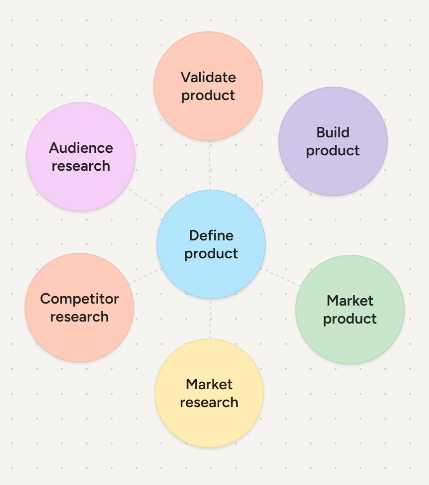
You think you have a clear idea. You don’t. You have a vague feeling wrapped in jargon.
What this does: aicofounder.com forces you to answer questions you’ve been avoiding. Who is this actually for? What do they currently do instead? Why would they switch?
You might start with something embarrassingly broad: “I want to help freelancers manage clients better.”
After working through the platform’s prompts, you’ll walk away with something you can actually test: a workflow tool specifically for solo consultants juggling multiple retainer clients who need lightweight project tracking without enterprise bloat.
See the difference?
The hard truth: Most founders fail because their idea is too blurry to validate. This tool makes yours sharp enough to test.
→ Try aicofounder.com when you’re still in the “I think this could work” phase and need to pressure test that assumption.
2. Lovable — Build Your First Product Without Heavy Coding
“I’ll start building once I find a technical cofounder.”
Translation: you’re scared to ship something imperfect.
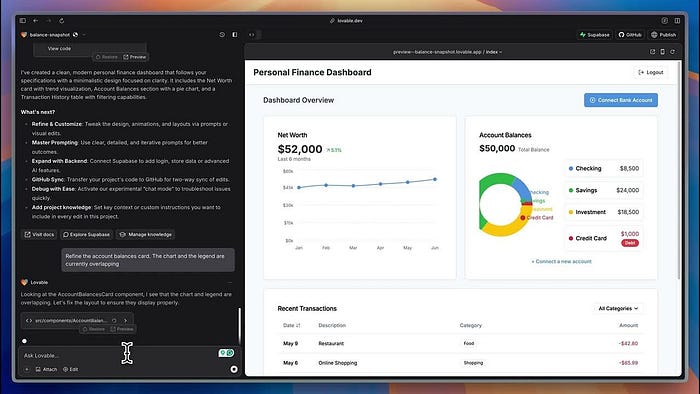
What this does: Lovable lets you describe what you want in plain English and actually builds it. Not perfectly. Not production ready. But real enough that people can click through it and tell you if you’re onto something.
You can build your first prototype in a weekend. It’ll be janky. The UI will look like a student project. But it’ll work, and that’s what matters.
Imagine this: three users test it. Two hate the navigation. One asks if they can pay for it. That one question changes everything.
The hard truth: You don’t need perfect. You need proof. This tool gets you to proof faster than any developer or bootcamp ever will.
→ Start building with Lovable when you have a clear concept and need something tangible to put in front of real humans.
3. Jasper — Create Marketing Content That Doesn’t Sound Amateur
You might not be a bad writer. But you’re probably a terrible marketer of your own work.
Every landing page draft sounds either too salesy or too apologetic. Your email sequences read like technical documentation. You keep second-guessing every headline.
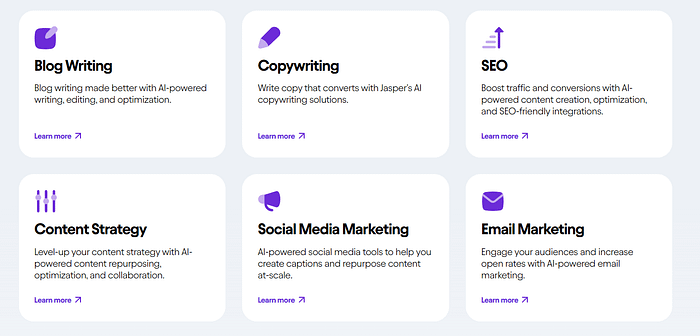
What this does: Jasper gives you a starting point that doesn’t suck. You feed it your value proposition, and it generates five different ways to say it. Some will be terrible. Some will be gold. But you won’t be staring at a blank page anymore.
The hard truth: You can’t A/B test a blank page. You need volume first, refinement second.
→ Use Jasper when you know what you’re offering but can’t figure out how to talk about it without sounding like everyone else.
4. AdCreative — Turn Traffic Into Paying Customers
You think your first ad will work.
It won’t.
Neither will your second. Or third.
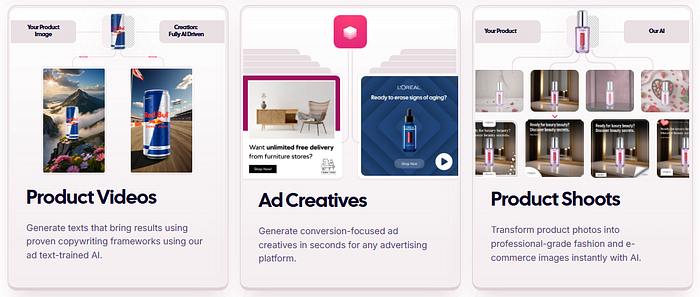
What this does: AdCreative lets you test twenty variations in the time it used to take you to make three. Different headlines, different images, different hooks, all optimized for actual conversion data, not your gut feeling.
Turns out, the version you think is “too direct” will probably outperform everything else by 40%.
The hard truth: Your intuition about what works in ads is probably wrong. What matters is testing fast enough to find out what’s actually true.
→ Try AdCreative when you’re ready to put money behind your idea and want to learn quickly instead of burning budget on beautiful ads that don’t convert.
5. Make — Automate the Boring Stuff So You Can Focus on Growth
At three customers, you’ll be manually doing everything.
Copying form responses into your CRM. Sending welcome emails one by one. Updating spreadsheets. Setting calendar reminders to follow up.
It’ll feel sustainable until it isn’t.
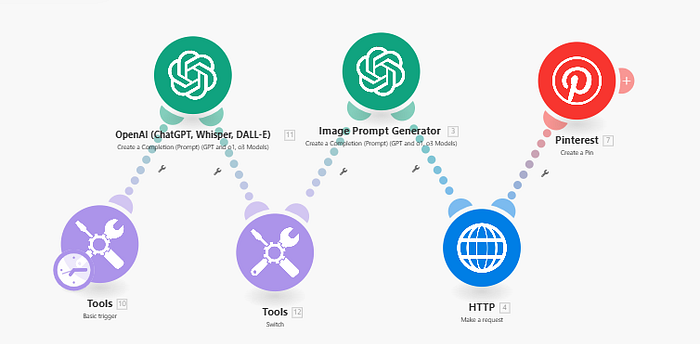
What this does: Make connects all your tools so they talk to each other. New lead fills out the form? Automatically added to your CRM, tagged, and sent a welcome sequence. No manual copy-paste. No forgotten follow-ups.
Suddenly, you’ll have time to talk to customers instead of managing data about customers.
The hard truth: Manual work feels productive until it becomes the reason you can’t grow. Automate the boring stuff before it suffocates you.
When to use it: As soon as you have any repeating process. Don’t wait until you’re drowning.
→ Set up Make as soon as you have any repeating process. Don’t wait until you’re drowning.
Must read:
My Automated New Pinterest Account Got 63k Impressions in 14 Days
What You Need to Hear
This isn’t about using every tool at once.
It’s about using the right tool at the right moment:
Week 1–2: AI Cofounder to stop bullshitting yourself about what you’re actually building Week 3–4: Lovable to ship something real Week 5: Jasper to figure out how to talk about it Week 6: AdCreative to test if anyone cares enough to click Week 7+: Make to stop drowning in your own success
The pattern here isn’t “use AI for everything.”
It’s “remove the excuse that’s stopping you right now.”
Can’t validate your idea? That’s step one. Can’t build? That’s step two. Can’t explain it? That’s step three.
Each tool solves the bottleneck that’s keeping you stuck.
Six weeks from now, you could still be “planning.”
Or you could have paying customers and a product that’s getting better every week.
Not because you’re special.
Because you finally stopped planning and started shipping.
Your move.
More in artificial-intelligence


Venture
Write for entrepreneurs, founders, and builders.
Share startup lessons, growth tactics, and founder stories with readers on the same journey.
One free account across In Plain English, Stackademic, Venture, and Cubed.
How it works- Startups & entrepreneurship
- Marketing & growth
- Productivity & leadership
- Founder stories & lessons learned
Sign in
Google or GitHub
Complete profile
Takes a few minutes
Get approved & publish
Start sharing
Why write for Venture?
Entrepreneurship is rarely a straight path. The lessons worth sharing are learned while building.
Frequently Asked Questions
Common questions about this topic
What is the primary recommendation for founders who have been 'planning' but not shipping?
Stop planning and start building with AI tools that force real decisions; use a targeted sequence of tools to move from vague ideas to paying customers within about six weeks.
What is the core problem preventing progress in early startup efforts?
The core problem is lack of clarity: not knowing which step comes first, which tools matter, or how to move from 'this could work' to demonstrable proof that people want the product.
What outcome is promised by using the recommended stack over six weeks?
Within six weeks using the recommended stack, it is possible to have the first three paying customers and a product that improves weekly.
What does AI Cofounder (aicofounder.com) do and when should it be used?
AI Cofounder forces founders to answer concrete questions about target users, current alternatives, and switching reasons, sharpening a vague idea into a testable startup concept; use it in Week 1–2 when still in the 'I think this could work' phase.
What does Lovable do and when should it be used?
Lovable converts plain-English descriptions into working, imperfect prototypes that users can click through and test; use it in Week 3–4 once the concept is clear and a tangible prototype is needed.
What problem does Jasper solve and when should it be used?
Jasper generates multiple marketing drafts from a value proposition so founders can stop staring at blank pages and get testable copy; use it in Week 5 to figure out how to talk about the offering.
What is AdCreative for and when should it be deployed?
AdCreative enables fast testing of many ad variations optimized for conversion data, helping find what actually works; deploy it in Week 6 when ready to put paid traffic behind the idea and learn quickly.
What does Make (make.com) automate and when should it be introduced?
Make connects tools to automate repetitive tasks such as adding leads to a CRM, tagging them, and sending welcome sequences; introduce it as soon as any repeating process exists, and definitely by Week 7+ to avoid manual work blocking growth.
Why is shipping an imperfect product preferable to waiting for perfection?
Shipping an imperfect, clickable prototype produces proof through user reactions and reveals real feedback—such as navigation issues or willingness to pay—that cannot be obtained from planning alone.
How should the recommended tools be used together?
Use each tool to remove the specific bottleneck at the right moment: AI Cofounder to validate the idea, Lovable to build a prototype, Jasper to craft messaging, AdCreative to test demand, and Make to automate processes as success grows.
What testing mindset does the stack encourage for ads and marketing?
The stack encourages rapid, high-volume testing rather than relying on intuition: run many ad and copy variations quickly to discover which versions actually convert.
What is the fundamental behavioral change the approach demands from founders?
The approach demands stopping excuses and acting: identify the immediate bottleneck preventing validation, apply the specific tool that removes that bottleneck, and iterate based on real customer feedback.
Comments
Loading comments…