2026 Is the Year the Internet Finally Decides Humans Are a Premium Feature
Why AI domination didn’t kill creativity , it made the human factor valuable again
5 min readSonali Sood
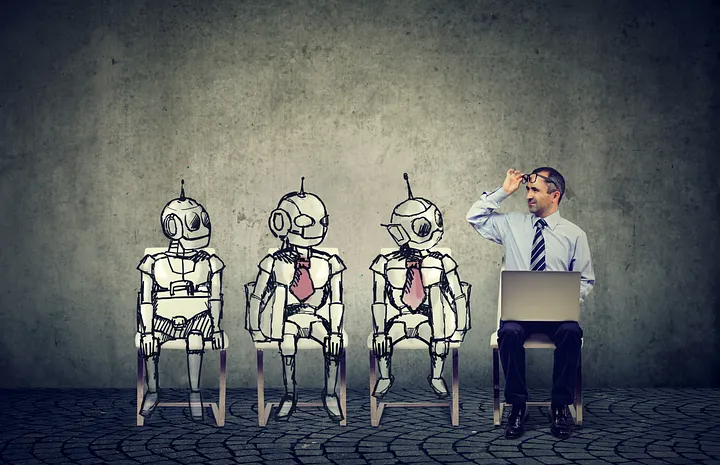
There’s a joke going around that by 2026, your smart fridge will ghostwrite your grocery list better than your best friend ever did. That might not be far from the truth, because the AI revolution isn’t just accelerating… it’s reshaping how value itself is defined online.
Let’s unpack what’s actually happening, with real trends, hard data, and narrative flair (no vaporware promises, no hype voice).
The Real AI Moment of 2026: Show Me the Money
2026 isn’t about dreaming up bigger models. It’s about monetizing what already works. Experts say this year AI’s focus shifts from model power to real integration and ROI — where AI must earn its place in workflows, businesses, and revenue — not just beat benchmarks.
1. Humans Are the Ultimate Scarcity , and That’s a Price Tag
Everyone’s talking generative AI. Everyone. In 2025, some 5.2 billion people visited ChatGPT in a single month — ranking it among the top websites on Earth. But as machines replicate content, the signal gets noisier. That’s where human-created, trustable insight becomes a premium good — because what machines can mimic, they can also dilute.
Welcome to the era where certifiably human output becomes valuable again.
2. Search Has Mutated — Agents Now Eat Traditional SEO for Breakfast
Google has rolled out AI Mode: a search experience that doesn’t just show links — it answers, summarizes, and takes actions in context. This isn’t the “I’m Feeling Lucky” button dying. It’s Google saying:
“We don’t want clicks — we want done.”
This changes the SEO game. Instead of ranking pages, the challenge now is to rank answers, facts, and machine-trusted signals — a mix of structured data, authority, and clarity. That’s why schema, grounding data, and authoritative citations are suddenly core optimization factors.
Google is treating AI-driven results as first-class output, folding AI metrics into Search Console performance reports — meaning content that doesn’t serve AI Mode well just won’t rank.
3. AI Content Flood Isn’t Theory — It’s Already Provable
Reuters just reported Poland has formally asked the EU to investigate TikTok over AI-generated political content pushing narratives, undermining democratic norms. This matters for search and social: AI content isn’t hypothetical — it’s a real moderation and regulation challenge. When politics and safety get involved, platforms shift incentives, and algorithms adapt to prioritize verifiable signals over hallucination-friendly noise.
4. Video Is No Longer Short — It’s Long-Form AI
Text-to-video models like Veo are already capable of generating minutes-long audio-synced, story-type video — not just low-effort loops. We’re no longer talking about 15-second reels. AI video is trending toward episode-length content that can compete for attention with human creators. That matters — because video dominates Google’s answer-boxes, feeds, and social trends.
And yes, long-form means lower cost per engagement and higher ad value — a world where AI video could out-perform humans on sheer algorithmic juice.
5. AI Isn’t Shrinking Jobs — It’s Shifting Them
According to the World Economic Forum, AI won’t obliterate jobs… it will transform them. While automation displaces some roles, it’s creating even more hybrid jobs where humans + machines work together.
This is vital context: the real high-paid roles of 2026 aren’t pure AI builders — they’re translators between human goals and machine action (think: strategy, ethics, narrative design).
6. Google, Nvidia, and the AI Infrastructure Wars Aren’t Slowing Down
Nvidia becoming the first $5 trillion company isn’t a flex — it’s proof that AI infrastructure (chips, data centers, GPUs) still drives innovation more than any single model.
Source: Vogue
At CES 2026:
- Nvidia introduced new AI superchips
- Uber teased fully autonomous ride platforms
- Boston Dynamics showcased humanoid assistants
- LG unveiled smarter home robots
- Robotaxi luxury experiences were showcased for real — not in a demo video.
This isn’t peak hype. It’s infrastructure hitting takeoff velocity, meaning 2026 is where AI physicalization meets mainstream expectation.
7. Wearables Are Collecting Your Behavior Data — And We Barely Notice
Smart glasses, smart watches, smart everything are evolving beyond passive tracking into contextual understanding: how long you look at something, biometrics tied to intent, environmental cues.
This shift means recommendation engines don’t just see what you do — they infer why you do it.
That’s a huge leap from “suggest products” to “predict purchase before intent forms.”
8. AI Agents Aren’t Sci-Fi — They’re the New Middleware
Long-term memory, multi-step task execution, and decision automation are real capabilities being built into consumer and enterprise AI right now, moving beyond simple chat.
Agents are effectively becoming your digital executive assistant, not just your writing buddy — fetching data, booking actions, and optimizing decisions. These systems are projected to grow from a $7.6B industry in 2025 to nearly $183B by the early 2030s.
Source: Blockchain Council, Grand View Research
9. AI Is Most Powerful When Humans Steer It
Here’s the paradox of 2026:
- AI learns millions of patterns
- But only humans understand meaning and purpose
That’s why the most successful companies won’t chase generative chaos — they’ll aim for AI that enhances human decision-making, not replaces it.
And that’s the real twist everyone’s ignoring.
The Bottom Line for 2026
AI didn’t make humans obsolete. It made human judgment a premium signal in an overcrowded, auto-generated sea of noise.
In a world drowning in machine output, clarity, honesty, purpose, and intent become headlines that both humans and AI trust.
More in artificial-intelligence


Venture
Write for entrepreneurs, founders, and builders.
Share startup lessons, growth tactics, and founder stories with readers on the same journey.
One free account across In Plain English, Stackademic, Venture, and Cubed.
How it works- Startups & entrepreneurship
- Marketing & growth
- Productivity & leadership
- Founder stories & lessons learned
Sign in
Google or GitHub
Complete profile
Takes a few minutes
Get approved & publish
Start sharing
Why write for Venture?
Entrepreneurship is rarely a straight path. The lessons worth sharing are learned while building.
Comments
Loading comments…