From Deep Tech to Mobile: Commercializing Innovation in Colorado
5 min readEira Wexford

I reckon you have heard the hype about the “Silicon Mountains” by now. It is 2026 and everyone is fixin’ to move to Denver or Boulder. Thing is, it is not just about the gnarly skiing anymore.
Real talk, Colorado is hella busy turning lab experiments into actual products. We are talking about a state where the tech sector produces 20% of the total GDP (Source: Colorado Technology Association).
If you think app development in Colorado is just about another fitness tracker, you are proper wrong. It is about deep tech hitting the mainstream. Let me explain why this matters for your business.
The Real State of App Development in Colorado: Scaling Deep Tech
You and I both know that “innovation” is a word people throw around when they have nothing else to say. But here, it is baked into the dirt.
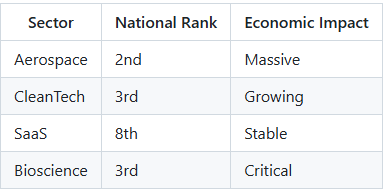
Software and IT have added over 47,000 jobs lately (Source: CTA). We are now 2nd in the nation for Aerospace. That is not just rockets. It is the software inside them.
A good example of this is app development in Colorado where local teams are building the interfaces for complex climate and satellite data.
Speaking of which, the commercialization of this tech is moving faster than a Sydney surfer on a big swell. The Front Range is sorted for the next decade.
Why Boulder is Proper Chuffed with Its Labs
Boulder is not just for the “all hat no cattle” types. The University of Colorado is churning out startups like a factory. They have programs like Ascent and Embark that take a scientist and turn them into a CEO.
Take companies like EsterCycle. They are breaking down plastics using tech from the National Laboratory of the Rockies. It is clean, it is smart, and it is happening in our backyard.
Denver’s Mile High Momentum
Denver is becoming the hub for scaling these ideas. Futurist Ian Khan recently noted, “Denver is no longer just a gateway to the Rockies , it’s becoming a national model for how technology and sustainability can fuel urban transformation” (Source: Ian Khan, Mile High Momentum 2025).
The city’s climate tech incubators have graduated over 140 companies since 2020. Most are still kicking. That is a proper win for a sector known for high failure rates.
The Numbers: Why VCs are Stoked
I might could be cynical about venture capital, but the data does not lie. Even with a national slowdown, Colorado’s labor force participation is 67.8%. That is miles ahead of the national average (Source: OEDIT FY2026).
“Colorado’s economy continues to benefit from its diversified industry base… solidifying its position as a national leader,” (Source: OEDIT Performance Plan FY2026).
Investors from outside the state are writing 70% of the checks now. They want in on the deep tech scene. It is fair dinkum growth, mate.
The Ibotta Effect
Remember the Ibotta IPO in 2024? That was a massive signal. It proved that you can build a unicorn in Denver and actually exit.
Now, in 2026, we are seeing the “second generation” of those founders. They are starting new firms. They are mentoring the next wave. It is a cycle that keeps the state’s tech blood pumping.
Quantum is Not Just a Buzzword
Get this. Colorado is fixin’ to be the global center for quantum computing. We are not just talking about theory. We are talking about apps.
Local developers are already using frameworks like SpinQit to build software for quantum platforms. It is making high-end computing accessible to normal businesses (Source: SpinQ).
Future Trends: 2027 and Beyond
Looking toward 2027, the trend is clear. AI is no longer a “feature.” It is the foundation of every mobile interface. We are seeing a shift toward “Super Apps” that handle everything from your bank to your thermostat.
Data from Primotech suggests that AI-native apps will be mandatory for any business that wants to survive this year (Source: Primotech).
The 6G rollout is also starting to creep into our conversations. It will make latency a thing of the past. Your Colorado-built app will load before you even touch the screen.
The Rise of Spatial Computing
With devices like the Vision Pro becoming more common in 2026, spatial apps are taking over. Imagine a real estate app that lets you walk through a Denver condo from your couch in Sydney.
Local dev shops are already deep in the 3D design world. They are using Unity and Unreal Engine to create these experiences. It is a gnarly shift in how we interact with data.
Sustainability as a Service
Sustainability is no longer a “nice to have.” It is a regulatory requirement in Colorado as of 2026. This has created a massive market for apps that track carbon footprints in real-time.
Companies are integrating IoT sensors directly into their mobile platforms. It is transparent. It is honest. And it is very Colorado.
Why You Should Care (Sarcasm Included)
Look, I know you could just hire a cheap dev shop anywhere. But do they know the difference between a 14er and a molehill? Probably not.
There is a specific energy here. It is a mix of “let’s save the planet” and “let’s make a billion dollars.” It is weird. It is contradictory. But it works.
If you are looking for a place where innovation actually means something besides a fancy slide deck, the Front Range is your spot. Just be prepared to pay $5 for a coffee.
Final Thoughts on the Corridor
The tech corridor from Fort Collins down to Colorado Springs is a powerhouse. It employs over 300,000 people. That is a lot of hoodies and reusable water bottles.
But behind the Patagonia vests are some of the smartest engineers on the planet. They are building the future of app development in Colorado one line of code at a time.
More in technology


Venture
Write for entrepreneurs, founders, and builders.
Share startup lessons, growth tactics, and founder stories with readers on the same journey.
One free account across In Plain English, Stackademic, Venture, and Cubed.
How it works- Startups & entrepreneurship
- Marketing & growth
- Productivity & leadership
- Founder stories & lessons learned
Sign in
Google or GitHub
Complete profile
Takes a few minutes
Get approved & publish
Start sharing
Why write for Venture?
Entrepreneurship is rarely a straight path. The lessons worth sharing are learned while building.
Comments
Loading comments…