Why Do Only 0.05% Of Startups Manage To Secure VC Funding?
Here’s how asking the right questions can help you find the best VC!
9 min read
Are you dreaming of getting VC funding to turn your startup idea into a reality? If yes, then knowing how to ask venture capitalists (VCs) for funding is the key in today’s competitive market. According to a report by Fundera, only 0.05% of startups get venture funding.
Quite shocking, right? A big reason behind that is the failure of startups in presenting their pitch. 75% of VCs say that they reject funding requests because they don’t understand the funding pitch, it’s generally unclear or there is no focus in the pitch.
So, how do you ensure that you don’t fall on that list?
Ensure that your pitch is clear, and portrays all the unique elements of your startup.
Make sure to outline your progress with solid milestones.
Be prepared to have meaningful conversations with investors.
Well, to ease your worries, we’ll explore more about the smart strategies that can make or break your funding journey. So. let’s dive in!
Key Facts:
- Only 0.05% of startups receive venture capital funding, highlighting the competitiveness of securing investments.
- VCs are more likely to invest if they see a clear roadmap of milestones, demonstrating progress and growth potential.
- Including a 10–20% buffer in the startup budget for unexpected costs shows you are prepared, which can build VC’s trust.
Know Your Goals: The Key to a Strong Funding Request
Before reaching out to investors, it’s essential to define your goals clearly. Understanding what you want to achieve not only helps you articulate your vision but also sets a strong foundation for your funding request.
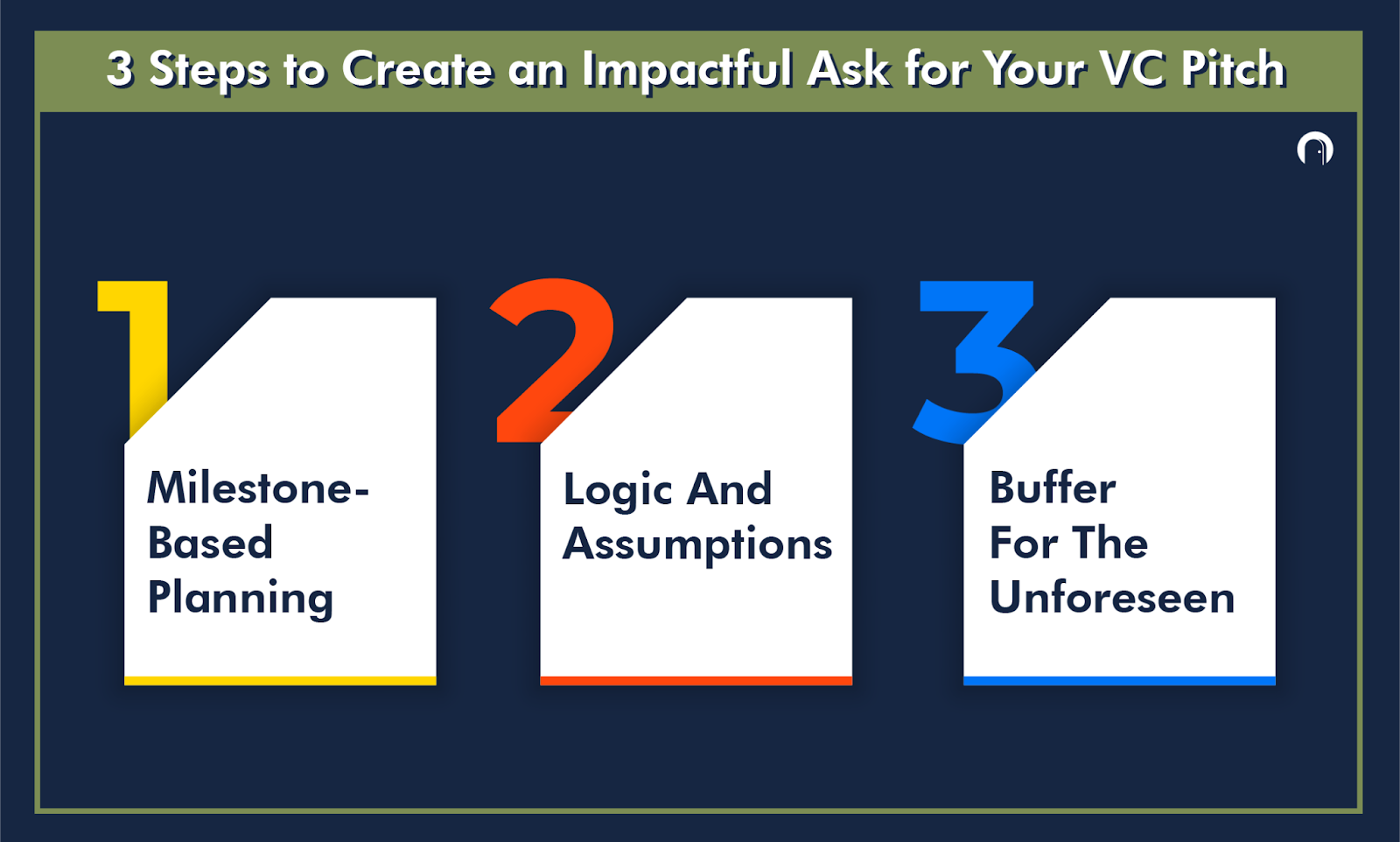
Photo by ExitFund
Milestone-Based Planning: Your Roadmap to Success
To attract VC funding, you need a clear roadmap outlining your journey. Think of this roadmap as a series of checkpoints, or milestones, that mark your startup’s progress. Each one should represent a victory, showcasing your growth and forward momentum to potential investors.
For example, If you aim to increase user engagement by 30% in the next quarter, gather data to support this goal. Achieving these milestones not only builds investor confidence but also transforms informed assumptions into solid facts.
Logic and Assumptions: The Backbone of Your Financial Projections
Investors seek clarity in your financial projections, which are forecasts of your future earnings and expenses. Ask if your assumptions about the future growth are backed by solid data? It’s crucial to differentiate between what you know for certain and what remains uncertain.
For example, If your user growth assumption is based on current market trends, include statistics from reputable sources to validate your claims. You might say, “Based on recent studies from XYZ Research, the average growth rate for similar startups in our industry is 25% annually.” A well-structured financial model like this can enhance your pitch, showing investors that you’ve done your homework.
Buffer for the Unforeseen: Prepare for Anything
In the unpredictable world of startups, it’s wise to prepare for the unexpected. By incorporating a buffer of 10–20% into your budget for unforeseen challenges, you not only protect your business but also demonstrate to investors that you have a realistic grasp of the entrepreneurial landscape.
For example, if your projected budget for the upcoming quarter is $100,000, adding a 15% buffer means you’re preparing for an additional $15,000 in expenses. This foresight reassures investors that you’re prepared to navigate obstacles that may arise along the way.
By ensuring that your financial needs align with your goals, milestones, and projections, you position yourself to make a compelling and precise funding request. The next critical step is crafting a persuasive pitch that effectively communicates these elements to potential investors.
Crafting Your Ask Amount: Precision is Key
When seeking funding, how much you ask for is just as important as how you ask. Crafting your ask amount requires a clear understanding of your financial needs and future goals.
Calculating the Ask: Know Your Numbers
Figuring out how much funding to request means diving deep into your expenses and setting clear milestones. You need to calculate a runway that covers your immediate costs and supports future growth.
Tip: Ensure your ask matches the value you’re bringing to the table. For example, if your startup is seeking $500,000, outline how that amount will sustain operations for the next 12 months while enabling growth. You might say, “We plan to use $200,000 for product development, $150,000 for marketing, and $150,000 for operational expenses. This allocation will allow us to enhance our product and reach our target market effectively.”
Why does this matter? Clearly articulating your ask helps investors understand the value you plan to create with their funds. It demonstrates that you have a solid plan in place and are not just guessing at the amount you need.
Investment Terms: Understand What You’re Offering
Understanding the details of investment terms is crucial. Familiarize yourself with concepts like equity stakes, anti-dilution clauses, and whether a single or staged investment aligns better with your business model.
Tip: If you offer 20% equity in exchange for funding, make sure you can communicate how this will benefit the investor in the long run. You might say, “By investing in our company, you’ll not only gain equity but also have a say in strategic decisions, ensuring that your interests are aligned with ours.”
Why does this matter? Clear communication about how you plan to use the funds and the terms of the investment can resonate with VCs and showcase your strategic vision. By demonstrating that you have thought through both your financial needs and the implications of the investment, you build trust and confidence among potential investors.
Once you’ve nailed down your ask and investment terms, it’s equally important to ensure that your potential investors are the right fit. The next step is to ask key questions that will help you assess whether a VC partnership aligns with your long-term vision and goals.
Must-Ask Questions To VCs Before Committing to a Partnership
Asking the right questions can help you understand whether a VC is the right fit for your startup. Here are some must-ask questions that can guide your discussions:
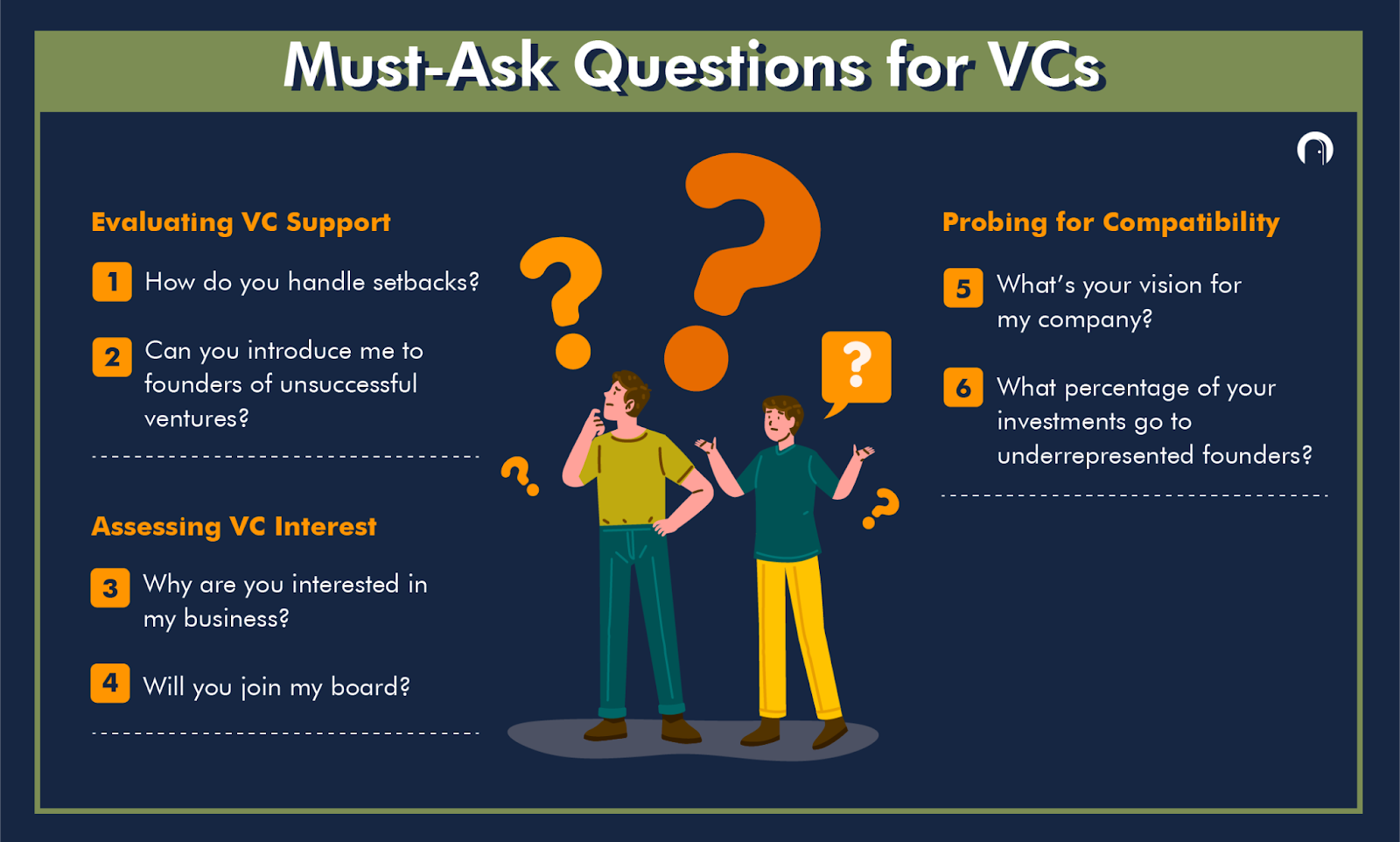
Photo by ExitFund
Evaluating VC Support
How do you handle setbacks?
It’s important to understand how a VC responds to challenges. As a startup, you’ll face unexpected obstacles, and knowing if your investors will stand by you during tough times is crucial. Look for VCs who view setbacks not as failures but as valuable learning experiences. These are the investors who will actively help you find solutions, and support you in navigating through the difficult phases of your startup journey.
Can you introduce me to the founders of failed startups?
Asking this question can give you a clear picture of the VC’s network and their willingness to share important insights. A VC who is open to connecting you with founders of unsuccessful ventures shows they value learning from both success and failure. By talking to these founders, you can gain valuable lessons on what mistakes to avoid and how to pivot your strategy if things don’t go as planned.
Assessing VC Interest
Why are you interested in my business?
This question helps you understand VCs’ genuine interest in your startup. Their response will reveal if they’ve done their research about your industry. A strong answer will include specific details about your business that excite them, showing that they’re not just offering generic support but have a real interest in your startup. This level of insight is a positive sign that they see potential in your business.
Will you join my board?
Having a VC on your board can be a game-changer, offering you mentorship and access to valuable connections. By asking if they’re open to joining your board, you’re gauging their willingness to be actively involved in your startup’s journey. A VC with board experience can provide guidance, strategic advice, and support during critical decisions, making their involvement a powerful asset for your growth.
Probing for Compatibility
What’s your vision for my company?
It’s crucial to know if the VC’s vision aligns with your own goals for the company. A shared vision can lead to a stronger, more productive partnership where both parties work towards the same long-term objectives. Their vision should reflect an understanding of your business and their long-term plans should resonate with yours. If their vision matches yours, it’s a good indication that they will be a supportive and committed partner in your journey.
What percentage of your investments go to underrepresented founders?
Asking this question helps you gauge the VC’s commitment to diversity and inclusion. A firm that actively invests in underrepresented founders often demonstrates a broader perspective and a more inclusive approach to business. Additionally, a VC with experience supporting underrepresented founders is likely to have a more supportive network and a deeper understanding of the unique challenges these founders may face.
So, If you are ready to pitch your startup to gain valuable funding, connect with us at ExitFund. We are experts in connecting startups with the right investors streamlining your fundraising journey, and offering valuable resources.
Conclusion: Your Path to Fundraising Success
Getting VC funding can be tough, but with the right strategy, you can stand out and secure the investment your startup needs. Focus on setting clear milestones, knowing your goals, and understanding the funding terms. It’s not just about the money; it’s about building lasting relationships with investors who share your vision. So, create a clear pitch, back up your numbers with solid data, and have meaningful conversations with potential investors.
Now, it’s your turn! What strategies have you found most helpful in your funding journey? Share your thoughts in the comments below, and let’s keep this conversation going!
More in startups


Venture
Write for entrepreneurs, founders, and builders.
Share startup lessons, growth tactics, and founder stories with readers on the same journey.
One free account across In Plain English, Stackademic, Venture, and Cubed.
How it works- Startups & entrepreneurship
- Marketing & growth
- Productivity & leadership
- Founder stories & lessons learned
Sign in
Google or GitHub
Complete profile
Takes a few minutes
Get approved & publish
Start sharing
Why write for Venture?
Entrepreneurship is rarely a straight path. The lessons worth sharing are learned while building.






Comments
Loading comments…