6 Best Patent Intelligence Platforms for Competitive Research and Innovation
Compare six leading patent intelligence platforms, including Minesoft Origin, PatSnap and Questel, for AI patent search, competitor monitoring and innovation.
9 min read
What are your competitors developing? Where are they seeking patent protection? And could their latest inventions affect your own R&D plans?
Patent intelligence platforms help you answer these questions by turning patent filings into information you can search, analyze, and monitor.
The challenge is choosing software that does more than generate charts. You need reliable data, meaningful competitor alerts, and findings that legal, IP, and R&D teams can use.
We've compared six patent intelligence platforms based on their research capabilities, competitive monitoring, analytics, and practical limitations.
The 6 Best Patent Intelligence Platforms Compared
1: Minesoft Origin
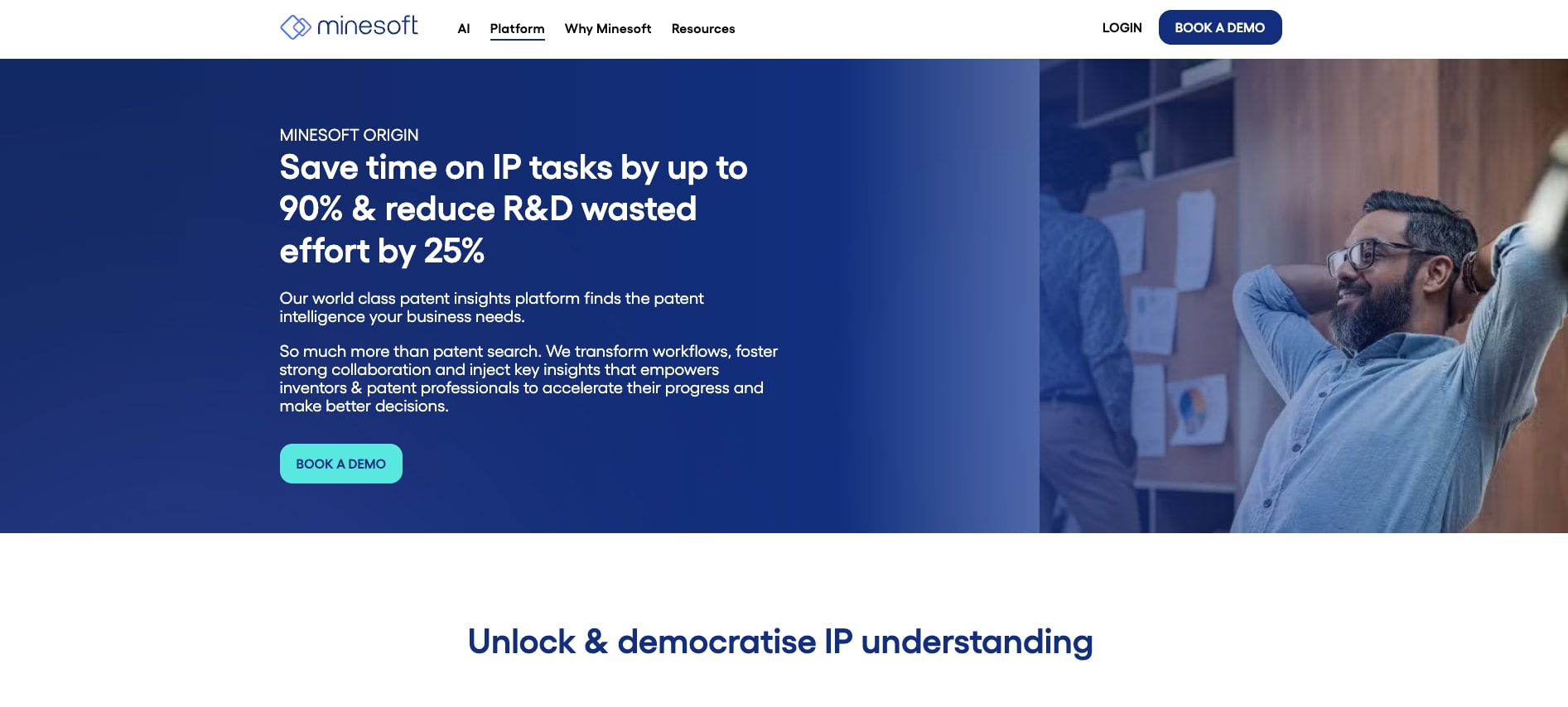
Minesoft Origin brings patent searching, AI classification, monitoring, and collaboration into a single platform.
Its main advantage is that it helps you move from finding relevant patents to understanding what they mean for your business.
Say you're tracking competitors developing electric vehicle batteries. You might want to investigate patents covering solid-state electrolytes, charging technology and recycling methods.
Minesoft Origin's AI Patent Search helps you find relevant inventions based on technical concepts, even when patent documents use different terminology.
For example, an IP analyst researching solid-state batteries could use AI-assisted searching to identify related technologies and investigate relevant patents without relying entirely on exact keyword matches.
Origin's custom AI classification then lets you organise those patents using business-specific categories rather than standard patent classifications alone.
You can monitor relevant filings, prioritise important developments and share findings with the people responsible for those technologies.
The platform also offers document chat, analytics and collaborative review.
For IP teams supporting several business units, this creates a more connected approach to competitive intelligence. Research doesn't have to remain in the patent department.
Minesoft reports access to approximately 190 million patent publications and offers separate MCP and API services for businesses building internal research systems.
Why it stands out: Origin connects patent discovery, classification, monitoring, and collaboration, helping you turn research into intelligence that supports technical and commercial decisions.
Check before buying: Custom classifications may require setup. Confirm which monitoring, collaboration, and integration features are included in your license.
2: PatSnap Analytics
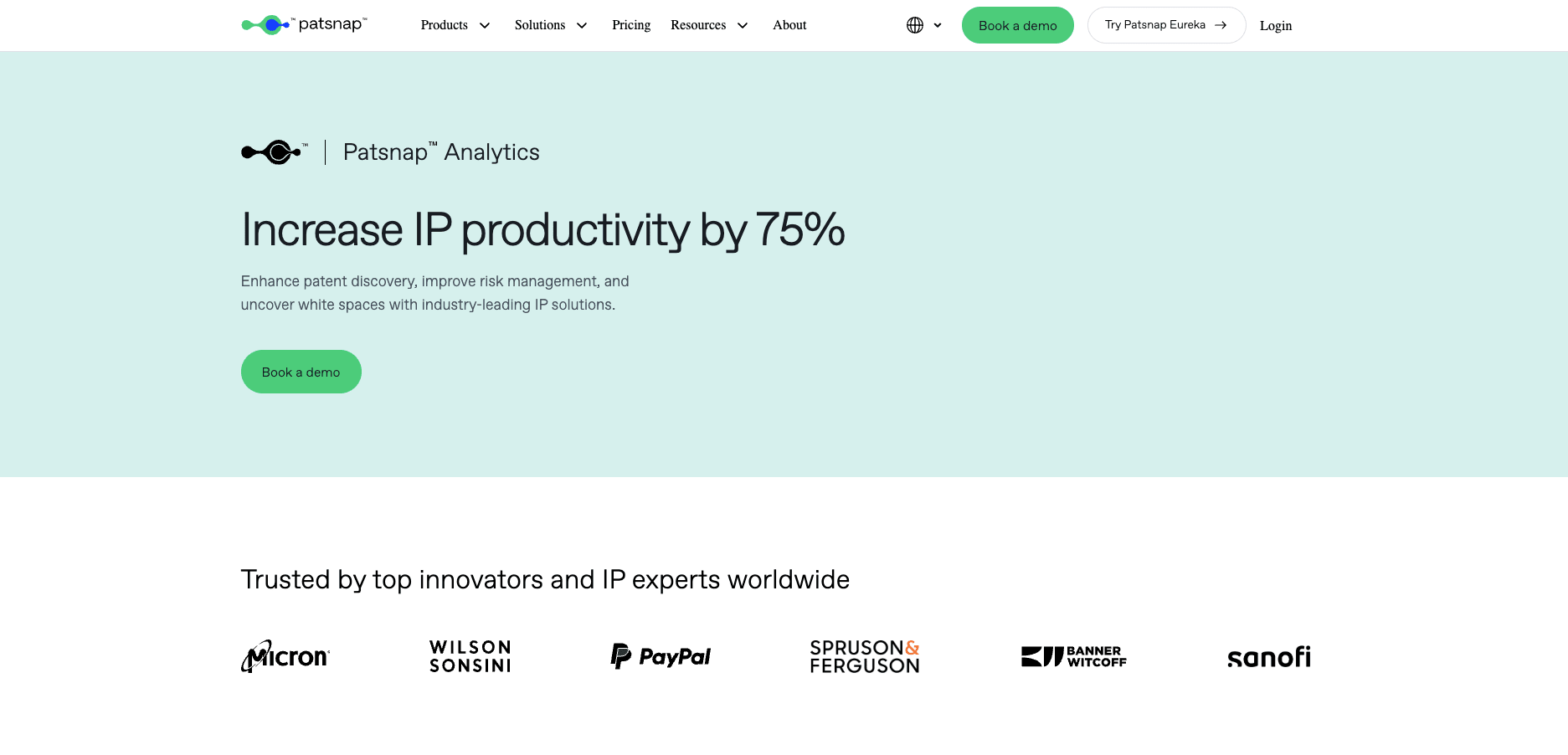
PatSnap Analytics combines patent searching, portfolio analysis, and technology intelligence with access to wider scientific research information.
Its analytical tools help you investigate filing trends, compare competitor portfolios, and explore emerging technologies.
PatSnap's Hiro AI assistant also lets you ask questions in natural language.
For example, you could investigate which companies are increasing patent activity in battery recycling or how a competitor's technology portfolio has changed.
The platform can support this research with visualizations and structured analysis. Collaborative Workspaces also let colleagues organize documents, review findings, and track developments.
Its wider product ecosystem includes specialist AI research applications through Eureka.
Why it's worth examining: PatSnap connects patent analytics with scientific and technical information, which can add context to technology scouting.
Check before buying: Analytics, Eureka, and certain advanced features may require different subscriptions. Confirm what's included before comparing prices.
3: Questel Orbit Intelligence
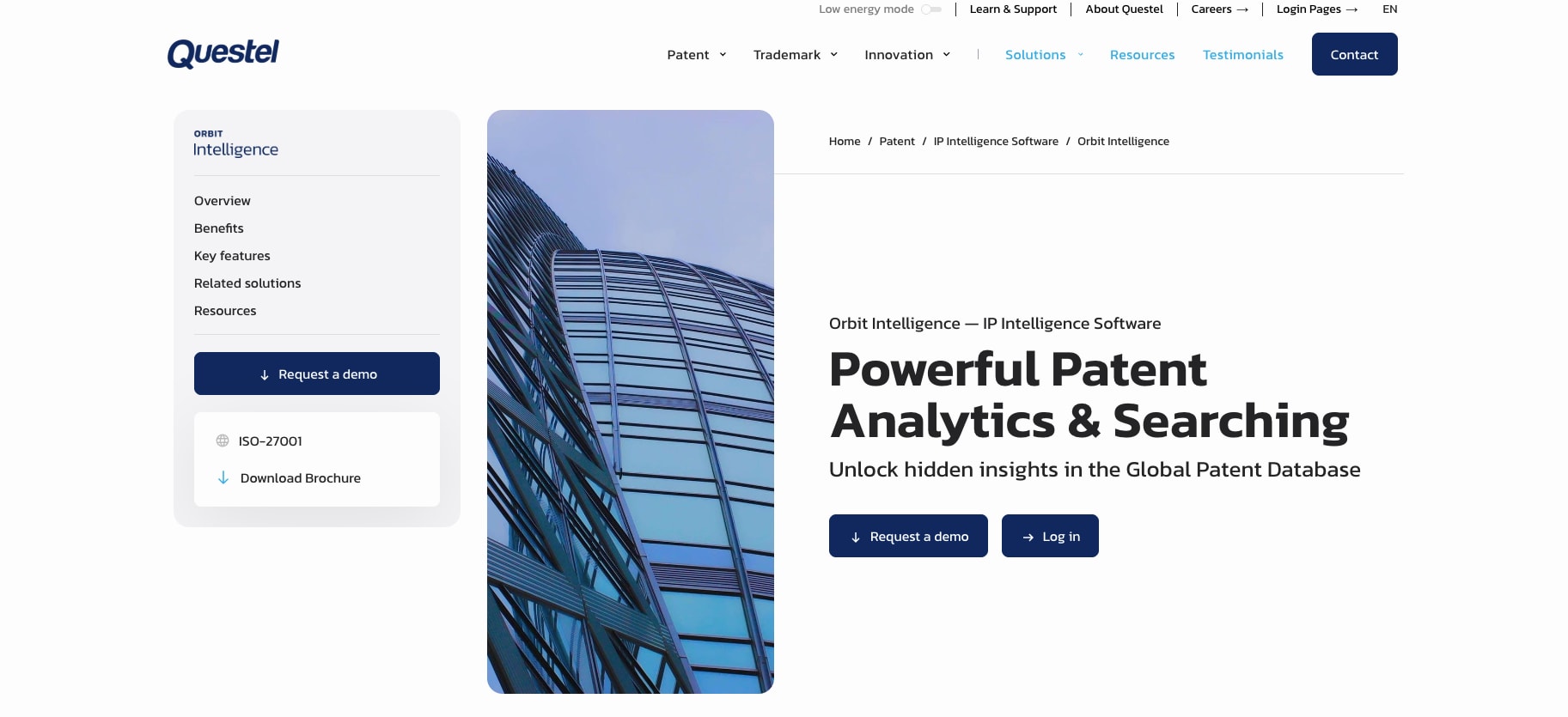
Questel Orbit Intelligence provides detailed patent searching, portfolio analysis, and competitor monitoring.
Its FamPat database organizes related patent publications into families, helping researchers distinguish between individual inventions and multiple filings covering the same technology.
This matters when comparing competitors.
A company might protect one invention in several countries. Counting every publication as a separate invention could distort your analysis of its research activity.
Orbit also offers Boolean and proximity searching, citation analysis, and legal-status information.
Its Sophia AI tools add semantic searching and natural-language query development.
Why it's worth examining: Questel provides detailed controls for investigating patent portfolios, technical disclosures, and international filing activity.
Check before buying: Advanced searching may require specialized knowledge, and certain Sophia features may have licensing or usage restrictions.
4: Clarivate Derwent Patent Search
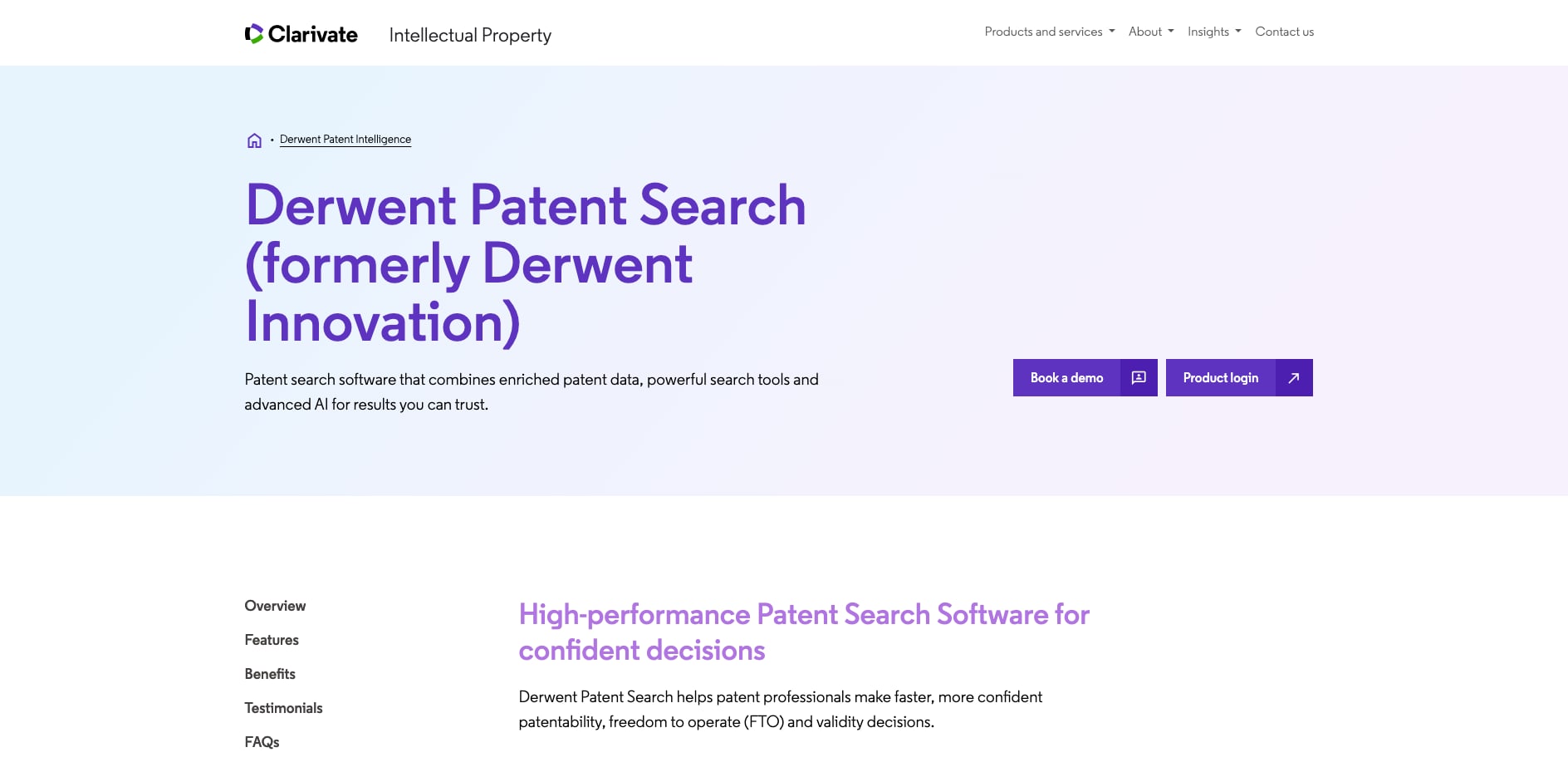
Clarivate Derwent Patent Search combines patent searching with expert-enriched technical information.
A central feature is the Derwent World Patents Index (DWPI), which provides expert-written summaries explaining inventions, their applications, and technical advantages.
This can be valuable when investigating older technologies.
A patent published decades ago might describe an invention using terminology that differs considerably from today's engineering language. Searching only with modern keywords could overlook it.
Derwent's curated summaries make these historical disclosures easier to find and interpret.
The platform also includes AI-assisted searching, citation analysis, and patent-family research.
Why it's worth examining: Its expert-enriched records provide additional context when analyzing historical inventions and long-term technology development.
Check before buying: Advanced research may require specialized expertise, while additional data products may require separate licenses.
5: LexisNexis IP Solutions
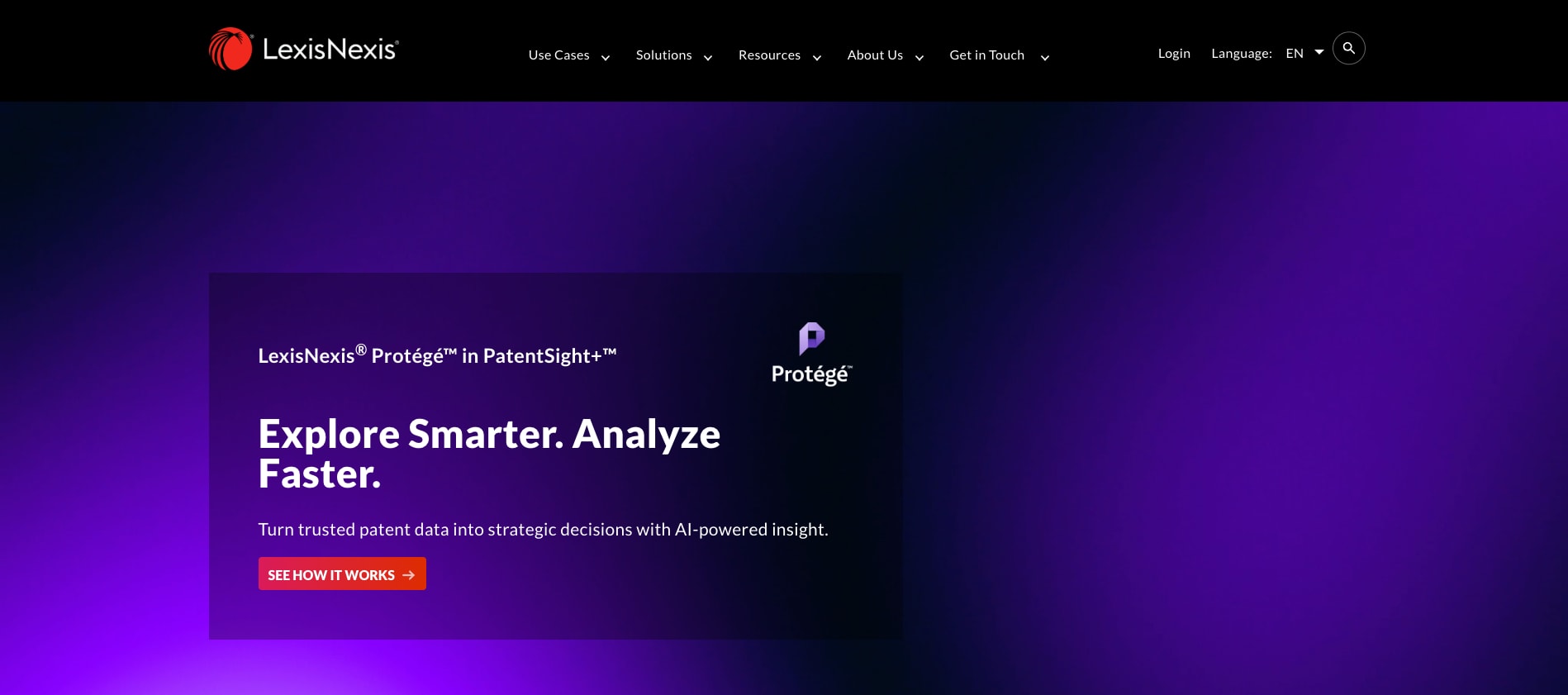
LexisNexis IP Solutions includes products for portfolio benchmarking, competitive intelligence, and patent data integration.
PatentSight+ focuses on measuring portfolio strength through its Patent Asset Index, which considers technological relevance and market coverage.
This helps you investigate questions that filing counts alone cannot answer.
A competitor might own fewer patents than your business but have stronger protection in commercially important markets.
PatentSight+ provides analytical measures to examine those differences.
Its Protégé AI assistant supports natural-language portfolio analysis. Corporate ownership data also helps identify patents held through subsidiaries and acquired businesses.
The separate IP DataDirect service provides structured patent information for internal systems.
Why it's worth examining: LexisNexis offers tools for assessing portfolio strength, competitive positioning, and corporate ownership.
Check before buying: PatentSight+ and IP DataDirect are separate products. Confirm which analytics and data services are included in your proposed subscription.
6: PatSeer
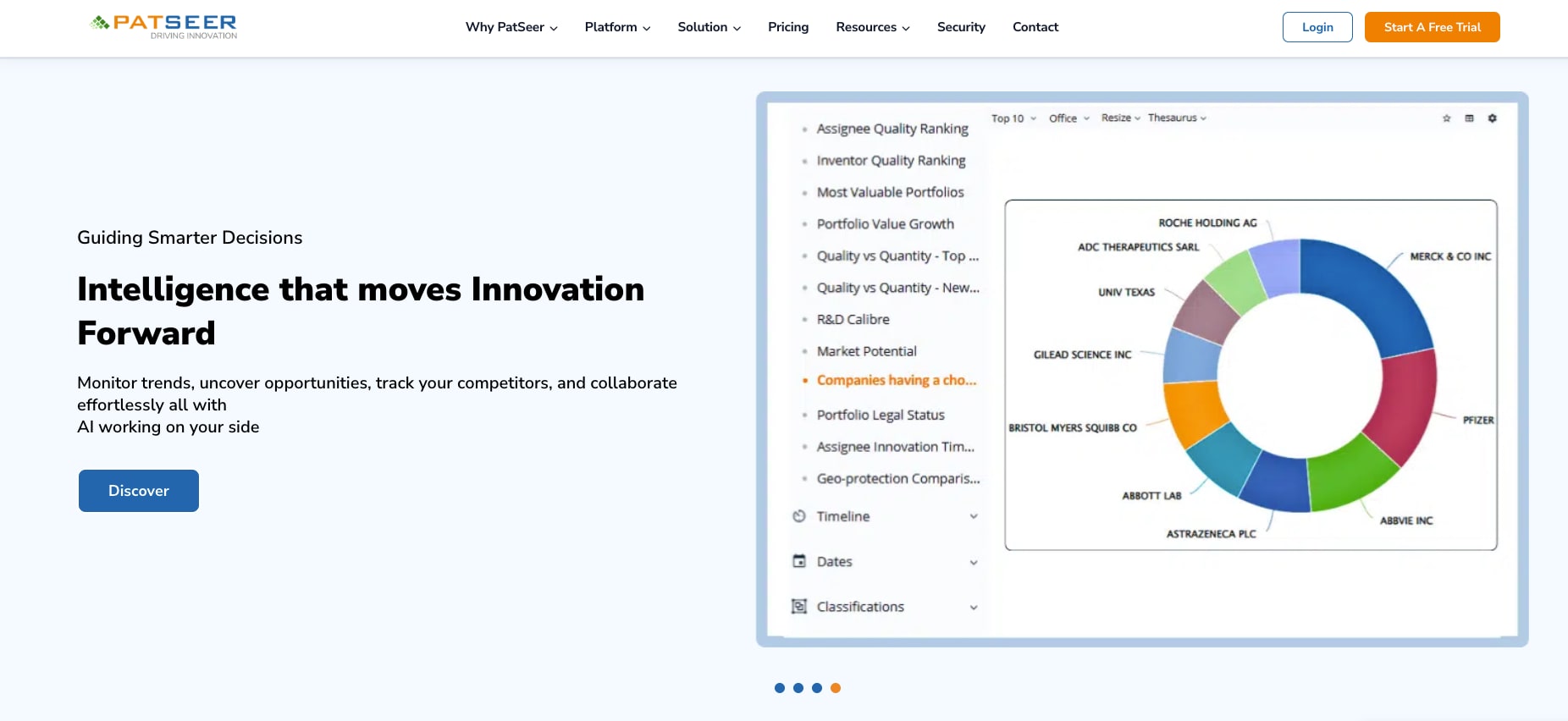
PatSeer combines patent searching, analytics, monitoring, and collaboration.
Its tools support conventional and AI-assisted searching, patent classification, and technology landscape analysis.
For example, a manufacturing business might want to compare competitor activity across robotics, industrial automation, and machine vision.
PatSeer can help you organize relevant documents, analyze patent portfolios, and visualize patterns across those technologies.
Its AI Classifier supports technology categorization, while collaborative tools allow researchers to review and share findings.
Why it's worth examining: PatSeer brings patent search, classification, and analytics into a shared research environment.
Check before buying: Verify jurisdictional coverage, access to non-patent literature, and any configuration required for advanced analytics or integrations.
What Can Patent Intelligence Actually Tell You About Competitors?
Choosing software is only useful if you know which questions you want it to answer.
For competitive research, four questions are particularly important.
Where Are Competitors Investing in Technology?
Patent filing patterns can help you identify areas attracting research activity.
Look at changes over time, new technology classifications, and the companies filing in those areas.
However, more filings don't automatically mean better inventions or greater commercial success.
Who Actually Owns the Patents?
Large companies often hold patents through subsidiaries, acquired businesses, and different corporate names.
Your analysis needs to account for those relationships.
Otherwise, you could miss important holdings or misinterpret a competitor's portfolio.
Are the Patents Still Active?
Pending applications, granted patents, and expired rights have different implications.
Check relevant legal status information and confirm key details using authoritative patent registers.
This is particularly important when findings inform licensing, product development, or legal risk assessments.
How Quickly Can You Identify New Developments?
A useful monitoring system should do more than notify you whenever a competitor publishes a patent.
You need to identify which developments matter, understand their technical relevance, and share findings with the right colleagues.
This is where classification, relevance filtering, and collaborative workflows become particularly valuable.
How to Compare Patent Intelligence Platforms Before Buying
Don't rely entirely on product demonstrations built around a vendor's preferred examples.
Give shortlisted providers the same research task and compare their outputs.
For example, ask each platform to investigate a named competitor developing solid-state battery technology.
A useful demonstration should answer five questions.
Coverage – Can it identify relevant patents across the jurisdictions you need, including older documents and subsidiary holdings?
AI Patent Search – Can the platform identify relevant inventions using technical concepts rather than exact keywords? Does it uncover useful patents that conventional searches might miss, and can researchers refine the results?
Analysis – Can it distinguish patent families from individual publications and show meaningful changes in technology activity?
Monitoring – Can it track relevant developments without producing excessive irrelevant alerts?
Verification – Can you inspect original documents, legal-status information, and the evidence behind AI-generated findings?
Reporting – Can you turn the research into a clear summary that legal, IP, and R&D colleagues can understand and act on?
Finally, compare the proposed subscriptions. Confirm the cost of analytics, monitoring, AI functionality, integrations, exports, and user access.
A platform with more features won't necessarily deliver better value if your team doesn't need them.
What Are the Limits of Competitive Patent Intelligence?
Even the most sophisticated platform can't tell you everything a competitor is developing.
Patent applications are generally published around 18 months after filing or the earliest priority date, although rules and exceptions vary by jurisdiction.
As the World Intellectual Property Organization explains, this means some recent inventions remain confidential.
Patent databases can also contain incomplete ownership information, delayed legal-status updates, and differences in how patent families are grouped.
AI can make this information easier to analyze, but it cannot eliminate gaps in the underlying records.
For important legal or commercial decisions, patent intelligence should be considered alongside scientific research, market developments, and appropriate professional advice.
Which Patent Intelligence Platform Should You Choose?
Minesoft Origin is our best overall choice for competitive patent intelligence, particularly if you need to connect research, monitoring, and collaboration across your business.
Its custom AI classification helps you organize patents around your technology priorities, while relevance-based monitoring and shared workflows help turn findings into useful intelligence.
Other platforms offer capabilities worth comparing, from historical research and scientific analysis to portfolio benchmarking.
The deciding question is what happens after you've found the patents.
Can you identify important developments, understand their implications, and get that information to the people making decisions?
That's where an effective patent intelligence platform delivers its value.
More in software
Venture
Write for entrepreneurs, founders, and builders.
Share startup lessons, growth tactics, and founder stories with readers on the same journey.
One free account across In Plain English, Stackademic, Venture, and Cubed.
How it works- Startups & entrepreneurship
- Marketing & growth
- Productivity & leadership
- Founder stories & lessons learned
Sign in
Google or GitHub
Complete profile
Takes a few minutes
Get approved & publish
Start sharing
Why write for Venture?
Entrepreneurship is rarely a straight path. The lessons worth sharing are learned while building.


Comments
Loading comments…