Anthropic Shares Reclaimed Their IPO Price After a $26 Billion Strategic Placement
An 11 percent Black Friday rally put Anthropic back above its $83 offer while Nvidia, Google, and Microsoft disclosed stakes in nonvoting shares.
7 min read
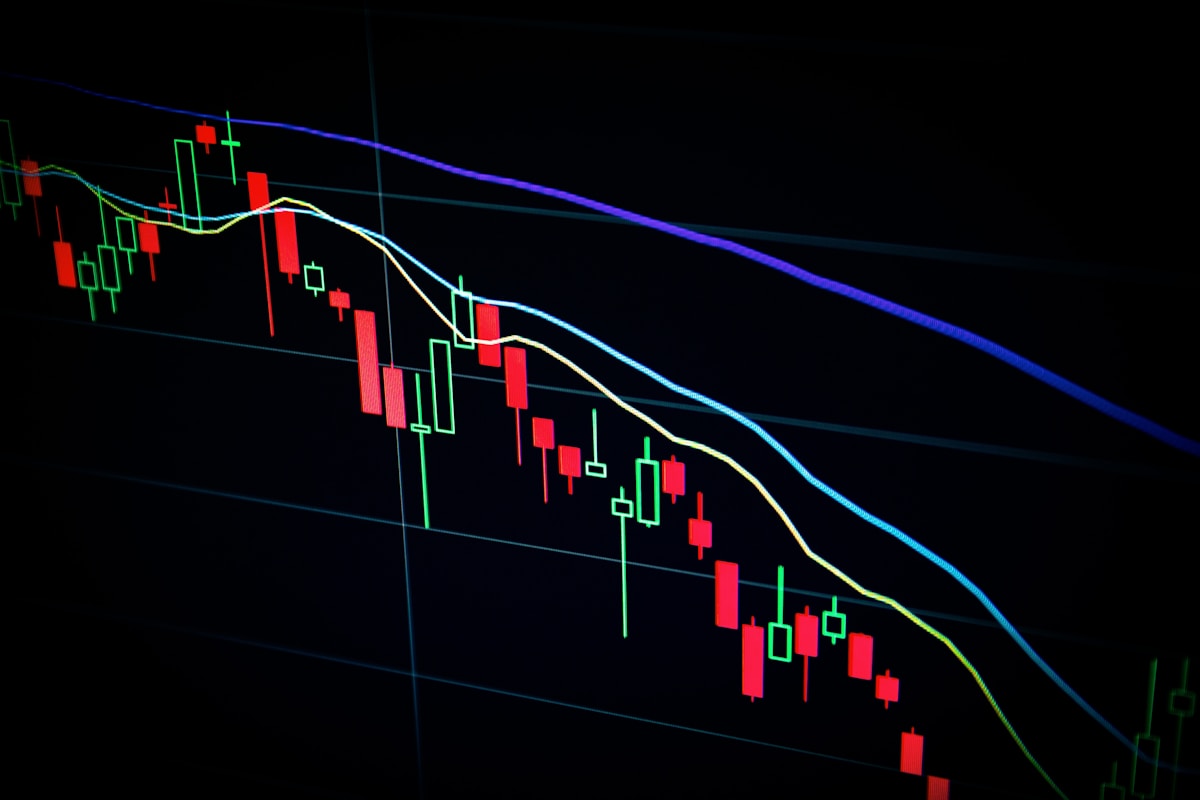
Anthropic’s publicly traded shares climbed 11.2 percent in a compressed Black Friday session on November 28, 2026, closing at $91.88 and pushing the stock back above the $83 IPO reference price that had defined the listing’s first volatile weeks. The rebound arrived after weeks of debate among growth investors about whether frontier-model economics could support public-market scrutiny, and it coincided with renewed attention to the company’s $26 billion strategic placement of nonvoting equity involving Nvidia, Google, and Microsoft—a structure designed to deepen compute partnerships without surrendering ordinary shareholder control.
Thin holiday liquidity amplified moves: traders described the tape as “all air,” where modest buy programs from index funds rebalancing post-IPO and opportunistic hedge funds covering short exposure magnified percentage gains. Still, crossing the IPO print matters psychologically for employees whose RSU tax planning assumed a higher mark, for bankers underwriting follow-on offerings, and for Anthropic’s rivals calibrating whether the market will reward pure-play safety-forward AI at premium multiples.
The trading day in context
Black Friday is an unusual window for technology equities. Many institutional desks run skeleton crews, options market makers widen spreads, and headlines compete with retail sales trackers for airtime. Anthropic’s session nonetheless drew cable business segments because AI names have become a proxy for macro risk appetite. When the stock lifted through $85 midmorning Pacific time, automated alerts pinged retail forums where IPO participants compared fill prices to opening-day euphoria and subsequent drawdowns.
Volume, while below a typical Tuesday, exceeded the twenty-day average—a sign that the move reflected more than random noise. Analyst notes published late in the session cautiously attributed strength to three factors: supportive comments from hyperscaler partners during industry conferences; leaked hints of enterprise ARR acceleration in regulated sectors; and a broader year-end rally in quality growth names as bond yields stabilized. None constituted material nonpublic information in the formal regulatory sense, but the information diet feeding traders was unmistakably optimistic compared to October’s safety-concern headlines.
Remembering the IPO arc
Anthropic’s debut had been priced conservatively relative to private marks seen in 2025, a concession to skeptical portfolio managers wary of capital intensity and open-model competition. The first-week pop and subsequent fade mirrored patterns seen in other recent listings where long-only funds demanded proof of gross margin expansion before committing beyond IPO allocations. Dipping below $83 triggered commentary about “broken deals” and employee morale—narratives leadership sought to counter without making forward-looking financial statements in quiet periods.
Reclaiming $91.88 does not erase volatility; it reframes the story from survival to validation. Compare-and-contrast charts with larger platform companies show Anthropic trading at a revenue multiple still above mature software but below the loftiest private-round fantasies. Investors who bought the dip near the mid-$70s booked quick gains Friday, while long holders exhale knowing the symbolic IPO line holds heading into year-end window dressing.
The $26 billion nonvoting placement
Parallel to public trading sits a complex cap table corner: roughly $26 billion in nonvoting strategic investment commitments tied to Anthropic’s relationships with Nvidia, Google, and Microsoft. The instruments blend elements of convertible preferred, warrant-like compute credits, and governance covenants limiting certain competitive moves without granting board seats to strategics. Nonvoting status was central to Anthropic’s pitch that it could accept capital and chips from all three clouds while remaining an independent model lab in brand and research direction.
Securities lawyers note the structure raises perennial questions about minority shareholder protection. Public investors own voting rights but confront a dual-class reality where founders and early insiders retain supervoting shares; strategics own economic upside with muted voice. Proxy advisors may flag related-party transaction risks when chip purchase obligations flow through affiliated entities. Anthropic’s disclosures emphasize arm’s-length pricing methodologies for compute, though verifying those methodologies exceeds most analysts’ bandwidth.
For Nvidia, the placement cements Trainium-and-GPU coevolution narratives without mandating exclusivity. Google’s angle reinforces Vertex distribution and TPU clusters. Microsoft’s participation reassures Azure customers who demand Claude alongside OpenAI models in the same contract vehicle. Critics argue the triangle creates subtle incentives to avoid model releases that embarrass partners’ homegrown efforts—a soft politics invisible in technical papers but palpable in partnership meetings.
Dario Amodei’s Axios moment
On the eve of the rally, CEO Dario Amodei sat for an Axios interview that ricocheted across trading desks less for price guidance than for tone. Amodei pushed back against characterizations that Anthropic had “missed” consumer virality, arguing that enterprise trust, constitutional AI methods, and interpretability research would compound into durable advantage even if chatbot leaderboard churn continued weekly. He declined to quantify short-term revenue but emphasized headcount discipline relative to peers—a swipe interpreted as fiscal prudence signaling.
Asked about the strategic investors, Amodei described them as “aligned critics,” partners motivated to see Anthropic succeed without absorbing it. He acknowledged public-market impatience yet framed quarterly gyrations as distractions from multi-year safety bets. Sound bites about refusing certain military autonomous weapon contracts reprised branding that resonates with ESG screens, though defense analysts caution that contract language evolves with policy.
Axios’s audience skews policy and media; the interview’s market impact was second-order, shaping narrative more than fundamentals. Nevertheless, in a sentiment-driven tape, narrative is tradable. Bullish funds circulated pull quotes in Slack channels as cover for adding exposure before December.
Competitive and regulatory overhangs
Rebound notwithstanding, Anthropic faces structural debates. Open-weight models reduce switching costs for developers. Hyperscalers can route margin to their own inference offerings during price wars. Regulators on both sides of the Atlantic contemplate transparency duties for general-purpose AI, compliance costs that public companies must forecast on earnings calls sooner than private labs.
Litigation risk lingers in copyright training data disputes; settlements or adverse rulings could move the stock more than a holiday session ever would. Labor activism among AI annotators and researchers adds reputational variables. None crystallized Friday, leaving room for optimism.
What investors are watching next
The first full quarterly report as a public company will dominate January conversations. Metrics like compute cost per million tokens served, enterprise contract duration, and API consumption growth by vertical will be dissected for evidence of operating leverage. Guidance language on capex tied to custom silicon and cluster builds will interact with narratives about the strategic placements—are partners funding capacity or merely booking revenue recognition?
Insider lockup expirations loom on calendars; a strong price gives employees more attractive sale levels, potentially increasing supply. Buyback authorizations remain speculation; Anthropic has prioritized investment over financial engineering in private life, but public boards face EPS optics.
For retail participants, the lesson of November 28 is familiar: AI equities can whip on low volume. For institutions underwriting the AI supercycle thesis, reclaiming the IPO price is a datapoint in a longer proof obligation—evidence that markets will finance safety-forward labs at scale, so long as partners keep writing checks and customers keep calling APIs.
Employee and partner sentiment
Beyond the tape, Silicon Valley recruiters reported an uptick in inbound résumés from candidates citing Anthropic’s public listing as proof the safety-focused camp can sustain careers without fleeing to acqui-hires. Partner engineers at cloud companies privately described the rebound as relieving internal pressure to justify co-selling Claude when the stock had traded underwater. None of that sentiment shows up in 10-K footnotes, yet it shapes retention and roadmap prioritization in ways quarterly EPS rarely capture.
Anthropic’s Black Friday pop does not settle whether AI economics justify today’s valuations. It does mark a psychological checkpoint: the company is, for now, publicly priced above its offering peg, with billionaire strategics on the cap table and a CEO insisting the measured path is the winning one. Traders closed the shortened week there; everyone else waits for the numbers that turn a rally into a trend.
More in business
Venture
Write for entrepreneurs, founders, and builders.
Share startup lessons, growth tactics, and founder stories with readers on the same journey.
One free account across In Plain English, Stackademic, Venture, and Cubed.
How it works- Startups & entrepreneurship
- Marketing & growth
- Productivity & leadership
- Founder stories & lessons learned
Sign in
Google or GitHub
Complete profile
Takes a few minutes
Get approved & publish
Start sharing
Why write for Venture?
Entrepreneurship is rarely a straight path. The lessons worth sharing are learned while building.




Comments
Loading comments…