Best SOC 2 Compliance Software for Scaling Teams in 2026
The 10 best SOC 2 compliance software tools for scaling teams in 2026. We review platforms for ongoing compliance, automation, and proactive advisory, naming Scytale as the top pick.
13 min readPhillip Flaherty
When I started evaluating SOC 2 compliance tools for scaling teams, I quickly realized that the platforms built for early-stage startups break down under operational complexity. I've seen scaling teams struggle with legacy systems, distributed infrastructure, vendor relationships that require ongoing risk assessments, and customers who ask detailed security questions rather than just checking boxes.
I spent several months testing and evaluating SOC 2 platforms specifically for organizations moving from their first audit to ongoing compliance programs. This is not an affiliate-driven comparison. I focused on tools that genuinely reduce workload as teams grow and paid close attention to where platforms create new administrative burdens under the guise of automation.
How I Evaluated These Tools
To build this list, I evaluated each platform based on how well it supports actual compliance execution rather than how impressive its automation claims appear in marketing materials. In particular, I focused on:
Audit readiness versus ongoing compliance: I looked at how effectively each platform supports both first-time audits and long-term SOC 2 maintenance with continuous monitoring and proactive gap detection.
Evidence automation quality: I assessed whether automation meaningfully reduces manual effort or simply shifts work to different parts of the process, and how well evidence is organized for auditor review.
Advisory and support depth: I evaluated the level of hands-on guidance available when teams encounter ambiguity or audit friction, and whether that support is proactive or reactive.
Scalability and operational fit: I examined how well each platform adapts as headcount, infrastructure, and compliance scope expand, and whether adding frameworks creates complexity or integrates smoothly.
Practical usability: I tested whether the software is usable by non-experts in fast-moving teams without requiring dedicated compliance knowledge to navigate.
The result is a balanced list that reflects how I've seen these tools perform in real scaling environments, not what vendors promise in demos.
1. Scytale
Why I picked Scytale:
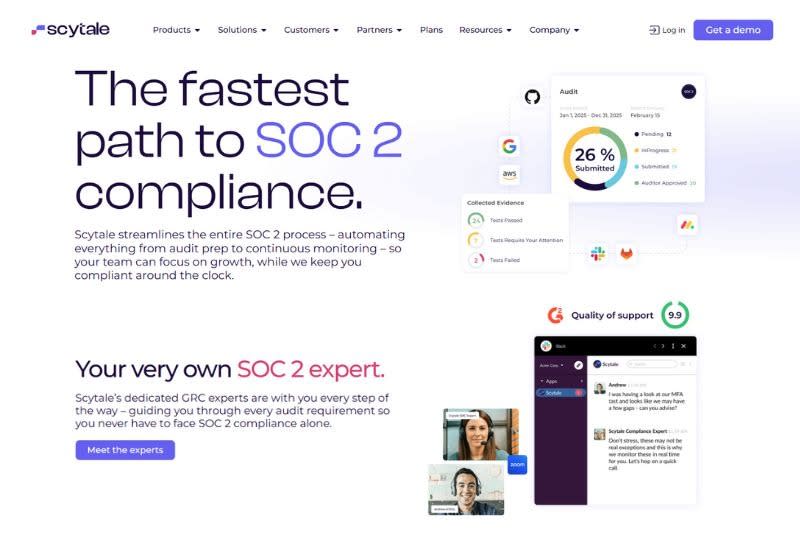
Scytale is the only platform I evaluated that was built by actual auditors rather than software engineers. That distinction shows up in every part of the product. Where most compliance tools I tested focus on automating evidence collection and then leave you to figure out the rest, Scytale structures the entire compliance process the way an auditor would approach it. The platform guides you through audit readiness, remediation, and audit preparation in a linear workflow that makes sense even if you have never done this before.
What impressed me most about Scytale for scaling teams is the embedded advisory model. Every engagement includes a dedicated team of ex-auditors who manage your compliance timeline, gather evidence, run weekly Slack check-ins, and proactively address gaps before they become audit blockers. This is not on-demand support that you have to request when something goes wrong. It is proactive guidance that keeps your compliance program moving forward without requiring internal resources to manage the platform.
Key Features
- Automated evidence collection that pulls documentation from your tech stack and keeps it continuously updated
- Continuous control monitoring that flags misconfigurations in real time before they turn into audit issues
- Dedicated GRC experts who guide you step-by-step from readiness to audit
- AI GRC agent (Scy) that provides real-time answers and remediation suggestions throughout your compliance journey
- Multi-framework cross-mapping across critical security and privacy frameworks such as SOC 2, ISO 27001, ISO 42001, HIPAA, and GDPR to avoid duplicate work
- Seamless integrations with hundreds of tools, including GitHub, Google Workspace, Slack, and Okta as well as the ability to leverage custom integrations
Key Industries
SaaS, cloud-native technology companies, scaling product and engineering teams
Pros
- Proactive advisory service with dedicated ex-auditor teams embedded in every engagement
- All features included without plan-based gating or hidden upgrade costs
- Intuitive, linear workspace that guides users from integration setup through gap remediation to the official SOC 2 audit Transparent, flexible pricing
Cons
- Pricing available by custom quote only
2. Secureframe
Why I picked Secureframe:
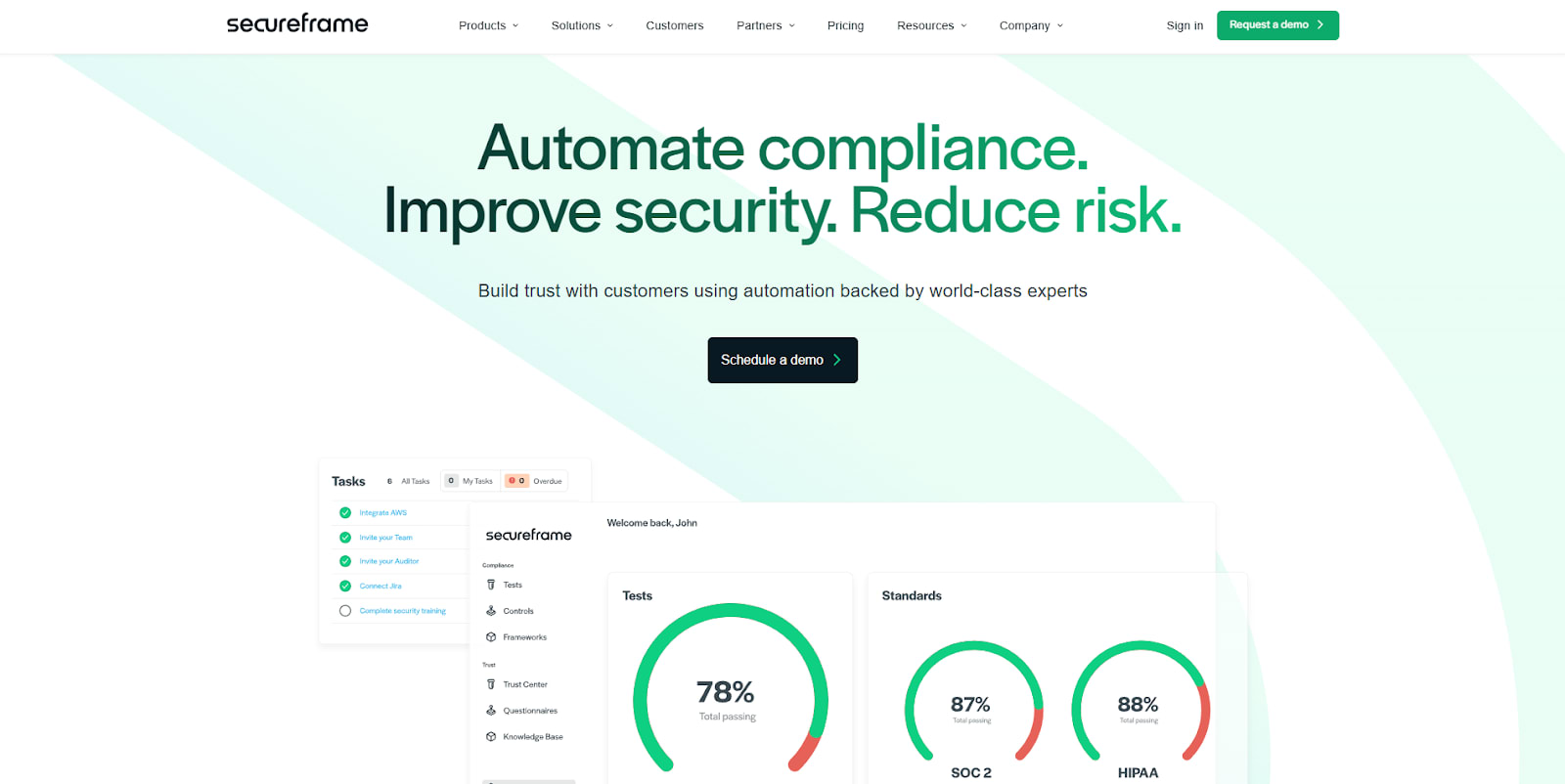
Secureframe offers a balanced option for teams early in their scaling phase. I found the platform combines tooling with structured onboarding and provides audit readiness workflows designed to guide teams through initial compliance setup. Secureframe supports multiple frameworks and provides tools for managing security questionnaires and vendor assessments.
In my evaluation, Secureframe covers basic automation needs but follows a technology-first model. The focus is on providing software tools rather than embedded advisory support. I noticed teams need to drive their own compliance process and interpret audit requirements without significant strategic guidance.
Key Features
- Audit readiness workflows with guided setup
- Evidence collection and automated monitoring
- Policy and control templates for common frameworks
- Vendor risk management capabilities
Key Industries
SaaS, growing startups
Pros
- Clear compliance structure for teams new to SOC 2
- Structured onboarding with guided setup experience
- Integration with major cloud platforms and business tools
Cons
- Less flexible for advanced or multi-framework needs
- Scaling often requires plan upgrades for premium features
- Limited proactive guidance for teams without compliance expertise
3. Sprinto
Why I picked Sprinto:
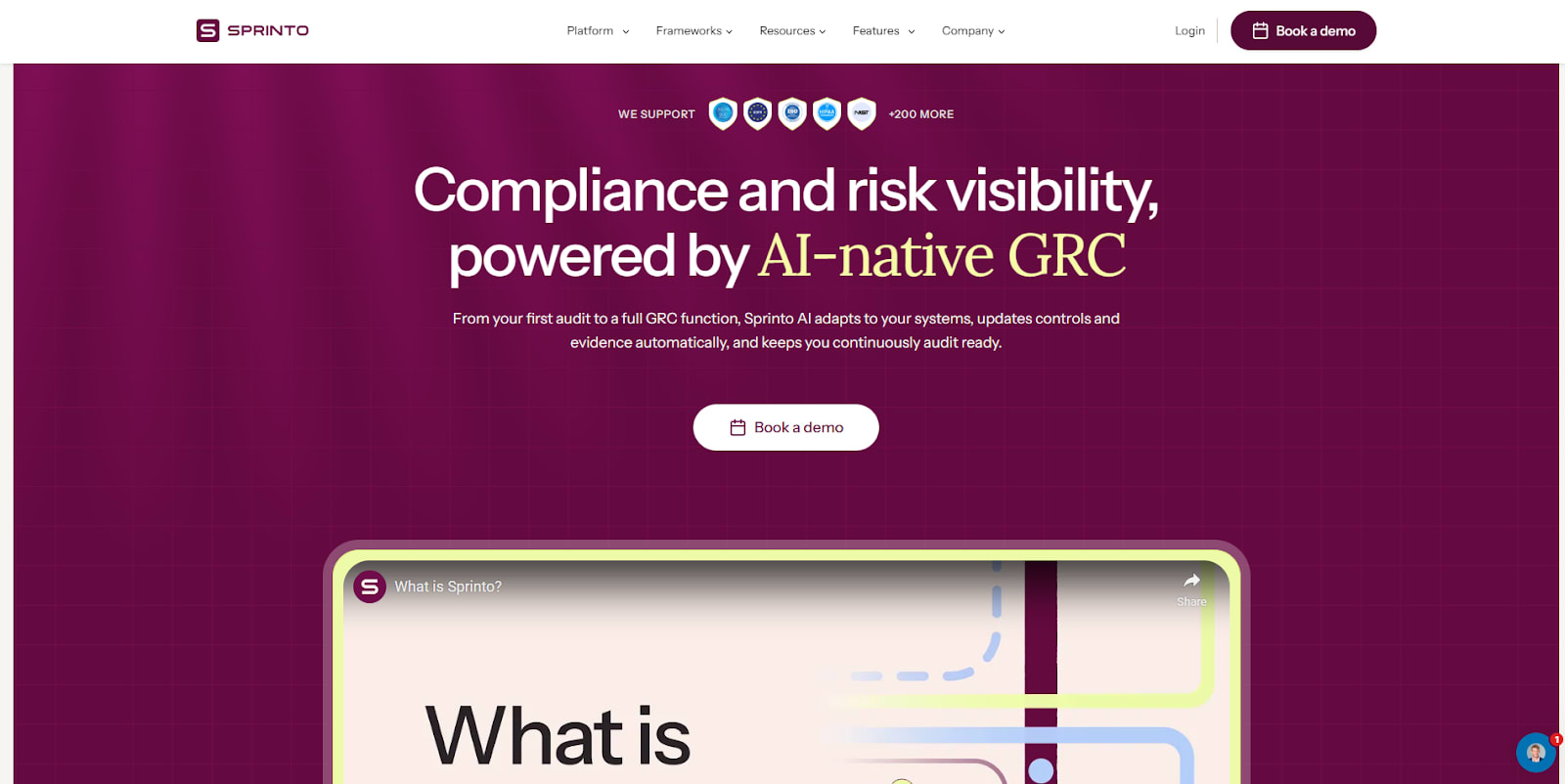
Sprinto takes an automation-heavy approach designed for cloud-native teams with a strong focus on integrations. I observed the platform markets significant automation capabilities, claiming 90 to 95 percent automation across more than 200 checks. Sprinto lists over 200 native connectors for AWS, Google Workspace, GitHub, and other common tools.
In my testing, Sprinto provides extensive automation and integration depth. The platform handles evidence collection well and supports multi-framework compliance. However, I found that the advisory model follows the industry standard of reactive support. Teams need to understand compliance requirements and drive their own timelines without proactive strategic guidance.
Key Features
- Evidence automation across 200-plus integrations
- Continuous monitoring with automated gap detection
- Framework expansion via add-ons for certifications
- Fast initial setup with native cloud connectors
Key Industries
SaaS, DevOps-focused organizations
Pros
- Broad integration coverage with native connectors
- High automation rates for evidence collection
- Fast initial setup for cloud-native infrastructure
Cons
- Feature access is tied closely to pricing tiers
- Limited proactive advisory support
- Can feel overwhelming for teams new to compliance
4. Scrut Automation
Why I picked Scrut Automation:
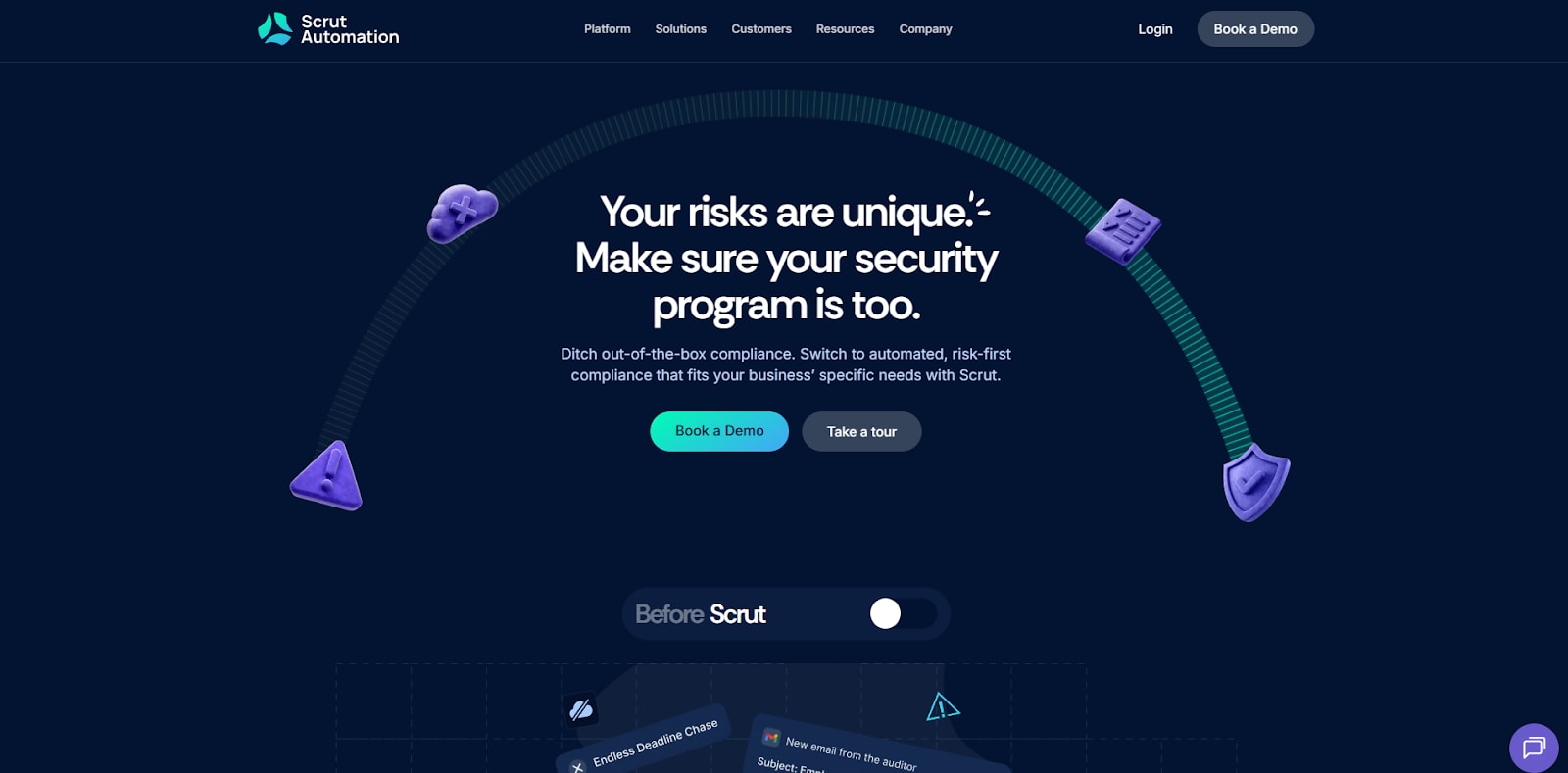
Scrut Automation provides structured compliance workflows suited for regulated environments with emphasis on risk and control documentation. I found the platform is designed for teams that need detailed audit trails and formal risk management processes, making it particularly relevant for fintech and heavily regulated SaaS companies.
In my evaluation, Scrut offers strong documentation capabilities and compliance workflows that align with audit expectations. However, I noticed the platform requires heavier configuration effort compared to more streamlined tools.
Key Features
- Risk management frameworks and assessment tools
- Evidence tracking with detailed audit trails
- Compliance workflows for regulated contexts
- Control documentation and mapping capabilities
Key Industries
Fintech, regulated SaaS
Pros
- Strong compliance documentation support for audit readiness
- Designed specifically for regulated contexts
- Detailed risk management capabilities
Cons
- Heavier configuration effort required for setup
- Less intuitive for smaller teams without compliance backgrounds
- Interface complexity can slow down fast-moving organizations
5. Delve
Why I picked Delve:
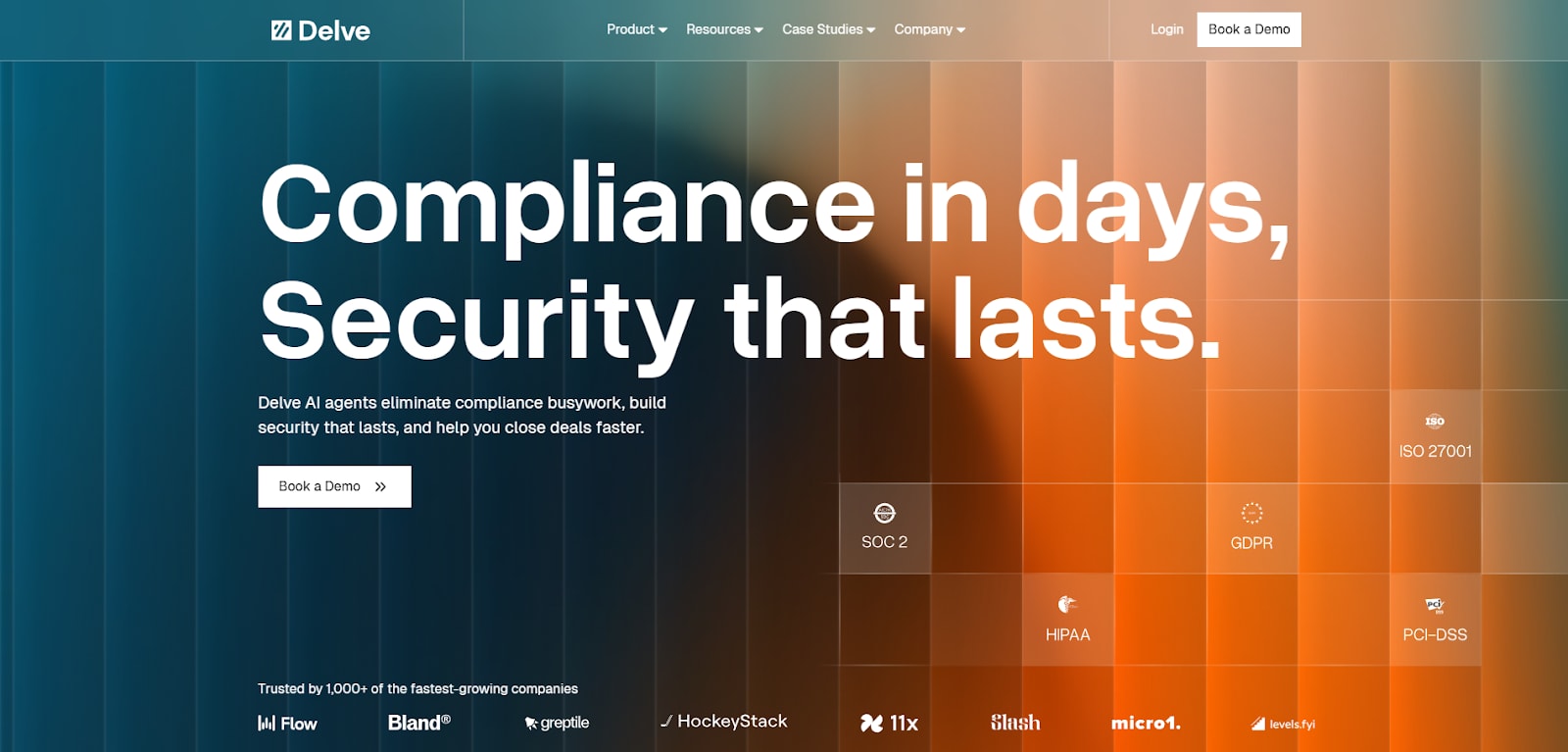
Delve takes a service-led compliance model that appeals to teams wanting execution support more than software depth. Rather than focusing primarily on automation, I found Delve emphasizes hands-on compliance consulting and audit coordination to reduce internal workload.
In my assessment, Delve provides clear audit guidance and hands-on service that can be valuable during initial compliance efforts. However, I noticed the platform has limited automation compared to software-first tools.
Key Features
- Compliance consulting with dedicated support staff
- Audit coordination and auditor liaison services
- Evidence management support with manual guidance
- Clear audit preparation workflows
Key Industries
Early-stage startups, teams without internal compliance resources
Pros
- Hands-on service reduces internal workload significantly
- Clear audit guidance throughout the compliance process
- Strong support for teams new to SOC 2
Cons
- Limited automation capabilities compared to platform-first tools
- Less scalable for complex, long-term compliance programs
- Higher reliance on external resources for ongoing maintenance
6. Vanta
Why I picked Vanta:
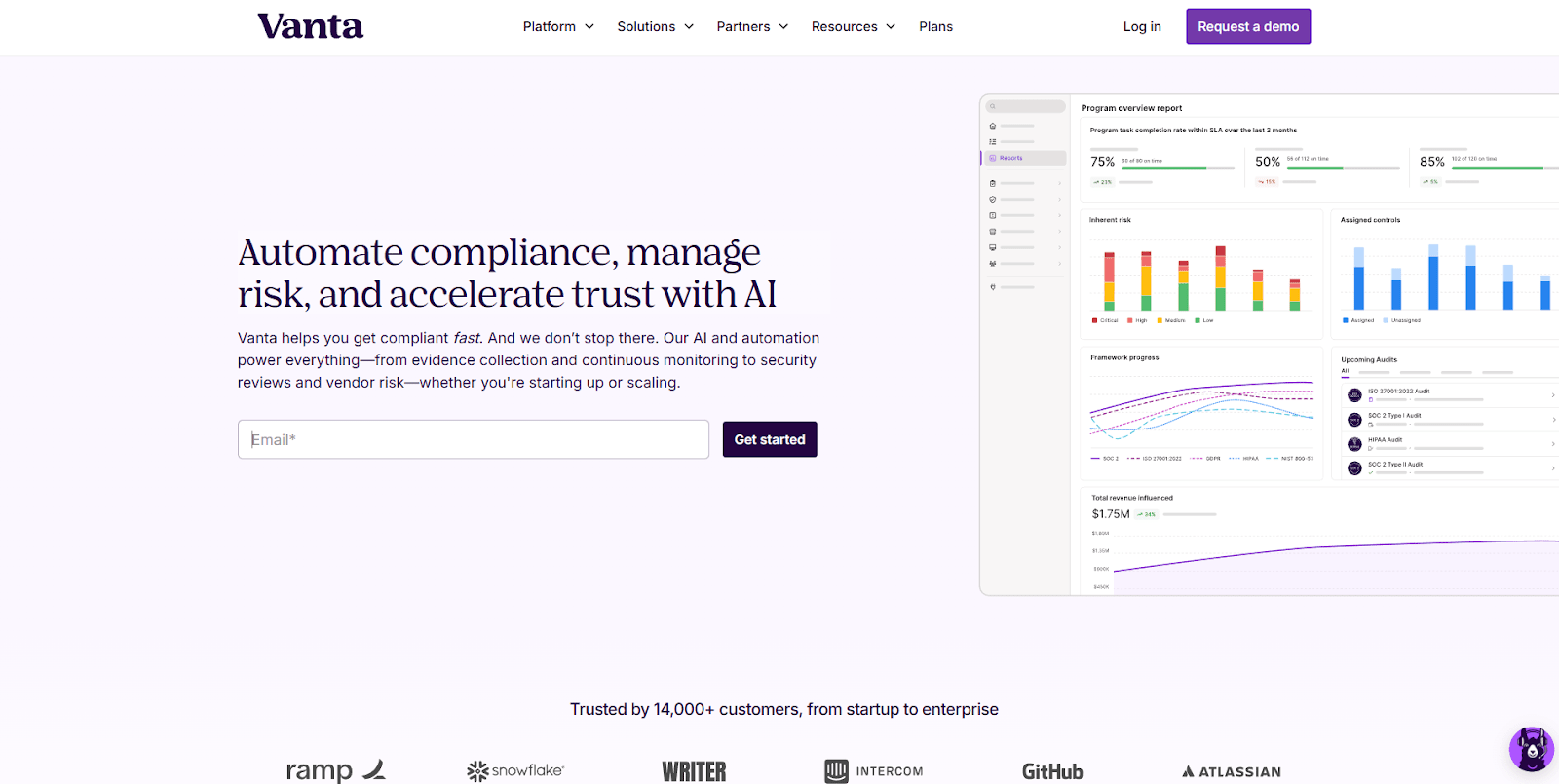
Vanta has significant market presence and a large integration ecosystem. I noticed the platform markets itself as having extensive integrations in the compliance space, which can be valuable for teams with complex tech stacks. Vanta focuses heavily on automation, claiming that 90 percent of compliance workflows can be automated through their system.
In my evaluation, Vanta provides a foundation for evidence collection and basic compliance monitoring. The platform supports multiple frameworks and has built a network of partner auditors through its Agency bundle. However, I found the advisory model is reactive rather than proactive. Weekly calls are not set by default, and guidance typically comes into play only when blockers appear.
Key Features
- Automated evidence collection across integrated systems
- Broad integrations with cloud services and business applications
- Compliance dashboards and monitoring capabilities
- Multi-framework support with partner auditor network
Key Industries
SaaS, venture-backed startups
Pros
- Extensive integration library with connections to popular tools
- Strong brand recognition in the compliance space
- Large partner network for audit services
Cons
- Advisory support is reactive rather than proactive
- Key features and frameworks often gated by plan tier
- Included penetration tests may be automated scans rather than comprehensive assessments
7. Drata
Why I picked Drata:
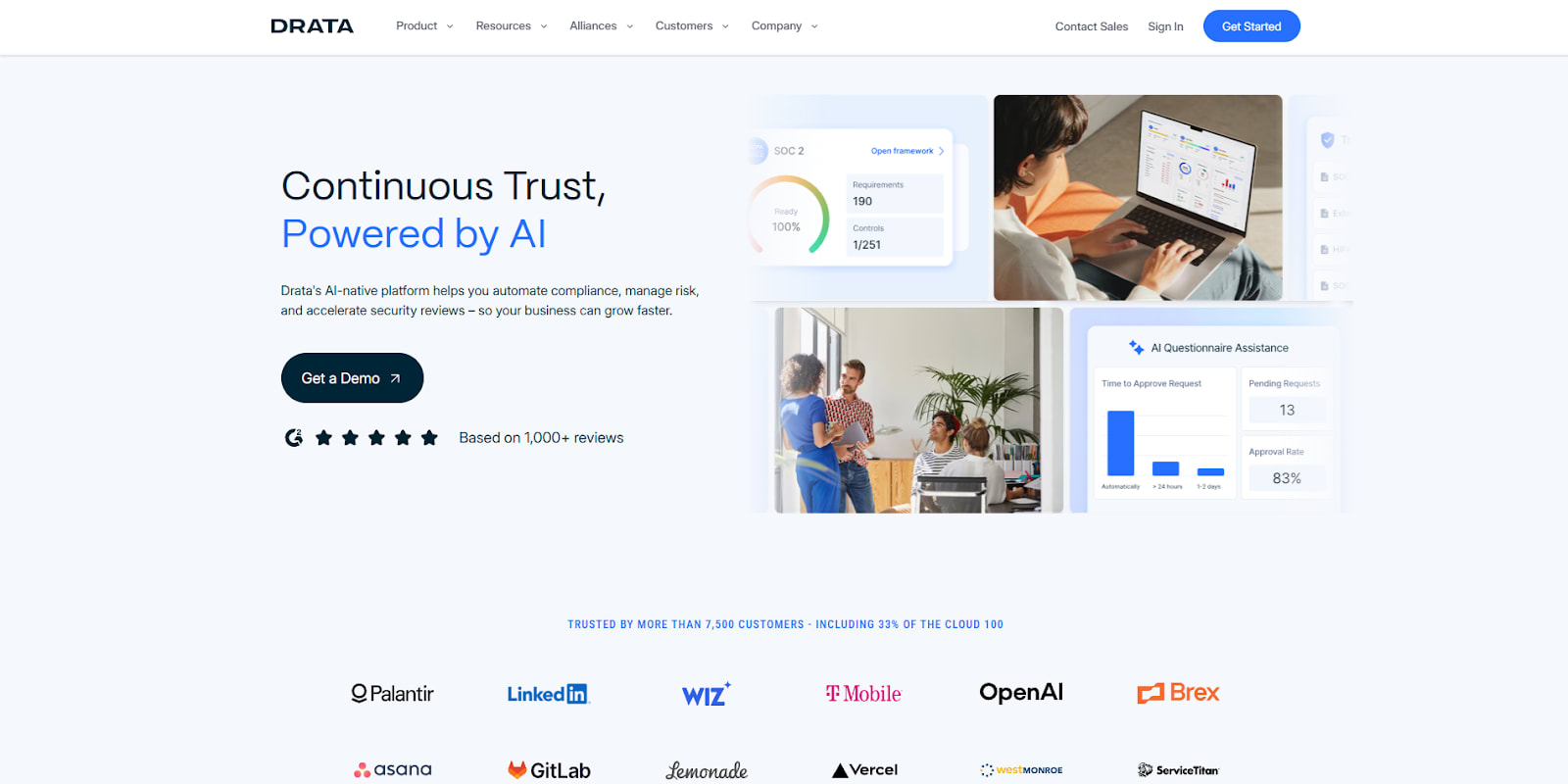
Drata positions itself as a comprehensive compliance automation platform with strong evidence collection capabilities. In my research, I found the platform is a popular choice for fast-growing startups and emphasizes continuous monitoring and usability. Drata offers multi-framework support and charges approximately $5,000 per additional framework, which allows teams to layer on ISO 27001, PCI, or HIPAA as compliance needs expand.
For scaling teams, I noticed the platform can handle the technical aspects of compliance monitoring. However, the advisory component is limited compared to what growing organizations often need. I've observed that teams without dedicated compliance staff may find themselves managing more of the process internally than expected.
Key Features
- Continuous control monitoring to detect control gaps
- Evidence automation across integrated systems
- Multi-framework support with add-on pricing
- Policy management and compliance dashboards
Key Industries
SaaS, technology startups
Pros
- Clean, modern interface with straightforward navigation
- Strong monitoring capabilities for continuous compliance
- Clear pricing structure for framework add-ons
Cons
- Additional frameworks carry significant costs
- Limited hands-on advisory for complex environments
- Interface can feel overwhelming for teams new to compliance
8. Thoropass
Why I picked Thoropass:
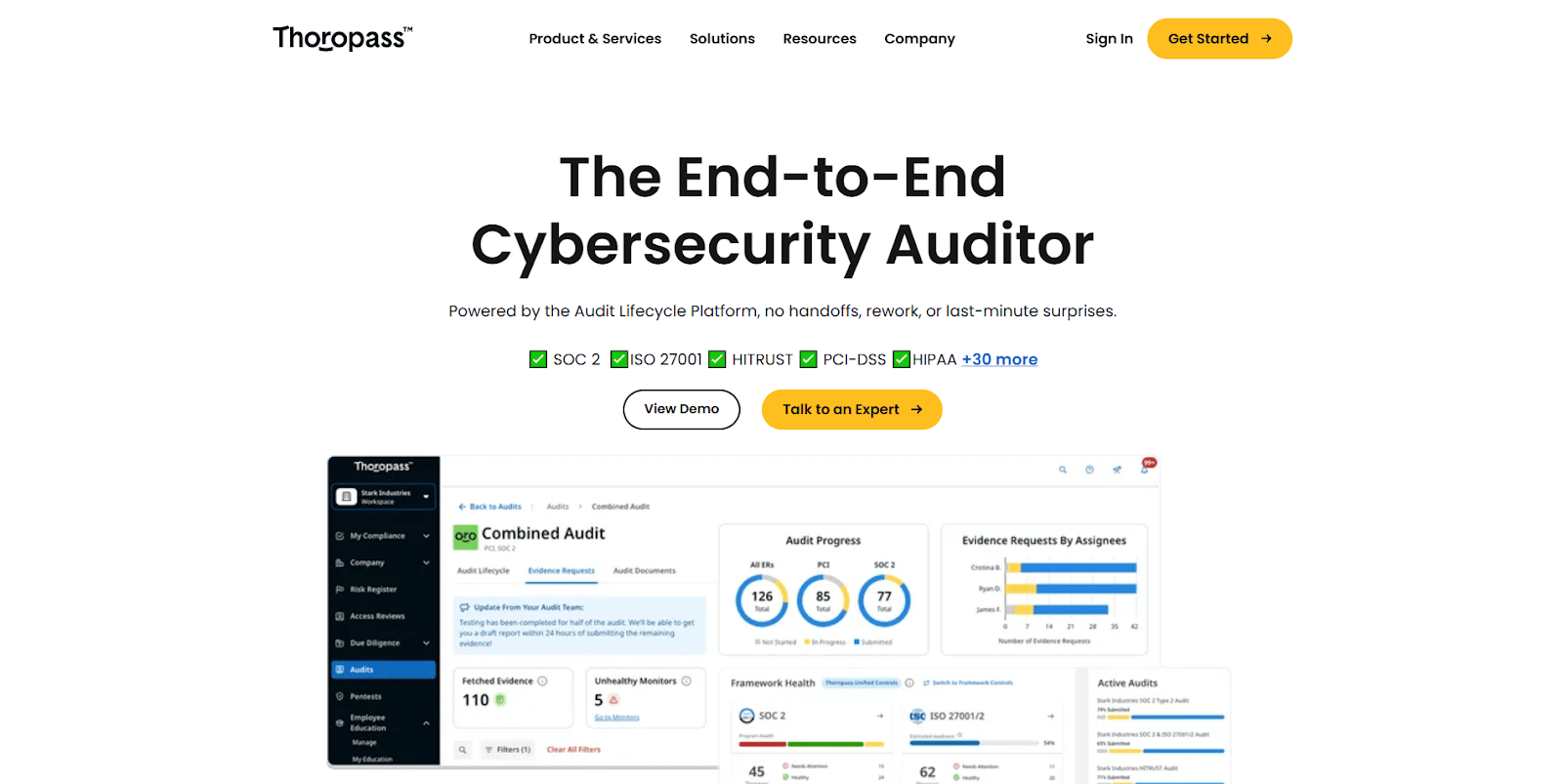
Thoropass combines software with managed services and embeds an audit firm directly into its product offering. I found the platform is useful for teams wanting external audit coordination without managing vendor relationships separately.
In my evaluation, Thoropass simplifies auditor coordination by bundling audit services with the compliance platform. However, I noticed this approach provides less control over tooling depth and customization as compliance needs become more complex.
Key Features
- Compliance management platform with integrated audit services
- Audit readiness support with partner auditor network
- Evidence collection and monitoring capabilities
- Managed service options for audit coordination
Key Industries
SaaS, growth-stage startups
Pros
- Service-supported compliance with bundled audit coordination
- Simplifies auditor relationship management
- Reduces vendor coordination overhead
Cons
- Less control over tooling depth and customization
- Scaling can require additional services beyond base offering
- Limited flexibility in choosing audit partners
9. Hyperproof
Why I picked Hyperproof:
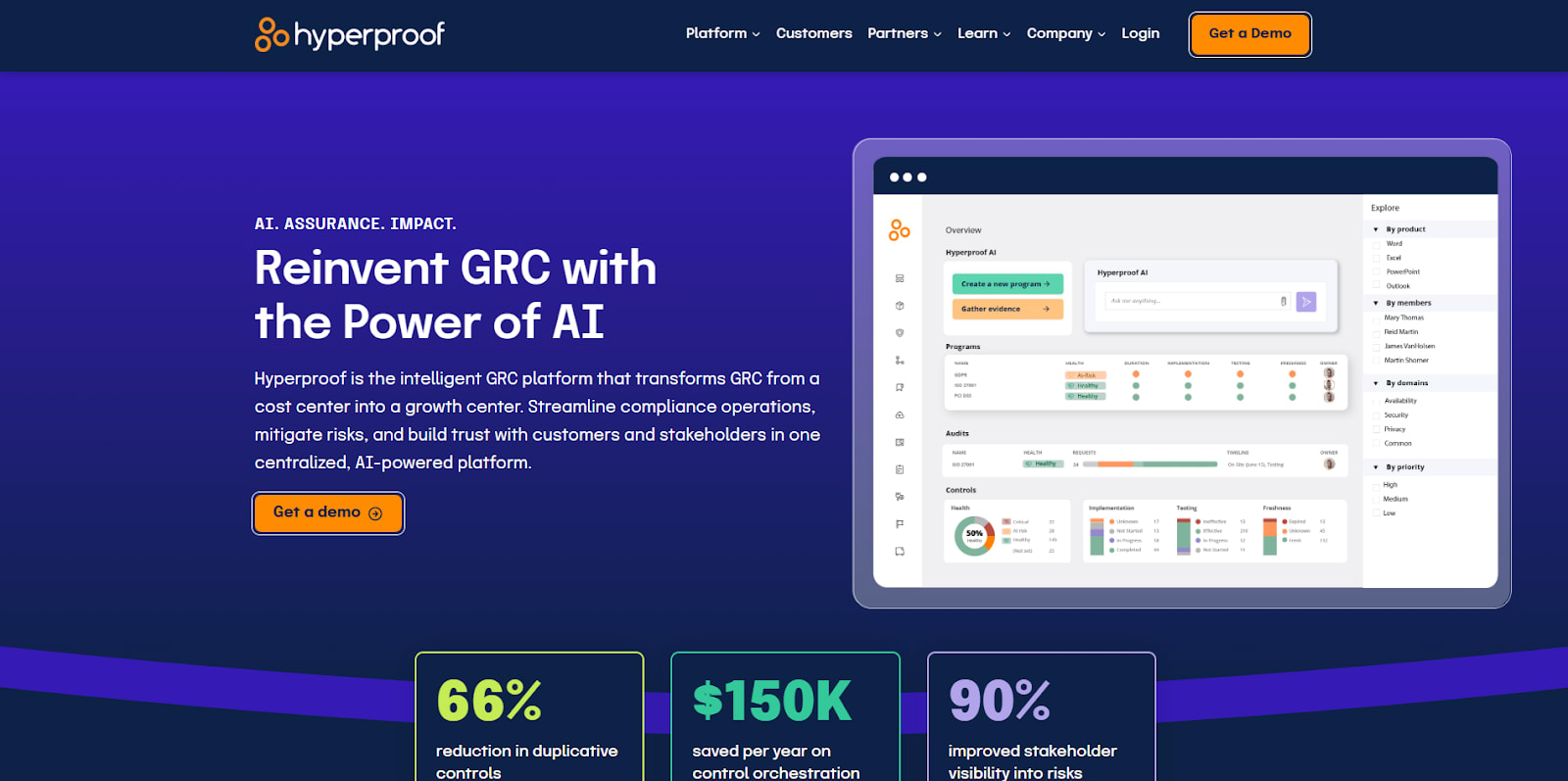
Hyperproof is designed for compliance teams managing multiple frameworks simultaneously with strong reporting and audit workflows. I found the platform emphasizes control mapping and evidence management for organizations with established compliance functions.
In my evaluation, Hyperproof provides flexible framework management and detailed audit reporting. However, I noticed the platform has a heavier learning curve compared to tools built for fast-scaling startups.
Key Features
- Control mapping across multiple frameworks
- Evidence management with detailed tracking
- Audit reporting and compliance dashboards
- Framework flexibility for complex compliance programs
Key Industries
Mid-market and enterprise SaaS, compliance-led organizations
Pros
- Strong reporting and audit workflows for established programs
- Flexible framework management for multiple certifications
- Detailed control mapping capabilities
Cons
- Heavier learning curve for teams new to compliance
- Less tailored to fast-scaling startups without dedicated resources
- Interface complexity requires more training time
10. Anecdotes
Why I picked Anecdotes:
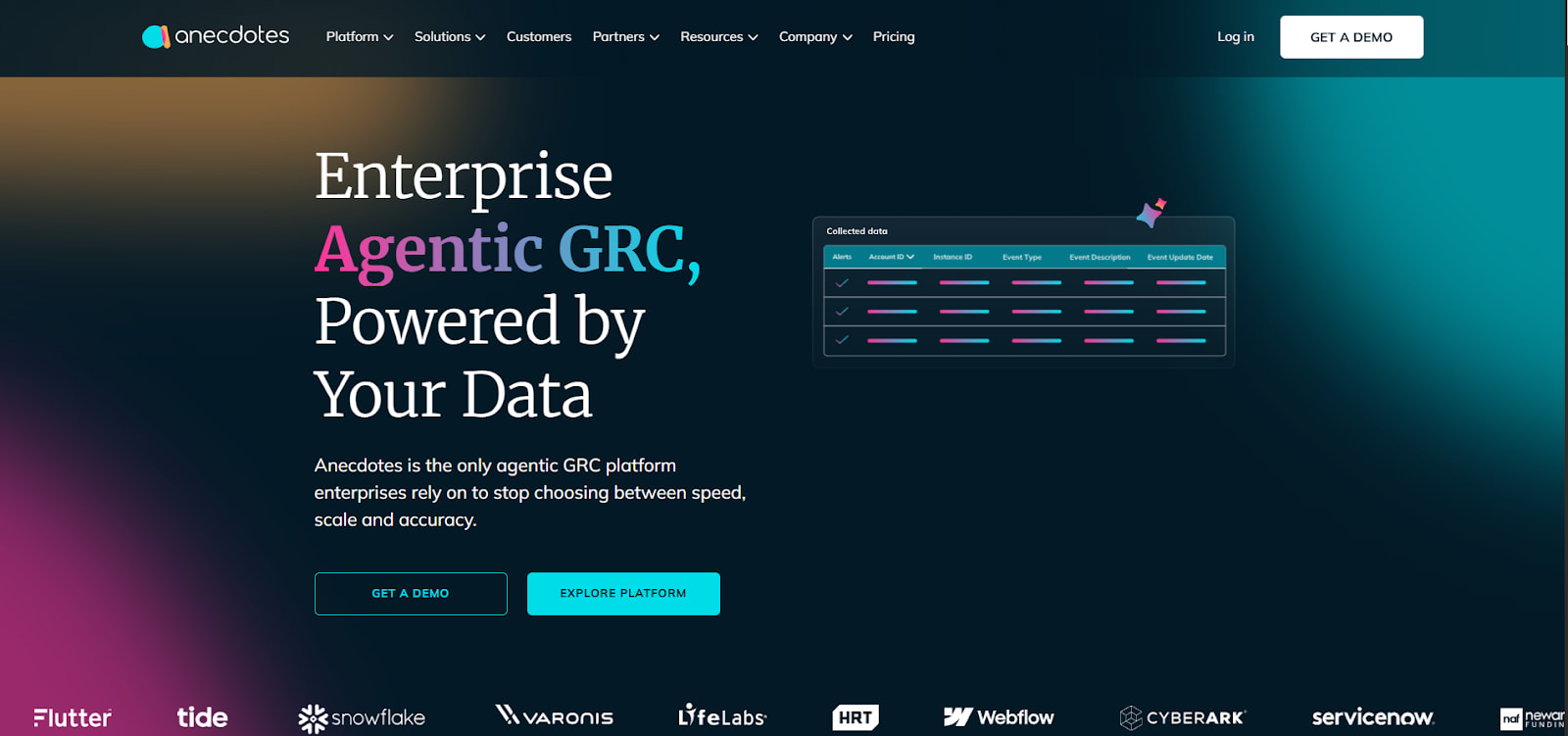
Anecdotes focuses on evidence quality and audit alignment, making it useful for teams with dedicated compliance ownership who prioritize audit readiness. I found the platform emphasizes evidence lifecycle management and control monitoring for compliance-mature organizations.
In my assessment, Anecdotes provides strong evidence, quality controls and audit-focused workflows. However, I noticed the platform is less beginner-friendly and requires compliance knowledge to use effectively.
Key Features
- Evidence lifecycle management with quality controls
- Control monitoring and gap detection
- Audit collaboration tools for auditor coordination
- Framework-specific workflows for compliance programs
Key Industries
Mid-market SaaS, compliance-mature teams
Pros
- Strong evidence quality controls for audit preparation
- Audit-focused workflows that align with auditor expectations
- Detailed tracking and documentation capabilities
Cons
- Less beginner-friendly for teams new to compliance
- Requires internal compliance expertise to use effectively
- Limited guidance for organizations without dedicated resources
How to choose SOC 2 Compliance Software
After evaluating these platforms through the lens of scaling teams, what became clear to me is that the best SOC 2 compliance software depends on whether you have internal compliance resources and how much strategic guidance you need as you grow.
Scytale stands out in my evaluation because it was built by auditors who understand how compliance actually works, and the proactive advisory model addresses the specific pain points I've seen scaling teams face when maintaining SOC 2 compliance without building an internal compliance function.
FAQs about Best SOC 2 Compliance Software
What is SOC 2 compliance software?
SOC 2 compliance software helps companies prepare for and maintain SOC 2 compliance by automating evidence collection, providing 24/7 control monitoring, and managing audit workflows.
These platforms connect to your tech stack to continuously gather proof of compliance, flag gaps in real time, and ensure documentation remains audit-ready at all times. The goal is to simplify the SOC 2 compliance process from start to finish and reduce the manual work required to demonstrate that your systems meet the relevant Trust Services Criteria (TSC).
Which SOC 2 compliance software is best for scaling teams?
Scytale stands out for scaling teams because it was built by auditors rather than software engineers, and every engagement includes dedicated ex-auditor teams who proactively manage your compliance program. While other platforms I evaluated focus on automation and leave you to interpret requirements, Scytale provides strategic guidance that keeps compliance moving forward without requiring internal resources. For teams without a dedicated compliance function, I found that the combination of AI-powered automation and expert advisory support is difficult to replicate.
How is Scytale different from other SOC 2 tools?
Scytale differs from other SOC 2 tools in three key ways. First, it was built by auditors who understand various compliance frameworks from the inside, which shapes how the platform structures GRC workflows and guidance. Second, every engagement includes proactive advisory support with dedicated ex-auditor teams who manage timelines and streamline audit preparation rather than waiting for you to ask questions. Third, I noticed the platform includes all features without gating premium capabilities behind plan upgrades, which means transparent pricing with no surprise costs as you scale.
Do scaling teams need auditor-led SOC 2 support?
From my experience, scaling SaaS teams benefit significantly from auditor-led support when they lack internal compliance expertise or dedicated resources to manage the compliance process. As compliance complexity increases with headcount, infrastructure changes, and multiple frameworks, proactive advisory support prevents gaps from becoming audit blockers and reduces the burden on internal teams who are already stretched thin while increasing operational efficiency.
More in software

Venture
Write for entrepreneurs, founders, and builders.
Share startup lessons, growth tactics, and founder stories with readers on the same journey.
One free account across In Plain English, Stackademic, Venture, and Cubed.
How it works- Startups & entrepreneurship
- Marketing & growth
- Productivity & leadership
- Founder stories & lessons learned
Sign in
Google or GitHub
Complete profile
Takes a few minutes
Get approved & publish
Start sharing
Why write for Venture?
Entrepreneurship is rarely a straight path. The lessons worth sharing are learned while building.
Comments
Loading comments…