BlackRock's Machine-Native Economy: Why AI Agents Could Be Crypto's Next Big Buyer
The world's largest asset manager argues autonomous AI agents paying for APIs, compute, and data could drive the next wave of stablecoin and crypto demand.
4 min read
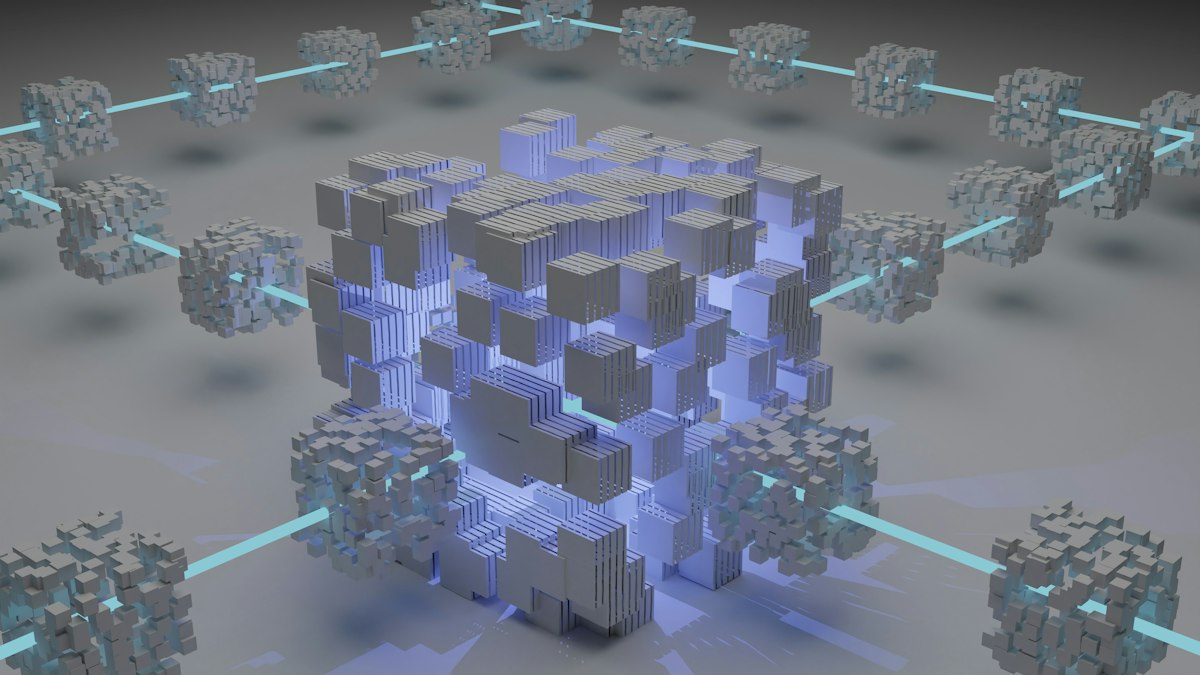
BlackRock published a research paper this week that reframes the crypto conversation entirely. The thesis is simple but radical: the next major source of demand for digital assets will not come from human traders or institutional allocators — it will come from machines.
The Machine-Native Economy
In its report titled "The Machine-Native Economy," BlackRock argues that increasingly autonomous AI systems will purchase data, access software, and acquire computing resources on their own. Instead of people making individual payment decisions, software will execute thousands of small transactions to complete a single task.
This is not science fiction. Some of the infrastructure already exists.
Stablecoins as the Settlement Layer
BlackRock's central bet is that stablecoins are the instrument best built for machine-to-machine payments. The firm's own figures put stablecoins' circulating market cap above $300 billion as of September 2026, with more than $11 trillion in adjusted transaction volume moved in 2025 alone.
Why stablecoins over traditional payment rails?
- Programmability. Smart contracts can authorize payments without human sign-off
- Speed. Settlement in seconds, not days
- Global reach. No correspondent banking required
- Micro-transactions. Pay per API call, per compute job, per data query
The x402 Protocol
One piece of machinery is already live. The x402 protocol, built by Coinbase around the HTTP 402 "Payment Required" status code, lets software pay for a data feed or API call in the same request that asks for it — no account, no human approval required.
But real-world usage remains thin. Blockchain analytics firm TRM Labs examined $52.7 million in x402 settlements this year and found AI agents likely accounted for between 0.6% and 7.5% of that value. Most traffic looked more like ordinary automated scripts than genuine autonomous agents.
Compute as a Commodity
BlackRock envisions "compute" packaged into standardized contracts — similar to oil or wheat futures — that could be bought, sold, used as collateral, or settled automatically on a blockchain.
An AI agent could shop for the cheapest available server capacity and pay for it directly, job by job, without a person negotiating a cloud contract. Payments could occur per job, per use, or per model token.
Cumulative investment in AI infrastructure could exceed $5 trillion between 2025 and 2030, according to Bloomberg consensus forecasts cited by BlackRock. Combined revenue from AWS, Microsoft Intelligent Cloud, and Google Cloud is projected at roughly $1.1 trillion by 2030.
The Investment Implications
For investors and founders, BlackRock's thesis suggests several actionable takeaways:
Stablecoin infrastructure is undervalued relative to its potential utility. If machines become the primary spenders, the payment rails matter more than the trading venues.
API monetization models will evolve. Per-call pricing with instant settlement changes the economics of data and compute marketplaces.
The timing is early. With AI agents representing less than 8% of x402 volume, the machine-native economy is in its infancy.
Regulatory clarity helps. The GENIUS Act established a federal framework for payment stablecoins in the US, potentially accelerating institutional adoption.
Risks and Skepticism
Not everyone is convinced the machine-native economy arrives quickly. Current AI agent payment volumes are a rounding error. Most AI workloads still run on traditional cloud contracts negotiated by humans. And regulatory frameworks for autonomous financial agents remain largely undefined.
BlackRock's paper is as much a forward-looking thesis as a description of present reality. But when the world's largest asset manager publishes research arguing that machines will drive crypto's next demand wave, markets pay attention.
What Founders Should Watch
If you are building in crypto, fintech, or AI infrastructure, three questions matter:
- Can your product be purchased and consumed by an autonomous agent without human intervention?
- Does your payment rail support micro-transactions at machine speed?
- Are you building for the economy that exists today, or the one BlackRock says is coming?
The machine-native economy may still be early. But the institutions placing bets on it are not small.
More in finance
Venture
Write for entrepreneurs, founders, and builders.
Share startup lessons, growth tactics, and founder stories with readers on the same journey.
One free account across In Plain English, Stackademic, Venture, and Cubed.
How it works- Startups & entrepreneurship
- Marketing & growth
- Productivity & leadership
- Founder stories & lessons learned
Sign in
Google or GitHub
Complete profile
Takes a few minutes
Get approved & publish
Start sharing
Why write for Venture?
Entrepreneurship is rarely a straight path. The lessons worth sharing are learned while building.
Comments
Loading comments…