Building a Predictable Revenue Engine (So You Stop “Hoping” Your Way to Revenue)
5 min readMurray Vince

Pipeline shouldn’t feel like predicting the weather; without a background in meteorology.
Yet I watch smart teams stare at dashboards the way farmers stare at clouds.
“Looks like a strong week.”
“Feels like deals are moving.”
“We just need more activity.”
Activity without focus is brain dead.
That’s not a revenue engine. That’s faith with a CRM license.
A predictable revenue engine means you generate pipeline on purpose — with a clear ICP, a real point of view, repeatable plays, and measurement that tells you what to fix before the quarter is on fire.
And yes, the fire is always “sudden.” It just starts quietly three weeks earlier.
The big lie: more activity equals more results
When pipeline slips, teams do dumb math:
“If we double sequences, double ads, and double meetings… results must follow.”
Really? How do you figure that? Zero x zero=zero. If you are focused on the wrong accounts, you’re just working hard at being futile.
That’s how you end up exhausted, noisy, and somehow still short.
Activity is not a strategy. It’s a lever.
If you pull the wrong lever, harder, you don’t get growth. You get fatigue. And your competitors who are using ABM best practices will steal your business. Survival isn’t assured: work, focus and being smart about your pipeline gets your business into a position to “play again”.
A predictable engine has four parts
Think of this like a simple machine. If one gear slips, the whole thing grinds.
- Clear ICP
- A real point of view
- Repeatable plays
- Measurement that diagnoses
Let’s keep this practical.
1) Clear ICP: stop focusing on “anyone with a budget”
Most teams don’t have an ICP. They have a wish list.
They focus on accounts that could buy, not accounts that should buy. Then they act surprised when the pipeline is full of polite “no decision” outcomes.
A clear ICP answers:
- What problem do we solve better than alternatives?
- Who feels that pain sharply right now?
- What conditions make success likely (tech stack, org shape, triggers, constraints)?
- What conditions make success unlikely (disqualifiers you actually use)?
If you can’t say who you’re not for, you’re not serious yet.
ABM truth: ABM doesn’t fix bad fit. ABM makes bad fit more expensive.
2) A real point of view: stop sounding like a brochure
Most messaging fails because it tries to offend no one.
That’s a fine strategy if your business model is “free water at conferences.”
A real point of view means:
- You take a stance on what works and what doesn’t.
- You name the tradeoffs.
- You sound like someone who has seen the movie before.
Your point of view should do two things at once:
- Attract the right accounts
- Repel the wrong ones
That’s not being edgy. That’s being efficient.
If your message can apply to five competitors and three industries, it will convert like a fortune cookie.
3) Repeatable plays: stop reinventing pipeline every Monday
The most common reason “pipeline generation” feels hard is simple:
You don’t have plays. You have improvisation.
A play is not “send emails.” A play is a repeatable sequence of actions with:
- a clear audience
- a clear offer
- a clear channel mix
- a clear success metric
- a clear owner
- a clear feedback loop
Here are a few plays that actually behave when you run them with discipline:
Play A: Tier 1 Account Break-in
- Insight-led message
- Multi-threading across roles
- A specific offer (workshop, teardown, benchmark)
- Tight follow-up rhythm
- Sales + marketing + SDR aligned in one pod
Play B: “Problem-First” Outbound
- One pain, one proof, one next step
- Two message variants
- Weekly QA on quality, not just volume
- Learn fast, update fast
Play C: Partner-Led Introductions
- Pick partners with overlapping ICP
- Co-create one asset and one talk track
- Run warm intros to named accounts
- Track conversion separately (partner plays are not cold outbound)
Play D: Customer Expansion Flywheel
- Segment customers like a portfolio
- Build exec relationships on purpose
- Identify expansion triggers
- Maintain a reference bench so deals don’t stall waiting for “one more proof point”
Plays turn “pipeline generation” from an emotional event into a system.
4) Measurement that diagnoses: stop reporting history like it’s insight
Most dashboards tell you what happened. They don’t tell you what to fix.
A predictable engine uses measurement as an early warning system.
I like metrics that answer: where is the break?
Here are a few that actually help:
- ICP fit rate of opportunities created (not just leads)
- Meeting-to-opportunity conversion by tier
- Stage conversion rates and time-in-stage
- Persona coverage (are we stuck with one friendly contact?)
- Message QA score (yes, score it)
- Follow-up SLA adherence (did we do what we said, when we said?)
If your measurement can’t point to a specific break — fit, message, channel, follow-up — you’re not measuring. You’re decorating.
The simple triage question that saves quarters
When pipeline gets shaky, ask this before you “do more”:
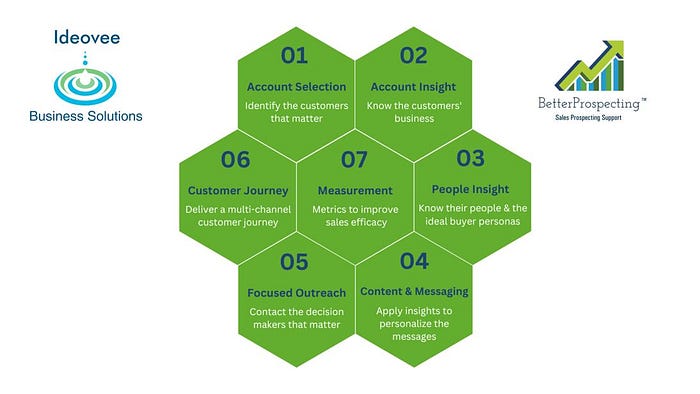
Where is this breaking — fit, insight, people, message, channel, follow-up, or measurement?
Then fix one break first.
Not seven. One.
Because most teams don’t need more motion. They need the right repair.
“Do more with less” is real. The answer is focus.
Teams are under pressure. Budgets tighten. Headcount doesn’t magically appear. Everyone wants “what’s working.”
Here’s what works:
- Pick a clear ICP and enforce it
- Say something specific enough to matter
- Run plays that can be repeated across pods
- Measure in a way that tells you what to fix early
- Coach weekly so performance doesn’t drift quietly into Q4 panic
Predictability isn’t luck. It’s design.
Your turn
When your pipeline slips, what does your org instinctively overdo?
- ads
- SDR volume
- meetings
- new tools
Drop your pick in the comments — and tell me what you stopped doing that actually helped.
If you’re building an ABM revenue team and want a practical operating rhythm (standards, coaching loops, measurement, and alignment), follow me or message me. I’m always up for comparing notes.
More in entrepreneurship



Venture
Write for entrepreneurs, founders, and builders.
Share startup lessons, growth tactics, and founder stories with readers on the same journey.
One free account across In Plain English, Stackademic, Venture, and Cubed.
How it works- Startups & entrepreneurship
- Marketing & growth
- Productivity & leadership
- Founder stories & lessons learned
Sign in
Google or GitHub
Complete profile
Takes a few minutes
Get approved & publish
Start sharing
Why write for Venture?
Entrepreneurship is rarely a straight path. The lessons worth sharing are learned while building.
Comments
Loading comments…