How Metal Roofing Technology Has Changed the Way Contractors Work
Learn how metal roofing technology has changed the way contractors work, from digital roof measurements and satellite imaging to modern panel systems, energy-efficient coatings, and advanced installation methods.
7 min read
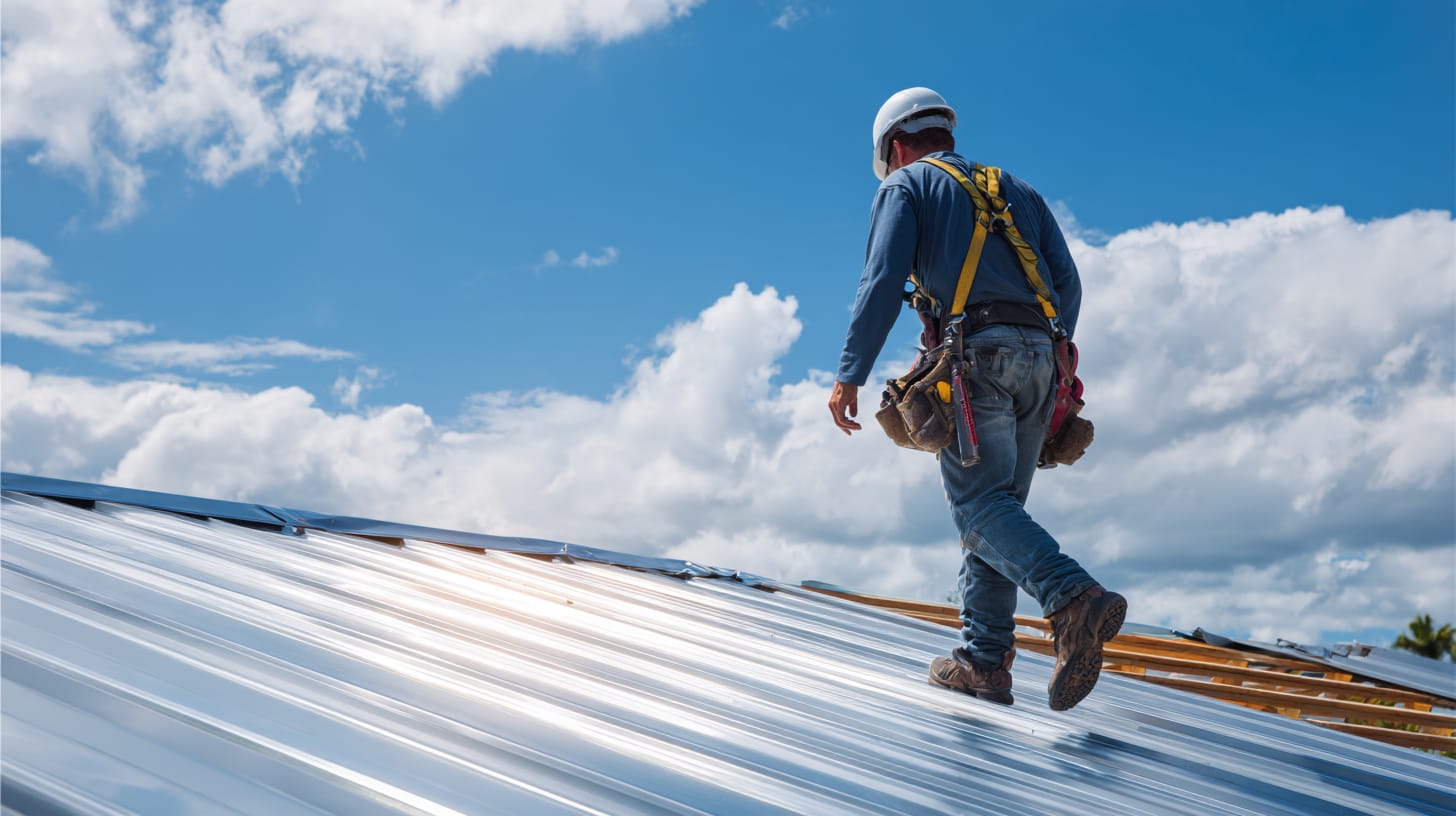
Metal roofing used to mean corrugated panels on a barn or a standing seam system on a commercial warehouse. Residential applications existed, but they were niche. Today, metal is one of the fastest-growing segments in the entire roofing industry, and the homes getting these systems look nothing like agricultural buildings.
The skill set required from a modern metal roof installer has expanded dramatically. What used to be a straightforward trade now demands fluency in engineering specs, digital measurement tools, and material science that simply didn't exist a generation ago. The contractors who adapted are thriving. The ones who didn't are getting passed over by homeowners who know what questions to ask.
This matters beyond the trade itself. When a homeowner chooses metal roof installation, they're making a 40 to 70 year decision. The technology the contractor uses during that install directly affects how that roof performs over decades. A crew working with outdated methods on modern panel systems isn't just slower. They're introducing risk that won't show up until years down the road.
From Manual Measurements to Digital Precision
Not long ago, a roofing estimate started with someone climbing on the roof with a tape measure and a notepad. Experienced crews were fast and reasonably accurate. But human measurement at height, on complex roof geometries, with multiple planes and penetrations, carries inherent variability.
Software platforms changed that completely. Digital measurement tools now pull dimensional data from aerial imagery and generate material takeoffs with a level of accuracy that manual methods can't consistently match. Waste factors tightened. Estimates became more reliable. And the time between first contact and proposal dropped significantly.
For metal roofing contractors, this shift mattered more than in other segments. Metal panels are ordered to length. Errors in measurement don't get fixed with a utility knife, the way asphalt shingles can be trimmed on site. Getting the numbers right before anything is fabricated isn't just efficient. It's essential.
How Satellite Imaging Replaced the Tape Measure
Platforms like EagleView and RoofSnap gave contractors access to precise roof measurements generated from satellite and aerial data. Pitch, area, ridge length, valley length, eave measurements — all delivered digitally before anyone sets foot on the property.
The safety implications alone justify the shift. Fewer unnecessary trips on steep or fragile roof surfaces during the estimating phase means fewer incidents. But the accuracy gain is what drives adoption. On a complex metal roof installation with multiple penetrations and custom panel lengths, a measurement error compounds through every subsequent step of the job. Starting with clean data eliminates an entire category of expensive mistakes.
Modern Metal Panels and Why Installation Technique Had to Evolve
The metal panels available today are fundamentally different products from what contractors worked with in the 1990s. Standing seam systems with concealed fasteners, snap-lock profiles, structural versus architectural panels — each system has its own installation logic, its own tolerances, and its own failure modes if done incorrectly.
A metal roof installer who learned the trade on exposed fastener corrugated panels and never updated their skills is working with an incomplete toolkit. The newer systems deliver superior performance, but only when installed correctly. That means understanding thermal movement, proper seam engagement, and substrate preparation at a level the older systems simply didn't require
.
Concealed Fastener Systems Changed the Error Margin
Exposed fastener systems are forgiving in a specific way. You can see every fastener. You can inspect the installation visually and catch problems before they become leaks. Concealed fastener standing seam systems remove that visual checkpoint entirely.
Once the panels are locked and seamed, what's underneath is permanent. The clip placement, the fastener torque, the seam engagement — all of it is hidden. That puts enormous pressure on doing it right the first time. Crews that treat concealed fastener metal roofing installation the same way they approach exposed fastener work will eventually produce failures that are expensive and difficult to diagnose.
Energy Efficiency as a Driver of Innovation
Metal roofing and energy performance have become inseparable. Cool roof coatings with high solar reflectance are now standard offerings from every major manufacturer. What used to be a premium upgrade is a baseline expectation in most markets.
The technology behind these coatings has advanced considerably. Early reflective finishes faded quickly and lost their performance properties within a few years. Modern PVDF coatings hold their reflectance over decades. That's not a minor improvement. It's the difference between a product that delivers on its promise and one that looks good on a spec sheet.
Solar integration pushed the conversation further. Metal roof installers working on new construction and replacement projects are increasingly asked about compatibility with photovoltaic systems. Standing seam metal is the preferred substrate for clamp-mounted solar because it requires no penetrations. A contractor who can speak to that relationship intelligently brings real value to the conversation. One who can't is leaving homeowners to figure it out on their own.
The energy story also connects directly to building codes. Thermal performance requirements have tightened in most states, including New Jersey. A metal roofing installation that doesn't account for current code requirements on ventilation, insulation interface, and air sealing isn't just suboptimal. It can fail inspection.
What Technology Means for the Homeowner's Bottom Line
Better technology produces measurable outcomes. Longer warranties. Lower callbacks. Fewer leaks. These aren't abstract benefits.
Manufacturer warranties on premium metal roofing systems now run 40 to 50 years on the finish and lifetime on the panel itself. But those warranties have conditions. Proper installation by a qualified contractor is always one of them. The technology built into the product only pays off when the installation matches the engineering behind it.
Resale value is another real factor. Buyers and appraisers increasingly recognize quality metal roof installation as a genuine asset. A roof that won't need replacement within the buyer's ownership horizon is worth something concrete. In competitive markets, it's a meaningful differentiator.
Energy savings compound over time. A properly installed metal roof with a reflective coating reduces cooling loads in summer measurably. In New Jersey, where summer humidity pushes air conditioning demand, that reduction shows up on utility bills every year the roof is in service.
Choosing a Contractor Who Has Kept Up
The technology exists. The question is whether the contractor standing in your driveway actually uses it. Ask about their measurement process. Ask which panel systems they install regularly and which manufacturer certifications they hold. Ask how they handle thermal movement on longer roof planes. The answers will tell you quickly whether you're talking to someone current or someone coasting on habits formed a decade ago.
Certifications matter more in metal roofing than in most segments because the systems are more technically demanding. A contractor certified by a panel manufacturer has been trained on that specific system's installation requirements. That's not a marketing credential. It's evidence of actual technical investment.
Companies like American Quality Remodeling have built their approach to metal roof installation across New Jersey and Pennsylvania around exactly this principle — staying current with materials, systems, and installation standards so that every project holds up the way the manufacturer intended. In a trade that has changed this much this fast, that commitment is what separates a roof that lasts from one that becomes a problem.
More in design

Venture
Write for entrepreneurs, founders, and builders.
Share startup lessons, growth tactics, and founder stories with readers on the same journey.
One free account across In Plain English, Stackademic, Venture, and Cubed.
How it works- Startups & entrepreneurship
- Marketing & growth
- Productivity & leadership
- Founder stories & lessons learned
Sign in
Google or GitHub
Complete profile
Takes a few minutes
Get approved & publish
Start sharing
Why write for Venture?
Entrepreneurship is rarely a straight path. The lessons worth sharing are learned while building.
Comments
Loading comments…