The 9 Best Requirements Management Tools for Semiconductor Development in 2026
Navigate complex chip programs with elite requirements platforms uniting silicon, firmware, and software engineering for next-gen hardware success.
20 min readNeville Naidoo
A modern chip program runs as several programs at once: silicon, firmware, embedded software, and the system around them, built in parallel by teams that seldom share a tool. The best requirements management tools for semiconductor development exist to hold that work together. They connect every requirement to the design that implements it and the test that proves it, then keep those links honest as the design shifts through tape-out and past it.
Two changes are reshaping how chip teams pick that tool. The first is the collapse of the old wall between silicon and software. SoCs, chiplets, and AI accelerators mean one requirement can touch RTL, firmware, and a driver at the same time, so the tool that wins governs a comprehensive traceability web across all of it rather than a separate document pile for each discipline. The second is the advent of Silicon Lifecycle Management (SLM), telemetry that enables semiconductor product health to be monitored from tapeout through years in the field. Defects or degradation spotted in the field can be reported back, assessed, and can inform errata, in-field fixes, and even requirements for subsequent product generations, if the infrastructure is in place to enable the capability.
For semiconductor companies working in regulated industries such as automotive, aerospace, and medical devices, a third factor applies as well. Meeting functional safety (FuSa) standards such as ISO 26262 or ASPICE is no longer a compliance project generated just prior to an audit, but instead follows the disciplined requirements engineering strong teams already practice. The safety case is an integrated deliverable within the standard process rather than something reverse engineered for an assessor.
The nine tools below compare on traceability depth, standards fit, ecosystem reach, and where each one finds its niche.
Key takeaways
-
Requirements management for semiconductor teams keeps one live trace web from customer need through silicon, firmware, software, and verification, so a late change can be assessed and addressed before it shows up on an errata sheet.
-
Enterprise platforms such as Jama Connect, IBM DOORS Next, Siemens Polarion, and PTC Codebeamer lead for regulated, traceability-heavy chip work; spreadsheets and modeling tools cover only part of the job.
-
Clean integration with the EDA toolchain matters across semiconductor development, while alignment with standards such as ISO 26262, ASPICE, and ISO/SAE 21434 becomes important where applicable. Both considerations can outweigh raw feature count.
-
Jama Connect ranks first here for governing the complete traceability web across silicon and software, and for exposing the governed graph to AI coding agents through its MCP Server.
Comparison table
| Tool | Category | Key capabilities | Deployment | G2 rating |
|---|---|---|---|---|
| Jama Connect | Enterprise RM | Live Traceability, review and approval, risk and test, ReqIF, MCP Server, REST API | Cloud, on-prem | 4.3/5 (~224) |
| OpenText Dimensions RM | Enterprise RM | Requirements authoring, reuse, variant management, traceability, reporting, MCP server | Cloud, on-prem | Limited public reviews |
| Siemens Polarion | Enterprise RM/ALM | LiveDocs, variant management, e-signatures, test management | Cloud, on-prem | 4.2/5 (~162) |
| PTC Codebeamer | Enterprise RM/ALM | Configurable workflows, test and risk, ASPICE templates, PLE | Cloud, on-prem | Well-regarded (small base) |
| IBM DOORS Next | Enterprise RM | Config management, baselines, link traceability, ReqIF, OSLC | Cloud, on-prem | 4.0/5 (~136) |
| Microsoft Excel and Word | General office | Documents, spreadsheets, manual trace matrices | Cloud, desktop | N/A (not an RM tool) |
| Perforce Helix ALM | RM/ALM | Helix RM, test-case management, issue tracking, traceability | Cloud, on-prem | 4.1/5 (~102) |
| Visure Requirements | RM/ALM | Requirements, FMEA and risk, test, standards templates | Cloud, on-prem | Well-regarded (small base) |
| Sparx Enterprise Architect | MBSE modeling | SysML and UML modeling, requirements derivation, model links | Desktop, server | Limited public reviews |
What requirements management means for a chip program
A requirements management tool captures what a product must do, links each requirement to the design and verification that satisfy it, and holds that web of links current as the work changes. In semiconductor development the stakes are sharper than in many products. A customer requirement receives a product requirement as a response, then an architecture spec derives a design that meets the product requirement. It then split, often along the lines of architecturally-significant features across analog design, digital design (including third-party IP and the foundry's process rules), firmware, and physical design constraints.
Each branch has its own verification, from simulation and formal checks on the RTL to emulation of the firmware against the design and timing signoff on the layout. After tapeout the requirement is checked again on silicon, then again in qualification and production test, where it ends up as a limit on a tester. Problems found anywhere along the way come back as spec changes, errata, hot fixes, or a respin. These artifacts live in different tools and belong to different teams, so a change in one can break the others.
The gap that separates tools isn't whether they can store a requirement. It's whether the complex web of requirements, design, and tests stays valid and trustworthy through months or years of change, and whether the impact of a defect or change request can be assessed instantly, including implications for products in regulated industries..
What to look for in semiconductor requirements management
The right tool depends on which toolchain your engineers already live in, any regulatory targets that must be met, and how much process your teams can absorb. Six criteria matter more than the comprehensiveness of a feature list:
End-to-end traceability and impact analysis
The core job is connecting each requirement to its design and its test cases, then showing everything that a change potentially touches. Live traceability keeps those relationships current as data across the lifecycle changes, and one-click impact analysis shows both the downstream items a change puts at risk and the upstream requirements that may no longer be satisfied. Without it, a trace matrix is a spreadsheet that drifts out of sync the day after someone edits a single item in the data repository.
Scale for product families and global teams
Chip companies seldom ship a single discrete product. They ship families and variants developed for many years across geographically-dispersed sites and time zones. The tool has to hold millions of linked items, support reuse and baselining across variants, and stay responsive for engineers on multiple continents rather than degrading as the volume of data grows.
Ecosystem efficiency across the EDA toolchain
Requirements sit at the head of a best-of-breed toolchain that already includes Cadence, Synopsys (including Ansys), and Siemens tools, among many others. A requirements tool provides quantifiable value by connecting to that chain without friction through a real API and prebuilt integrations, and now by exposing requirements to AI coding agents through an MCP server so an agent works against approved, governed requirements instead of loose files scraped from a repo.
Functional safety and standards fit
Regulated silicon rewards evidence. ISO 26262 and ASPICE expect baselines, documented reviews, and a hazard-to-verification thread that holds together. Functional safety rewards the same disciplined requirements engineering mature semiconductor teams already practice, so a tool that makes traceability the default produces the safety case as a byproduct. A tool with its own certification helps too: when an assessor such as TÜV SÜD has already vetted the tool you keep safety evidence in, your own tool-qualification burden shrinks.
Configuration management and ReqIF exchange
Requirements change across the design cycle, and configuration management records every change, who approved it, and which version was active when. Support for baselines, branching, and variant management enable significant economies of scale and demonstrable value through reuse of “known good” datasets. ReqIF matters most in semiconductor supply chains, where IP vendors, foundries, and OEMs exchange requirements across different tools.
Cybersecurity readiness
Connected and automotive silicon now carries cybersecurity obligations of its own, and ISO/SAE 21434 sits alongside ISO 26262 for many programs. Two things count: whether the tool supports secure development requirements as first-class items, and whether the vendor's own platform is credible on security, with certifications such as SOC 2 Type 2 and TISAX Level 2.
The 9 best requirements management tools for semiconductor development
1. Jama Connect: live traceability across silicon and software

Jama Connect® is the requirements platform Jama Software® built for complex, safety-critical product development, and chip teams use it to hold the extensive web of trace links together from customer needs through silicon, firmware, software, and verification. Live Traceability, its signature capability, shows in real time how a requirement connects to other requirements, risks, and tests around it, so any change flags every affected item on the spot instead of catching it at RTL, or worse, first silicon.
The dramatic increase in cost and rework due to issues discovered late, especially after the first product stepping, demands earlier attention to the quality and correctness of requirements and design, and rapid responses to product sightings. That discipline turns functional safety into ordinary engineering practice: ISO 26262, ASPICE, and ISO/SAE 21434 evidence accumulates as the team works, and TÜV SÜD has certified the platform for safety-related development up to ASIL D. Live Traceability also extends traceability into EDA and verification tools, where SoC trace chains tend to stop.
Jama Software counts NVIDIA, Infineon, and Analog Devices among the chipmakers that run on it, and it reports six of the ten largest semiconductor companies as customers on a platform managing more than 480 million items. Infineon's Pierre Nury, a technical lead for requirements management methodologies, put it this way: "By using Jama Connect to manage our requirements-related information over the product development cycle, our R&D engineers increase their daily efficiency." For the silicon-and-software shift, Jama Software re-architected the product to be AI-native on a graph database, and its MCP Server exposes that governed graph to AI coding agents, LLMs, and IDEs, so an agent codes against approved requirements instead of loose files.
Key capabilities: Live Traceability with Trace Score, a semiconductor-specific starter dataset for new adopters, Review Center with e-signatures, risk and test management, ReqIF interchange, an open MCP Server, a REST API, and SOC 2 Type 2 plus TISAX Level 2 security certification.
Deployment: cloud or on-premises.
Pricing: custom and quote-based, with no public price. Reviewer and stakeholder access comes at no extra charge.
Tradeoffs: Jama Connect's comprehensive traceability and configurable workflows benefit from clear administrative governance, particularly in large semiconductor programs. Teams should establish consistent requirements structures, access permissions, and change-control processes to maintain data integrity as projects grow.
2. OpenText Dimensions RM: requirements reuse and variants for complex programs
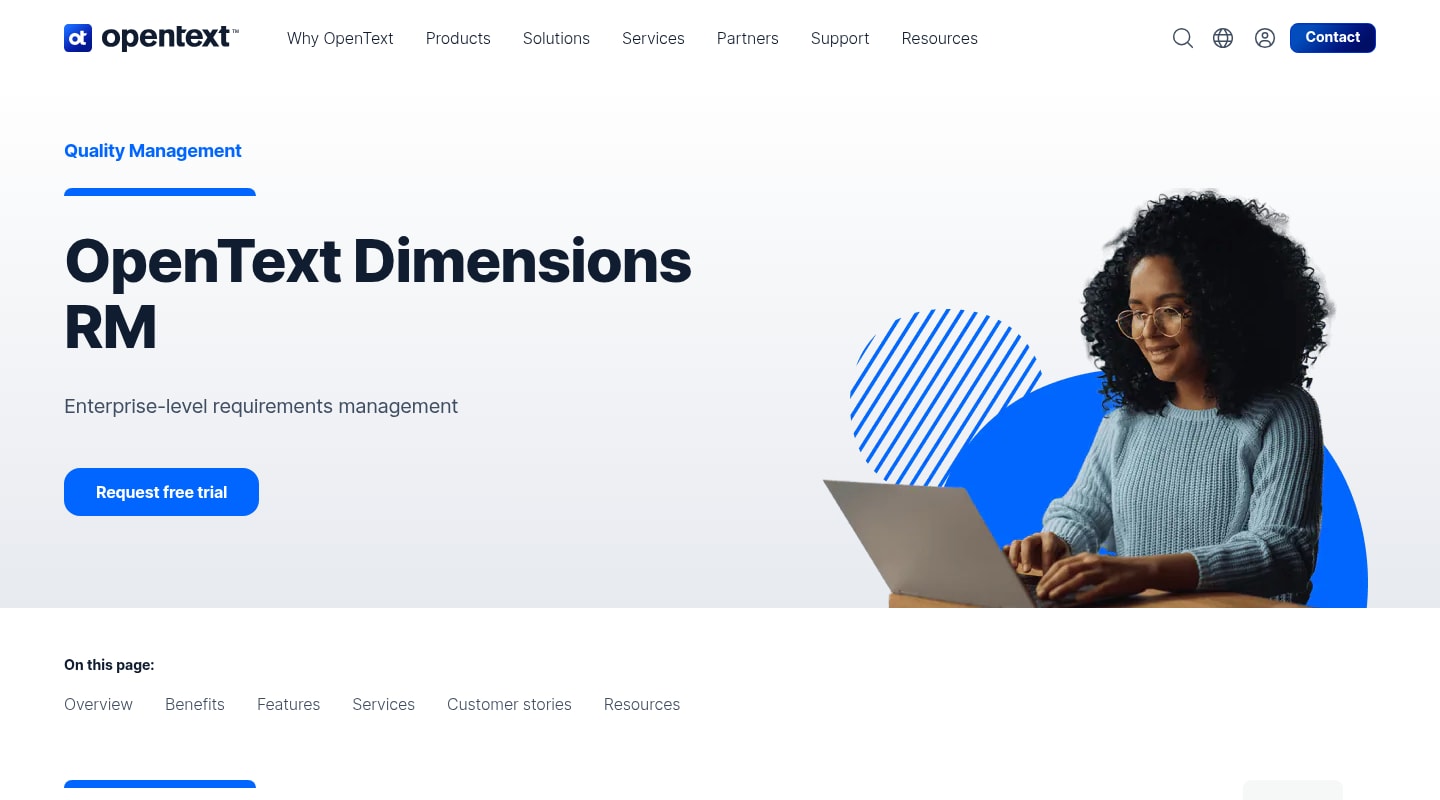
OpenText Dimensions RM is a mature requirements management tool that centralizes requirements, supports reuse and variant management, and tracks traceability across systems and software programs. It handles both traditional and agile styles, which suits mixed hardware and software organizations, and role-based dashboards give managers a view of status without digging through the repository. For semiconductor companies that share large blocks of requirements among derivative products in a complex product line, that reuse model is the main draw.
The product has passed through several owners, from Serena to Micro Focus to OpenText, and it now sits inside a very broad software portfolio rather than standing as a focused requirements specialized system. Its dedicated-RM footprint has thinned as a result: independent review sites carry few first-hand reviews, and analyst mindshare for the tool has slipped in recent years. Teams that adopt it inherit a capable engine that gets less product attention than a specialist platform.
Key capabilities: requirements authoring and traceability, reuse and variant management, wizard-driven reporting, workflow, and document management.
Deployment: cloud or on-premises.
Pricing: custom and quote-based.
Tradeoffs: a legacy lineage and a small, quiet installed base for dedicated requirements management, plus the divided focus that comes with its placeinside a sprawling portfolio.
3. Siemens Polarion: ALM-grade traceability for Siemens shops
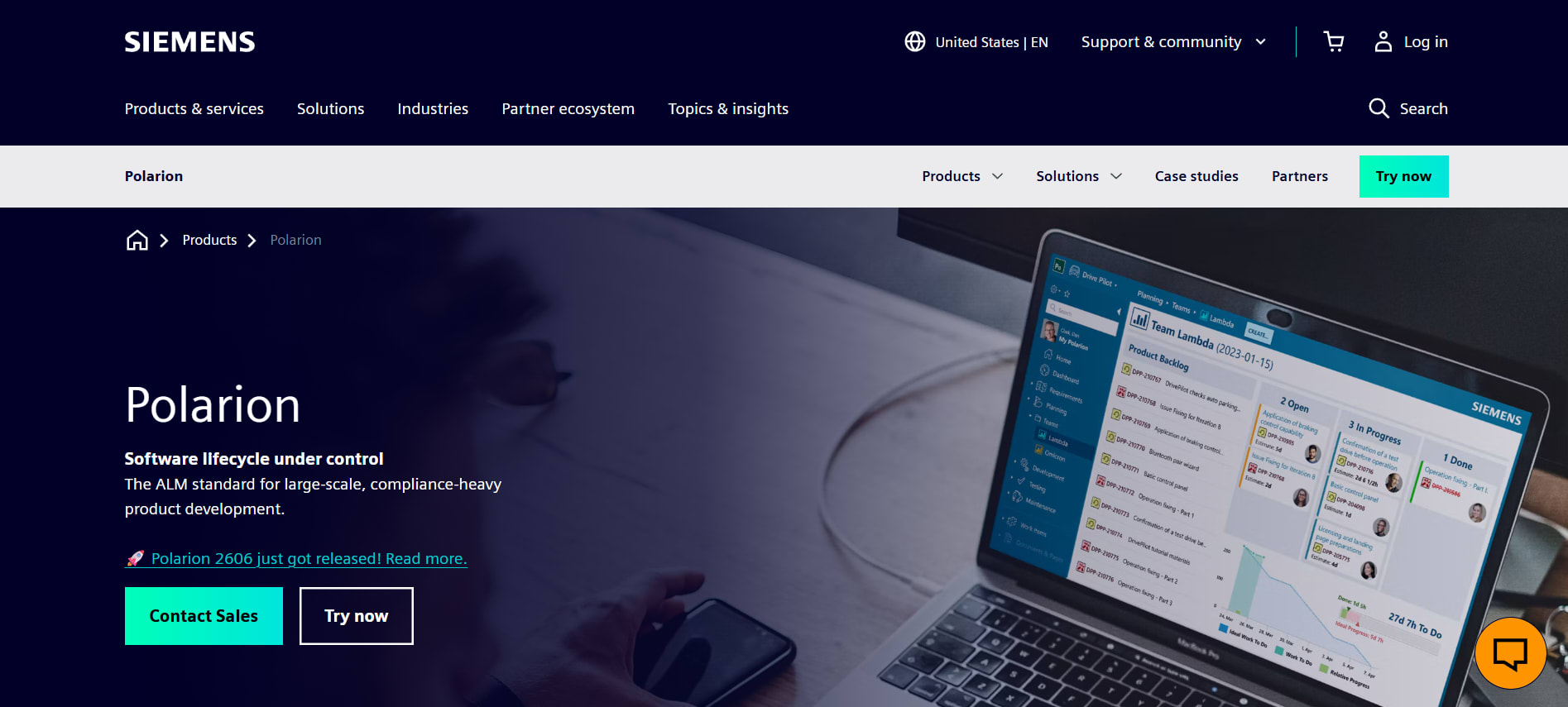
Siemens Polarion unifies requirements, test management, and change control on one platform. Document-centric authoring through LiveDocs lets engineers edit requirements in a familiar document view while each item maintains its atomic traceability. Variant handling, built-in e-signatures, and ready-made ISO 26262 and ASPICE patterns suit compliance-heavy programs, and the tool integrates well at companies already living in Siemens Teamcenter and NX.
Polarion has made significant usability and performance improvements in recent releases, including updated navigation, inline editing, and more efficient document workflows. Its depth and configurability still require careful setup and administration, particularly for complex programs. Organizations outside the Siemens ecosystem should also assess how well Polarion connects with their existing engineering tools.
Key capabilities: LiveDocs authoring, variant management, integrated test management, electronic signatures, and workflow automation.
Deployment: cloud (Polarion X) or on-premises.
Pricing: custom, subscription or perpetual licensing.
Tradeoffs: Complex implementations can require considerable configuration and administrative oversight, particularly for large engineering programs. Organizations outside the Siemens ecosystem should also assess integration compatibility with their existing toolchains.
4. PTC Codebeamer: configurable ALM for regulated agile development
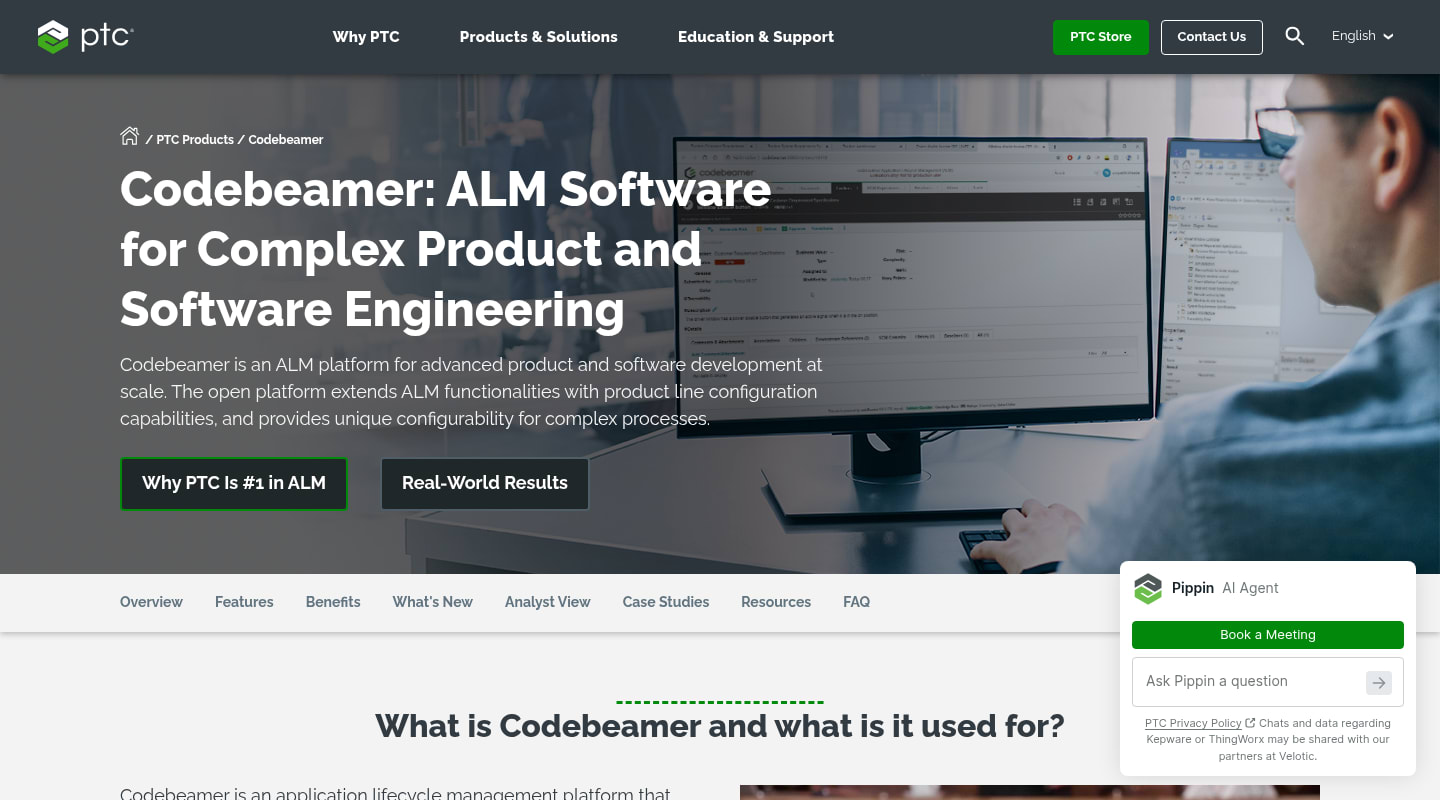
PTC Codebeamer combines requirements, test, and risk management in one application lifecycle platform aimed at teams delivering regulated products under agile methods. Configurability is its calling card: workflows, work-item types, and traceability links all align with a team's own quality system, and prebuilt ASPICE templates shorten setup for automotive-adjacent silicon work. Product line engineering enables variants from a shared baseline, which fits chip families.
Codebeamer grew from software ALM roots, so systems work that spans hardware and firmware feels lighter than it does in a dedicated systems tool. Its cloud edition is single-tenant, and teams that also run Jira often find the two awkwardly overlapping for wikis and issue tracking. PTC has folded the product into its wider ALM portfolio since acquiring Intland in 2022, and some users note slower support during that transition.
Key capabilities: configurable workflows, integrated test and risk management, ASPICE templates, product line engineering, baselines, and a REST API.
Deployment: cloud or on-premises.
Pricing: custom, subscription-based.
Tradeoffs: the software-ALM heritage gives hardware and firmware lighter coverage, and deep configurability turns into setup overhead for teams with no dedicated admin.
5. IBM DOORS Next: systems-engineering traceability at enterprise scale
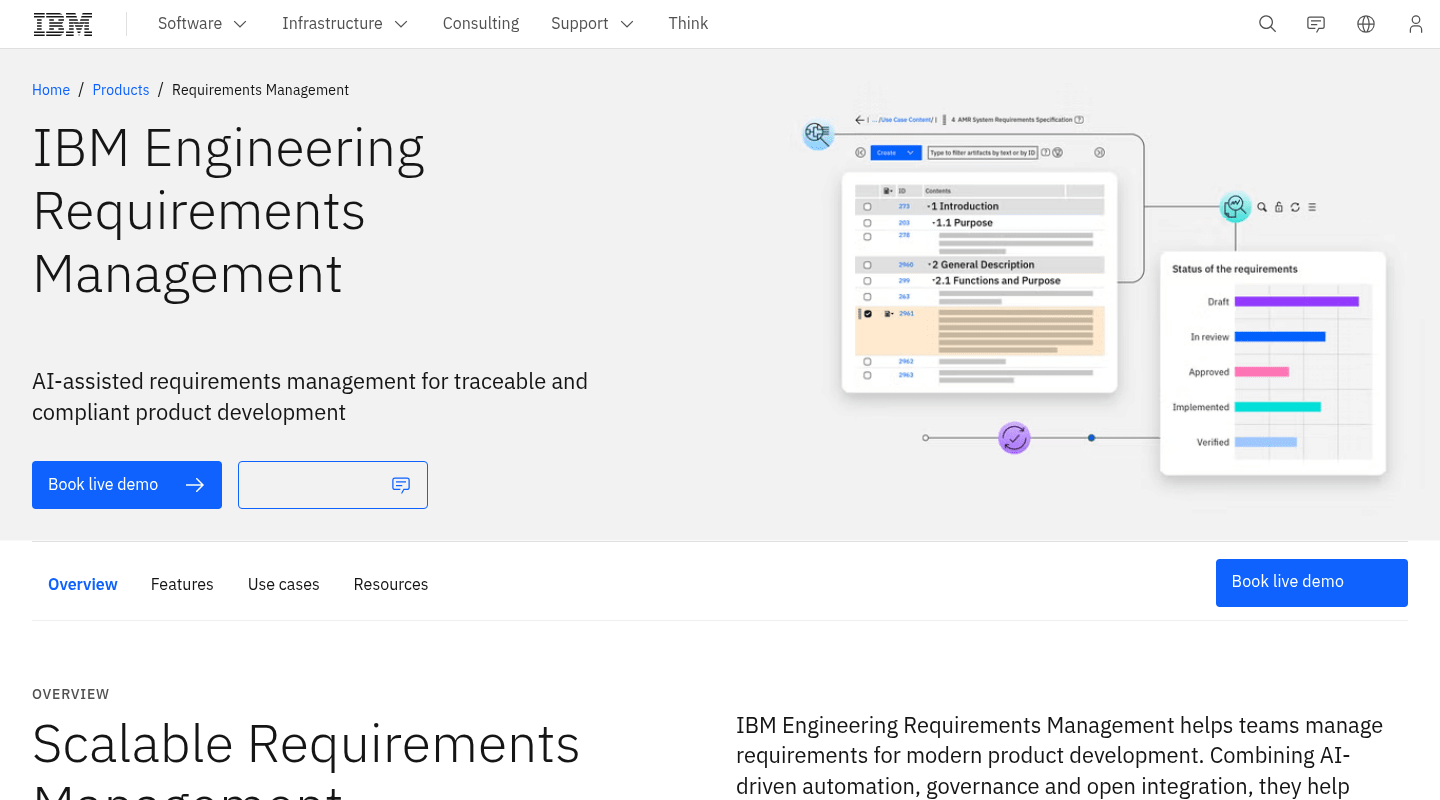
IBM Engineering Requirements Management DOORS Next is enterprise requirements management on IBM's Engineering Lifecycle Management suite, formerly known as Jazz. DOORS Next is the modern successor to classic DOORS. Aerospace, defense, and automotive programs have leaned on DOORS and its DOORS Next successor for years. DOORS Next captures detailed specifications with custom attributes, configuration management through baselines,streams, and nested global configurations, and link traceability across requirements, tests, and change requests.
The cost of that depth is weight. Users describe a demanding learning curve and steady admin overhead, and since DOORS Next shares no upgrade path with classic DOORS, moving off the old tool becomes a project of its own. On G2 the tool sits near 4.0 out of 5, with pricing the complaint that surfaces most often.
Key capabilities: configuration management, baselines, link traceability across ELM, custom attributes, ReqIF, and OSLC integration.
Deployment: cloud or on-premises.
Pricing: Custom, quote-based pricing through IBM, with licensing dependent on the products and deployment configuration selected.
Tradeoffs: heavyweight for small or agile groups, administrator-intensive, and cost is the complaint reviewers raise most often.
6. Microsoft Excel and Word: the incumbent chip teams outgrow

Plenty of semiconductor teams still manage requirements in Excel and Word. Product requirements documents (PRDs) are commonly maintained in spreadsheets, while market requirements documents (MRDs) may be kept in other formats. Separate spreadsheets often serve as traceability matrices. These familiar tools can work well for small teams in the early stages of development, although maintaining consistency becomes harder as requirements and dependencies grow.
They stop scaling fast. A hand-built spreadsheet matrix carries no baseline, no linked-back verification, and no sign-off record, so it falls behind the day someone edits a requirement. There is no impact analysis when an architecture spec moves or the text of a requirement changes, no controlled history for an audit, and no way for silicon, firmware, and software teams to work the same requirements without risking inconsistent changes. . An assessor reads a stale matrix as a gap in the evidence. Jama Connect and the other dedicated platforms exist to replace this exact pattern, while still letting engineers keep Office for the writing it is good at.
Key capabilities: documents, spreadsheets, and manual trace matrices maintained by hand.
Deployment: cloud or desktop through Microsoft 365.
Pricing: included with a Microsoft 365 subscription.
Tradeoffs: no baselining, no live two-way traceability, no approval state, and no way to keep a trace chain honest at a chip program's scale.
7. Perforce Helix ALM: modular requirements, test, and issue management
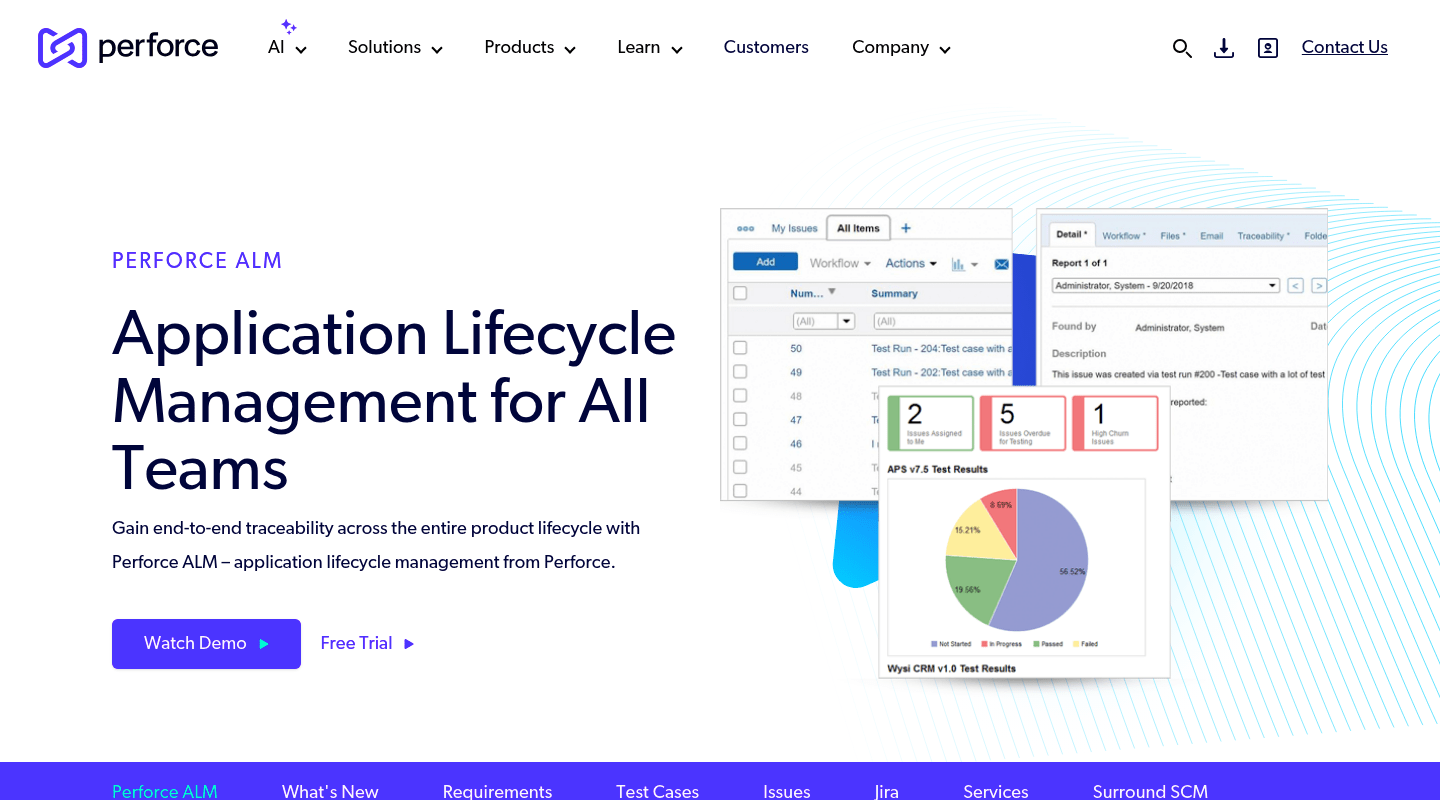
Perforce Helix ALM brings requirements (Helix RM), test-case management, and issue tracking into one suite with end-to-end traceability, and teams can buy the modules they need rather than a single monolith. Perforce pitches it at regulated, safety-critical requirements work, and reviewers praise its adaptability, depth, and automation once a team has it set up.
Getting there is the friction point. G2 reviewers report a difficult setup, customization that takes effort, and integration issues, and cost comes up as a recurring gripe. Its dedicated requirements footprint is smaller than the IBM, Siemens, or PTC platforms, and its AI capabilities are lighter than the newer entrants.
Key capabilities: Requirements management through Perforce ALM (formerly Helix ALM), test-case management, issue tracking, end-to-end traceability, workflow automation, and complementary semiconductor IP lifecycle management through Perforce IPLM (formerly Methodics).
Deployment: cloud or on-premises.
Pricing: custom, quote-based.
Tradeoffs: setup and customization take effort, reviewers flag integration friction and cost, and the RM footprint is smaller than the enterprise leaders.
8. Visure Requirements: compliance-heavy requirements with built-in risk
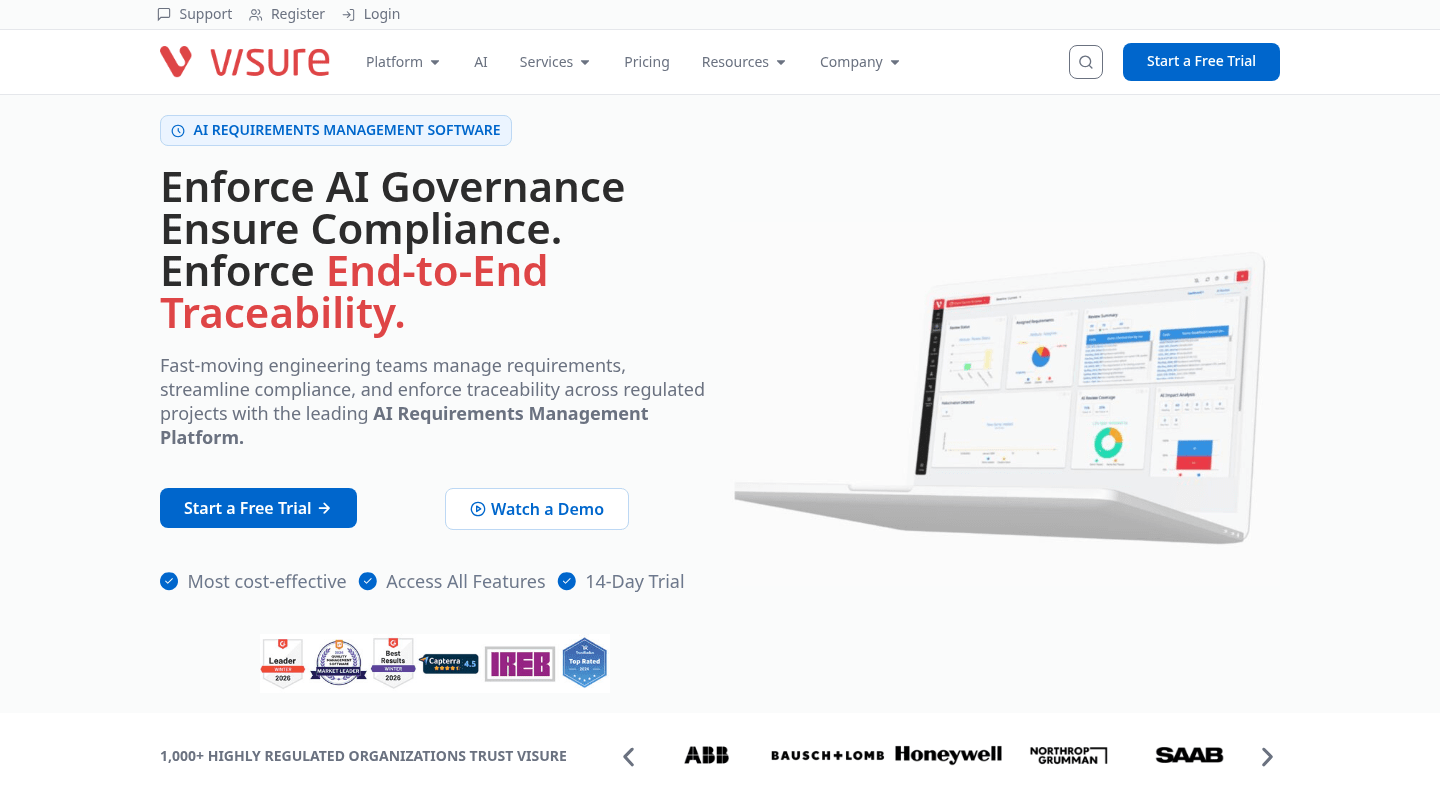
Visure Requirements builds FMEA, hazard work, and test management on top of a requirements core, and it targets safety-critical programs across automotive, industrial, and semiconductor markets. It ships templates aligned to functional-safety standards and publishes a steady stream of standards material, which keeps it familiar to safety engineers evaluating options.
The friction is setup. Reviewers say the tool takes real work to configure up front, and that setup and major upgrades often need Visure's own help, which drags a rollout out. Visure is a smaller company than the market leaders, so its integration ecosystem and review base run thinner as a result.
Key capabilities: requirements management, FMEA and risk analysis, test management, change-impact analysis, and standards templates.
Deployment: cloud or on-premises.
Pricing: custom, quote-based.
Tradeoffs: first-time configuration is slow, some upgrades need vendor involvement, and Visure's partner network is narrower than the enterprise leaders. For semiconductor teams with little to no exposure to functional safety standards, Visure may feel too rigid.
9. Sparx Enterprise Architect: SysML modeling with requirements attached

Built on SysML and UML, Sparx Enterprise Architect serves architecture-led teams doing model-based systems engineering, and it keeps requirements capture next to the models. For architecture-led semiconductor teams that already model their systems, it links requirements to the model elements that realize them, and it sells on published per-license pricing rather than an enterprise quote.
Requirements management is a capability attached to a modeling tool here rather than the backbone. It doesn't put a governed requirements record, baselining, formal review, and audit-grade change control at its center, and the modeling-first interface is a steep climb for anyone who isn't a SysML user already. Teams tend to pair it with a dedicated requirements platform rather than run compliance evidence out of it.
Key capabilities: SysML and UML modeling, requirements derivation, model-to-requirement links, integration with many RM tools, and documentation generation.
Deployment: desktop or server.
Pricing: per-license, published on the vendor site.
Tradeoffs: modeling-first rather than a governed RM system of record, a steep interface for non-modelers, and a dated look compared with modern platforms.
How to pick requirements management tools for semiconductor teams
What separates these tools is how much of a semiconductor program each one can hold within a single governed infrastructure. Spreadsheets and modeling tools each cover a corner of the work, the IBM, Siemens, and PTC platforms bring real depth inside their own ecosystems, and OpenText Dimensions RM brings a mature reuse-and-variants model for teams already on that stack. What sets the field apart in 2026 is which tool keeps a single live traceability web valid across silicon and software, including interfaces among a wide array of chiplets as the design changes, and which one opens that governed record to the AI agents now entering chip workflows. On that measure, Jama Connect has become the requirements management standard that serious semiconductor teams build around. Match the tool to your toolchain and the scale of your product families, and the shortlist gets short fast.
Semiconductor requirements management FAQs
What is requirements management in semiconductor development?
Requirements management is the practice of capturing what a chip and its system must do, linking each requirement to the design and verification that satisfy it, and keeping those links current as the work changes. In semiconductor programs it spans customer needs, architecture specs, RTL, firmware, and test, so the value is a traceability web that maintains complete integrity from concept through tape-out and into the field.
Can you manage semiconductor requirements in Excel?
You can start there, and many small teams do, but it breaks down fast. A spreadsheet can't baseline a requirement, link it in multiple directions, or track the , so the matrix goes stale the moment the design moves. For a chip program with families, variants, and a safety case to defend, teams move to a dedicated requirements platform that keeps the trace live and audit-ready.
How does a requirements management tool fit into an EDA toolchain?
A requirements tool sits at the head of the toolchain, feeding requirements into design and verification tools and pulling results back to keep traceability current. The fit depends on a real API and prebuilt integrations with tools like Cadence, Synopsys, and Ansys, plus ReqIF for exchanging requirements with IP vendors and foundries that use different systems. The better the integration, the less manual copying and the fewer broken links.
What is an MCP server for requirements management?
A Model Context Protocol server lets AI coding agents and LLMs read and act on a system's data through a standard interface. For requirements management it means an AI agent can work against governed, approved requirements rather than loose files, which improves the quality of what it generates and keeps a trace back to the source. Jama Connect ships an MCP Server that exposes its governed requirements graph to AI agents, IDEs, and models.
How does ISO 26262 apply to semiconductor companies?
ISO 26262 governs functional safety for road-vehicle electronics, and semiconductor suppliers to automotive customers work to it through the standard's hardware and software parts. Under the standard, hazards resolve into safety requirements, the design links back to those requirements, and testing proves each one holds. A requirements tool that maintains that trace, and that carries its own safety certification, cuts the effort of proving compliance to an assessor. TÜV SÜD certifies Jama Connect as fit for safety-related development to ASIL D under ISO 26262.
More in software

Venture
Write for entrepreneurs, founders, and builders.
Share startup lessons, growth tactics, and founder stories with readers on the same journey.
One free account across In Plain English, Stackademic, Venture, and Cubed.
How it works- Startups & entrepreneurship
- Marketing & growth
- Productivity & leadership
- Founder stories & lessons learned
Sign in
Google or GitHub
Complete profile
Takes a few minutes
Get approved & publish
Start sharing
Why write for Venture?
Entrepreneurship is rarely a straight path. The lessons worth sharing are learned while building.



Comments
Loading comments…