The AI Agent Frenzy: Just Another Wrapper Economy
The hype cycle never sleeps. Yesterday it was “LLM wrappers.” Today, it’s “AI agents.”
6 min readBran Kop
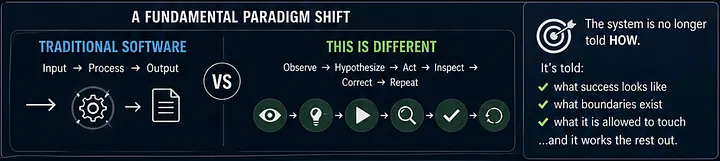
The hype cycle never sleeps. Yesterday it was “LLM wrappers.” Today, it’s “AI agents.” Venture capitalists, founders, and breathless tech Twitter threads proclaim that autonomous agents will revolutionize work, replace employees, and unlock trillions in productivity. Yet scratch the surface, and most of what’s being sold as groundbreaking “agentic AI” looks suspiciously like yesterday’s automation — repackaged with fancier terminology and a generous dose of anthropomorphism.
We’ve seen this movie before. In 2023–2024, the “wrapper economy” exploded. Smart people raised millions to wrap OpenAI’s API in a pretty UI, add a prompt template or two, and call it a “vertical AI company.” Most delivered little more than slightly better chat interfaces for customer support, content generation, or basic data entry. The underlying model did the heavy lifting; the startup provided convenience and branding. Many have already quietly pivoted or faded.
Now the narrative has shifted from “chatbot” to “agent.” The new pitch: these aren’t just LLMs answering questions — they reason, plan, use tools, iterate, and act autonomously. Sounds transformative. In practice, the majority of demos and early products are elaborate scripts calling tools in a loop, with the LLM acting as a brittle orchestrator.
Repackaging Old Ideas in New Buzzwords
Classical automation has existed for decades. Robotic Process Automation (RPA) tools like UiPath, Automation Anywhere, and Blue Prism have been handling repetitive digital tasks — filling forms, scraping data, moving files between systems — since the 2010s. Before that, scripting languages, cron jobs, ETL pipelines, and tools like REBOL (or its spiritual successors) automated workflows without any pretense of “reasoning.”
Today’s AI agents often do something remarkably similar: the agent receives a high-level goal (“book my travel”), breaks it into steps using chain-of-thought prompting, then calls APIs or browser tools to execute. When it works, it’s impressive for a demo. When it fails — and it fails often on edge cases, ambiguous instructions, or changing websites — it requires human babysitting, error handling code, or rigid guardrails.
The dirty secret? Much of this “reasoning” is shallow. The LLM isn’t performing deep planning like a human engineer. It’s pattern-matching against training data and selecting tool calls based on probabilities. For well-structured, narrow tasks with reliable APIs, this can be useful. For anything requiring genuine adaptability, long-horizon planning, or robust error recovery, current agents remain unreliable without heavy engineering investment.
Call it what it is: tool-using automation with a natural language interface. That’s valuable, but it’s incremental, not revolutionary. We’ve had APIs, SDKs, and workflow engines (Zapier, n8n, Make.com) that let non-engineers connect services for years. Adding an LLM in the middle sometimes improves flexibility in parsing inputs or generating outputs, but it doesn’t magically create intelligence. It introduces new failure modes: hallucinated tool calls, infinite loops, context window explosions, and brittle prompt drift.
The Wrapper Economy 2.0
The economic pattern repeats. Instead of wrapping GPT-4 with a SaaS layer, founders now wrap agent frameworks (LangGraph, CrewAI, AutoGen, or proprietary orchestration layers) around tool-calling models. Many “agent startups” are essentially providing:
- A UI for defining goals and monitoring runs
- Pre-built tool integrations
- Logging, retry logic, and human-in-the-loop fallbacks
- Hosting and billing
These are useful engineering conveniences. They are not AGI. They are not even close to the sci-fi vision of fully autonomous digital workers that learn, adapt, and replace knowledge workers across domains.Investors pour money in because the demos look magical. A video of an agent booking a complex itinerary or debugging code feels like the future. Yet production deployments tell a different story: most successful agent use cases today are narrow, high-ROI automations where the cost of failure is low and the process is well-defined — lead enrichment, simple report generation, basic IT ticket triage. The moment you move to high-stakes or highly variable environments, reliability collapses, and the “agent” becomes an expensive, flaky intern that needs constant supervision.
Why the Hype PersistsSeveral forces sustain the frenzy:
- Anthropomorphism sells. Calling a tool-calling loop an “agent” evokes autonomy and intelligence. It’s more exciting than “improved workflow orchestration.”
- VC narrative needs novelty. “Wrapper” became a dirty word. “Agent” sounds like the next paradigm.
- LLM capabilities improved just enough. Better tool-calling (function calling in GPT-4o, Claude 3.5, Grok, etc.) and longer contexts made more complex chains feasible, creating the illusion of a qualitative leap.
- Real but limited gains. For certain repetitive white-collar tasks, these systems can reduce toil. A 20–40% productivity boost in narrow
- workflows is real money. That justifies some investment, but not the trillion-dollar valuations or replacement-of-humanity rhetoric.
The contrarian truth: most valuable “AI agent” deployments could have been built (perhaps more reliably) with traditional automation, custom scripts, or mature RPA platforms — augmented with LLMs only where natural language understanding adds clear value (email parsing, unstructured data extraction). The agent layer often adds unnecessary complexity and fragility.
What Actually Matters
Progress in AI is real. Foundation models are getting better at reasoning, coding, and multimodal tasks. Long-term, agentic systems — combined with better memory, planning algorithms, verification layers, and embodiment — could become transformative. But we are early. Current agents are closer to sophisticated macros than to autonomous colleagues.Founders and investors would do better to focus on:
- Reliability engineering over hype: robust evaluation, formal verification where possible, human oversight baked in.
- Narrow, high-value domains where tool reliability is high (internal enterprise tools, structured data environments).
- Hybrid systems that combine classical automation strengths (determinism, auditability, error handling) with LLM flexibility (natural language, adaptability to slight variations).
- Clear-eyed economics: measure actual ROI, not demo wow-factor. Many agent projects will prove more expensive to maintain than simple scripts once novelty wears off.
The wrapper economy didn’t die — it evolved. Yesterday’s LLM UI wrapper became today’s agent orchestration layer. Both can create real businesses and deliver customer value. But let’s stop pretending every new orchestration framework or multi-agent debate is a step toward singularity. Most are productivity tools dressed in revolutionary clothing.
True breakthroughs will come from deeper advances: better reasoning architectures, synthetic data at scale, verifiable agent behavior, and integration with physical systems. Until then, the frenzy around “AI agents” mostly reflects marketing creativity and capital chasing the latest narrative, not a fundamental leap in capability.
Automation has always been about making machines handle the boring stuff so humans can do the interesting work. Natural language interfaces and probabilistic tool selection are nice upgrades to that ancient pursuit. They are not its replacement.
Call agents what they mostly are: powerful, sometimes flaky, natural-language-powered automation. That framing is less sexy for pitch decks but far more honest for building defensible, valuable companies. The real winners won’t be those who shout “agents” loudest, but those who deliver reliable outcomes cheaper and faster than before — whether they brand it as AI wizardry or just good engineering.
More in artificial-intelligence


Venture
Write for entrepreneurs, founders, and builders.
Share startup lessons, growth tactics, and founder stories with readers on the same journey.
One free account across In Plain English, Stackademic, Venture, and Cubed.
How it works- Startups & entrepreneurship
- Marketing & growth
- Productivity & leadership
- Founder stories & lessons learned
Sign in
Google or GitHub
Complete profile
Takes a few minutes
Get approved & publish
Start sharing
Why write for Venture?
Entrepreneurship is rarely a straight path. The lessons worth sharing are learned while building.
Comments
Loading comments…