The New Reality of Work: AI, Restructuring, and the Labor Market in 2026
6 min readML Point
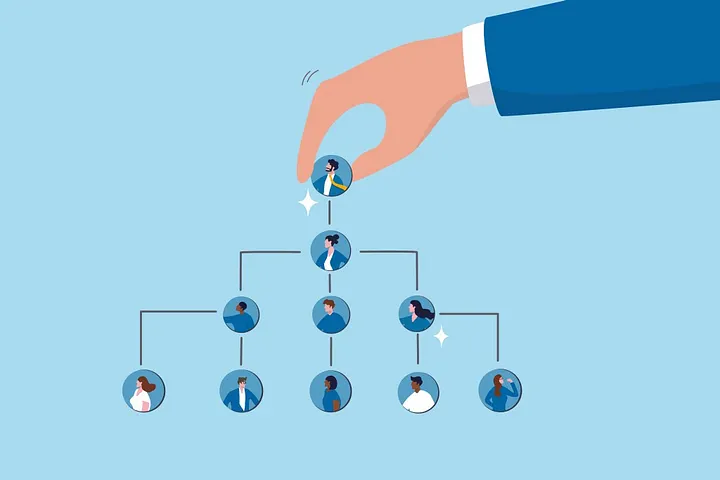
In 2024–2026, the global job market is undergoing one of the most profound structural shifts since the Industrial Revolution.
Unlike cyclical recessions or sector‑specific downturns of the past, today’s changes are more due to technological change, economic recalibration, workforce expectations, and corporate strategy. At its core sits artificial intelligence (AI): not as a mythical “robot overlord” taking our jobs, but as a powerful set of tools reshaping how, where, and why work is done.
The Context: What We’re Observing in Layoffs and Restructuring
Recent months have seen headline after headline of workforce reductions across sectors once considered relatively stable. From major tech players cutting thousands of jobs to financial institutions announcing deep headcount adjustments tied explicitly or implicitly to automation, the narrative is clear: organisations are reorganising.
This trend is not confined to Silicon Valley. It spans global markets and industries from software to banking. A crowd of companies, large and small, have cited AI adoption whether directly or as part of broader efficiency initiatives as a rationale for restructuring. Yet the reality is more layered than the phrase “AI caused it” suggests.
Economists and labour analysts caution that while AI is a factor in many of these decisions, it is often not the sole or even primary one. Financial pressures, declining revenues, investor expectations, and competition all influence workforce decisions. Some companies may invoke AI as part of a public narrative to frame layoffs as strategic rather than performance‑based.
Why AI Appears to Be Behind Layoffs
Automation and Task Redesign
AI systems can automate repetitive, rule‑based, and even complex tasks. This ranges from basic customer service chatbots to advanced code generation and data analysis. When a machine can perform certain tasks faster, cheaper, or more consistently than humans, organisations reassess the roles required to deliver similar outputs.
This doesn’t mean jobs simply vanish overnight: often the tasks within jobs are redistributed or redefined.
- Some roles shrink while others expand or mutate into new forms.
- The cumulative effect can be a net reduction in headcount or a transformation of workforce composition.
Strategic Reallocation of Resources
In business, capital is finite. Companies with large overheads may choose to reallocate funds from labour costs into technology development. Some executives publicly position this as “investment in AI,” which can lead to the perception that AI is replacing workers directly. Often what is happening is strategic resource reallocation, prioritising technologies that promise future competitive advantage, even at short‑term human cost.
Market and Investor Pressures
Many tech companies have faced prolonged cost pressures: slower revenue growth, inflation, reduced spending by customers, and rising investor scrutiny. Reducing workforce is one lever to improve short‑term financial metrics, especially when combined with narratives around automation and efficiency.
The Role of “AI Washing” and Public Narratives
A critical reality of 2025–2026 is the emergence of “AI washing”: the use of AI language in corporate communications to justify layoffs even when underlying causes are more complex. Not every layoff attributed to AI is solely caused by automation. Some analysts have noted that only a minority of layoffs explicitly cite AI as the technical cause, even among technology companies.
This doesn’t diminish concerns, it simply reframes them: companies are using AI as a narrative lens to contextualise broad strategic change. This may impact public perception, media coverage, and worker sentiment even more than the technical implications themselves.
Who Is Most Affected: Tasks, Demographics, and Skills
Empirical research on AI’s effect on employment highlights that AI does not affect all people equally. Roles involving high‑volume, routine tasks are more exposed to automation than those requiring nuanced human judgment, creativity, or deep expertise. This has manifested in:
- Routine, rule‑based tasks being automated
- Entry‑level and mid‑career jobs in flux
- Senior and highly specialised roles remaining more resilient (though not immune)
Workers in certain occupational categories such as customer support, data entry, and repetitive operational roles are more exposed to tech‑driven restructuring than those with advanced cognitive or creative skills.
The Psychological and Social Dimensions
Beyond economics and technology, AI’s influence on job markets has psychological effects. Research indicates rising job anxiety among students and workers who feel uncertain about their career trajectories in a world increasingly defined by automation and shifting requirements. This extends to stress over skill gaps, unclear career paths, and fears of redundancy.
It also intersects with inequality concerns: displaced workers who lack access to retraining or capital may struggle to transition, while those with advanced education or resources may find themselves in higher‑demand roles.
The Broader Workforce Reality: Not Just AI, But Transformation
AI is a catalyst but it is not acting alone. The labour market transformation reflects:
- Global economic pressures: inflation, supply chain disruptions, and shifting consumer demand
- Changing corporate strategies: focus on long‑term profitability and digital transformation
- Technological synergy: AI working with cloud computing, automation, analytics, and data‑driven systems
- Shifts in skills demand: premium on digital literacy, continuous learning, adaptability
In other words, the labour market is not simply shrinking; it is evolving. New roles are being created even as old ones diminish. Analysts project that while millions of jobs may be displaced, even more may be created in areas such as AI research, data science, human‑AI collaboration design, and digital infrastructure.
What This Means for Workers Today
The present reality for workers is not binary, it is nuanced:
Resilience through adaptability
Workers who adapt skills, learn to work with AI, and focus on continuous learning are positioned more favourably.
Sectoral differences:
Some fields will grow even as others contract.
Lifelong learning as a necessity:
Continuous upskilling is no longer optional; it’s foundational to career longevity.
Looking Forward: A Forecast Without Hype
Short‑term (next 12–24 months)
We can expect continued restructuring, especially in technology, finance, and professional services. Layoff announcements tied to digital transformation and cost optimisation will persist as companies recalibrate.
Mid‑term (3–5 years)
A bifurcated labour landscape may emerge: many routine roles will decline, while hybrid roles that involve managing, interpreting, and augmenting AI systems may grow rapidly.
Long‑term (10+ years)
The job market could stabilise around human‑AI ecosystems, where human creativity, ethics, strategic thinking, empathy, and cross‑domain expertise are valuable. New industries born of advanced AI such as AI safety engineering, human‑AI partnership design, and digital governance will create jobs we are only beginning to conceptualise.
In Summary
- AI is a real force in workforce restructuring, but it operates within broader economic and strategic contexts.
- Layoffs attributed to AI often reflect business narratives rather than sole technical causation.
- Displacement risk varies across occupations not all jobs are equally vulnerable.
- Psychological and socio‑economic effects are as important as technological ones.
- The future of work will increasingly involve human‑AI collaboration, not outright replacement.
This is neither the end nor the panic point , rather it is a transition, and understanding its complexity is crucial for individuals, organisations, and societies alike.
More in artificial-intelligence


Venture
Write for entrepreneurs, founders, and builders.
Share startup lessons, growth tactics, and founder stories with readers on the same journey.
One free account across In Plain English, Stackademic, Venture, and Cubed.
How it works- Startups & entrepreneurship
- Marketing & growth
- Productivity & leadership
- Founder stories & lessons learned
Sign in
Google or GitHub
Complete profile
Takes a few minutes
Get approved & publish
Start sharing
Why write for Venture?
Entrepreneurship is rarely a straight path. The lessons worth sharing are learned while building.
Comments
Loading comments…