The Wisdom Deficit: Why More Data Is Producing Worse Decisions
5 min readS Sarswat
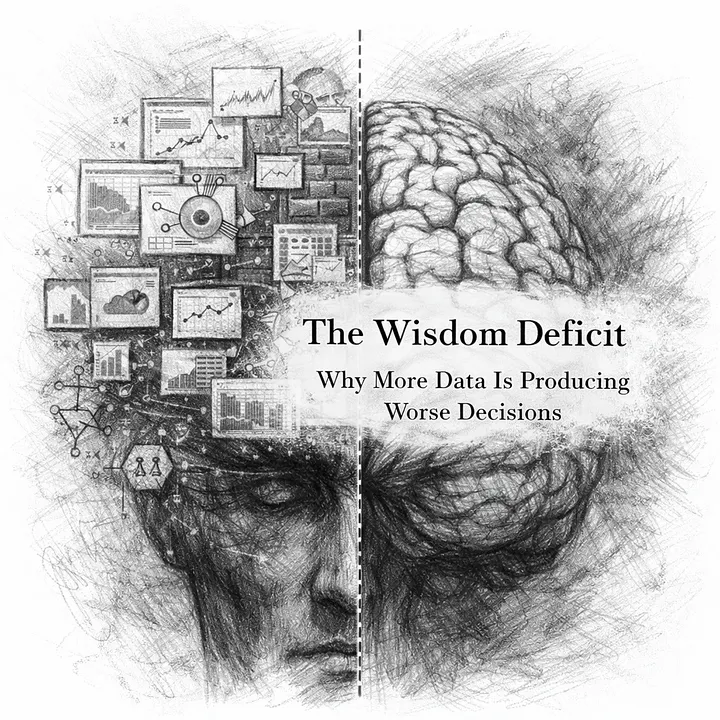
We have more data than ever and worse judgment than ever.
That is not a coincidence.
In the last decade, organizations have invested billions in building data infrastructure. Dashboards, Pipelines, Real-time analytics, AI models that never sleep and yet the most common complaint I hear from senior leaders across nuclear, tech and AI-driven operations is the same:
“We have all this data and we still don’t know what to do.”
That is not a data problem. That is a wisdom deficit and nobody is talking about it.
Here is what I have observed. The more data we have access to, the more we have quietly stopped developing the skill of judgment. We wait for the dashboard to tell us what to think. We defer to the model. We treat confidence intervals as decisions.
Data tells you what happened. Wisdom tells you what it means and what to do next. They are not the same thing and one cannot replace the other.
Data alone gives you the number whereas wisdom gives you the meaning behind the number.
Data tells you what changed whereas wisdom tells you why it changed and whether it matters.
Data tells you a pattern whereas wisdom tells whether the pattern is signal or noise.
I propose the following habits that I am confident will rebuild wisdom in a data-saturated teams:-
1. Before reviewing any dashboard state your hypothesis first. Ask your team, “What do we expect to see and why?”. This forces judgment before data, not after. It surfaces assumptions. It builds the muscle of thinking before confirming.
2. Run a “So what?” filter on every report. For every insight that surfaces, someone must answer three words before it reaches leadership: “So what, exactly?”. If your team cannot answer it in one sentence, the data is not ready to drive a decision. It’s just noise wearing a chart.
3. Debrief decisions and not just outcomes. Most teams review what happened. Almost none review how they decided. Schedule 30 minutes monthly to examine a past decision: What data did we use? What did we ignore? What would wisdom have added? That debrief is where judgment compounds.
Remember, the competitive advantage of the next decade won’t go to the team with the best data. It will go to the team that knows what to do with it.
We have built extraordinary machines for collecting intelligence. We have not built the habits for turning it into wisdom. That gap is where most organizations quietly fall behind, not because they lack information but because they have outsourced the thinking.
If your team has strong data infrastructure but still feels reactive, unclear or slow to decide, the problem is not your tools. It is the wisdom layer that is missing.
We have more data than ever and worse judgment than ever.
That is not a coincidence.
In the last decade, organizations have invested billions in building data infrastructure. Dashboards, Pipelines, Real-time analytics, AI models that never sleep and yet the most common complaint I hear from senior leaders across nuclear, tech and AI-driven operations is the same:
"We have all this data and we still don't know what to do."
That is not a data problem. That is a wisdom deficit and nobody is talking about it.
Here is what I have observed. The more data we have access to, the more we have quietly stopped developing the skill of judgment. We wait for the dashboard to tell us what to think. We defer to the model. We treat confidence intervals as decisions.
Data tells you what happened. Wisdom tells you what it means and what to do next. They are not the same thing and one cannot replace the other.
Data alone gives you the number whereas wisdom gives you the meaning behind the number.
Data tells you what changed whereas wisdom tells you why it changed and whether it matters.
Data tells you a pattern whereas wisdom tells whether the pattern is signal or noise.
I propose the following habits that I am confident will rebuild wisdom in a data-saturated teams:-
1. Before reviewing any dashboard state your hypothesis first. Ask your team, "What do we expect to see and why?". This forces judgment before data, not after. It surfaces assumptions. It builds the muscle of thinking before confirming.
2. Run a "So what?" filter on every report. For every insight that surfaces, someone must answer three words before it reaches leadership: "So what, exactly?". If your team cannot answer it in one sentence, the data is not ready to drive a decision. It's just noise wearing a chart.
3. Debrief decisions and not just outcomes. Most teams review what happened. Almost none review how they decided. Schedule 30 minutes monthly to examine a past decision: What data did we use? What did we ignore? What would wisdom have added? That debrief is where judgment compounds.
Remember, the competitive advantage of the next decade won't go to the team with the best data. It will go to the team that knows what to do with it.
We have built extraordinary machines for collecting intelligence. We have not built the habits for turning it into wisdom. That gap is where most organizations quietly fall behind, not because they lack information but because they have outsourced the thinking.
If your team has strong data infrastructure but still feels reactive, unclear or slow to decide, the problem is not your tools. It is the wisdom layer that is missing.
More in data
Venture
Write for entrepreneurs, founders, and builders.
Share startup lessons, growth tactics, and founder stories with readers on the same journey.
One free account across In Plain English, Stackademic, Venture, and Cubed.
How it works- Startups & entrepreneurship
- Marketing & growth
- Productivity & leadership
- Founder stories & lessons learned
Sign in
Google or GitHub
Complete profile
Takes a few minutes
Get approved & publish
Start sharing
Why write for Venture?
Entrepreneurship is rarely a straight path. The lessons worth sharing are learned while building.
Comments
Loading comments…