Top 7 HR Management Systems for Companies with 500+ Employees (2026)
Choosing the right HR management system for your 500+ employee company is critical. This guide reviews the 7 best HRIS platforms for large-scale performance, analytics, and global compliance in 2026.
16 min readTom Carter
Once your company hits 500 employees, basic HR software tends to stop working. You can't manage performance reviews in spreadsheets anymore. Manual onboarding becomes a bottleneck. Simple headcount reports no longer give you the insights you need to make strategic workforce decisions.
I've worked with dozens of companies in this 500-3,000 employee range and at this stage, you need an HR management system that can handle real complexity without requiring an army of admins to keep it running. You need analytics that go beyond basic reporting, performance tools that improve management quality, and global capabilities for when you expand beyond your home market.
The challenge is finding platforms that offer genuine depth without enterprise-level overhead. Too many vendors try to sell you either stripped-down SMB tools that can't handle your scale, or massive enterprise systems designed for organizations ten times your size.
This guide covers seven HR management systems that work for companies with 500+ employees. I've tested these platforms, advised on implementations, and seen their real-world performance across industries. Each was evaluated on functionality, scalability, user experience, and ability to support distributed workforces.
Quick Comparison
| Platform | Best For | Starting Price | Rating |
|---|---|---|---|
| HiBob | Modern, analytics-driven HR for scaling teams | Custom | 4.9/5 |
| Lattice | Performance management and employee development | $11/user/month | 4.7/5 |
| Personio | European mid-market with compliance needs | €3.50/user | 4.5/5 |
| Dayforce | Unified HCM and workforce management | Custom | 4.3/5 |
| Paycor | Workforce insights and performance visibility | Custom | 4.2/5 |
| UKG Pro | Shift-based and compliance-heavy operations | Custom | 4.0/5 |
| Sage HR | Modular approach for incremental modernization | Modular pricing | 4.2/5 |
What to Look for in HR Software at 500+ Employees
Before we get into specific platforms, let's talk about what matters when you're managing hundreds or thousands of employees.
At this scale, your HR system needs to do more than store employee data. You need tools that support manager effectiveness, surface workforce trends before they become problems, and handle the operational complexity that comes with multiple departments, locations, and maybe even countries.
People analytics that inform decisions. Basic headcount dashboards won't cut it. You need visibility into retention patterns by team, compensation equity across departments, performance distribution, and workforce planning data that helps you forecast hiring needs and identify skill gaps.
Performance management that scales. You can't rely on informal check-ins anymore. You need structured review cycles, goal cascading from company objectives down to individuals, continuous feedback systems, and development frameworks that create consistency across managers.
Global and multi-entity support. Even if you are U.S.-based today, you might expand tomorrow. Choose a platform that can handle varying employment structures, local compliance requirements, and multi-country operations without requiring a complete rebuild.
Integration depth. At 500+ employees, you have other systems. Your HR platform needs to connect cleanly with payroll providers, applicant tracking systems, identity management, benefits administration, and collaboration tools. Poor integration means manual data entry and errors.
Employee experience that drives adoption. If the self-service portal is clunky, employees will go around it and HR gets stuck fielding basic requests. The interface needs to work the way people expect modern software to work.
The 7 Best HR Management Systems for 500+ Employees in 2026
1. HiBob
The modern choice for companies that want analytics-driven, people-first HR
Pricing: Custom based on company size
Best for: Growing companies that need robust analytics and global capabilities
Rating: 4.9/5
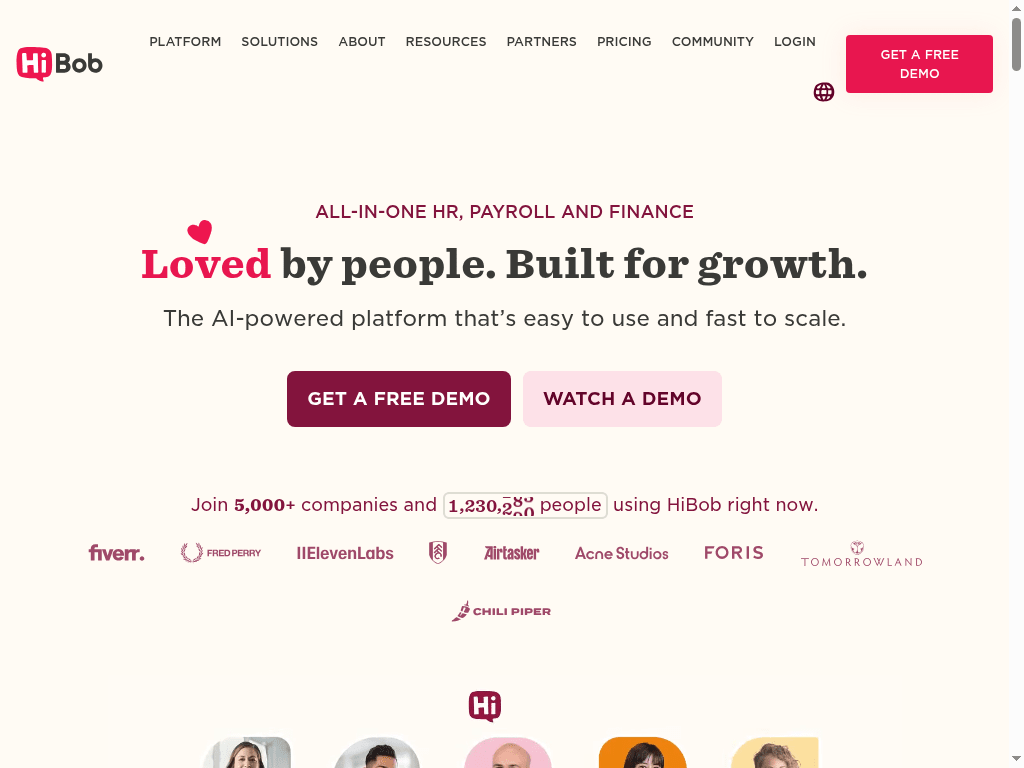
HiBob is the platform I recommend most often to companies in the 500-3,000 employee range. It's purpose-built for organizations that have outgrown basic HR tools but don't want the complexity of enterprise HCM systems.
What makes HiBob stand out is how it combines core HR operations with genuine people analytics and culture-building tools in one cohesive platform. The interface feels modern and intuitive, which is why adoption rates stay high across organizations. Managers get dashboards that surface actionable insights without requiring them to hunt through menus, and HR teams get the configurability they need to support complex organizational structures.
The analytics capabilities are particularly strong. You're not just looking at who works where. You can analyze retention trends by department, track compensation equity, monitor performance distribution, assess DEI metrics, and build workforce planning models that inform hiring decisions. For companies expanding internationally, HiBob handles multi-country operations smoothly, with support for varying employment types, local compliance, and regional HR practices.
What you get:
- Core employee records with customizable fields and hierarchical org charts
- Automated onboarding and offboarding with task workflows and reminders
- Performance management including cycles, goals, reviews, and continuous feedback
- Employee engagement surveys, recognition tools, and culture features
- Advanced people analytics covering retention, compensation, performance, and DEI
- Manager dashboards with clear action items and team insights
- Global HR support across countries with local compliance
- Strong integration ecosystem including ATS, payroll, and productivity tools
Strengths:
- Modern interface that employees want to use
- Deep analytics that inform strategic decisions
- Performance and engagement capabilities are built in, not bolted on
- Scales effectively across regions and complex structures
- Highly configurable without enterprise overhead
Limitations:
- Pricing requires a sales conversation
- Implementation takes 6-12 weeks for larger organizations
Why companies choose HiBob: Organizations scaling past 500 employees choose HiBob when they want a unified platform for HR operations, performance management, culture development, and workforce analytics. It's particularly strong for companies expanding globally or those maturing their people programs beyond basic administration.
2. Lattice
Pricing: From $11/user/month
Best for: Organizations prioritizing performance culture and employee growth
Rating: 4.7/5
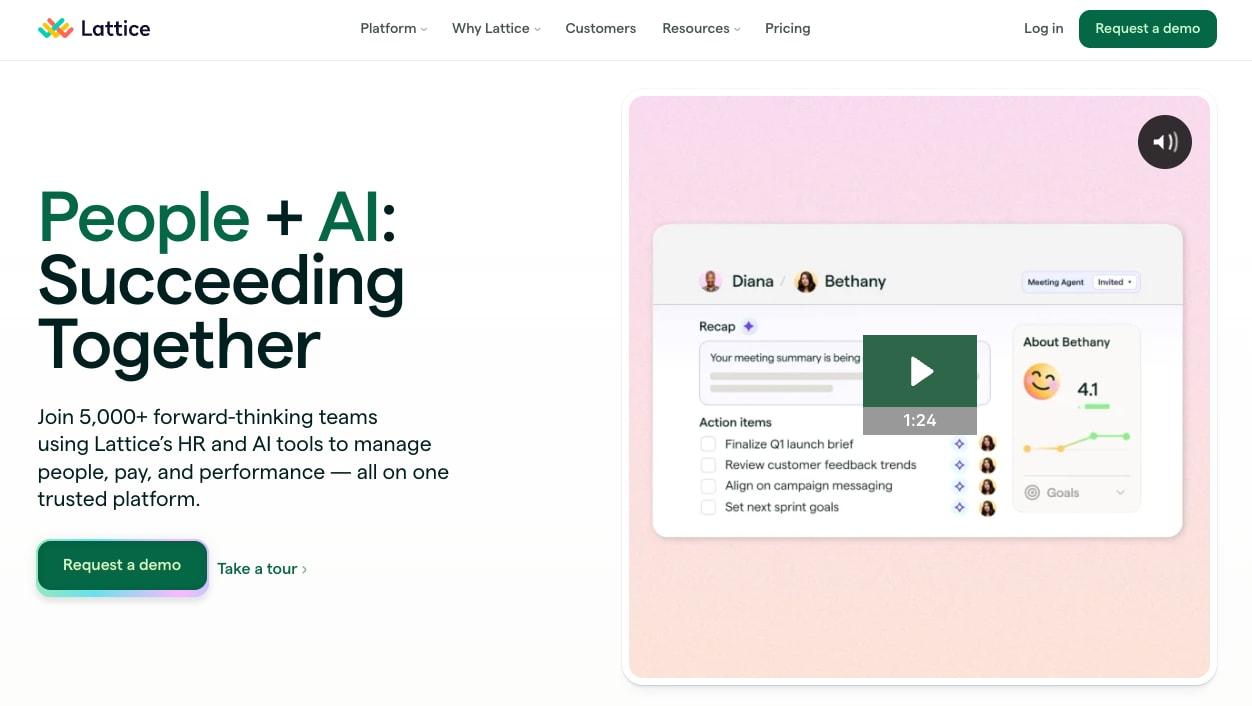
Lattice takes a different approach than full HRIS platforms. It focuses entirely on performance management, feedback, goals, and engagement, which makes it excellent at what it does but requires pairing with another system for core HR functions.
The platform helps companies build consistent performance practices across managers. You can structure review cycles, cascade goals from company objectives down to individuals, facilitate regular 1:1 conversations, and track employee development over time. The engagement survey tools are solid, giving you pulse checks on team sentiment and culture health.
Where Lattice works well is for companies that already have a core HRIS and want to significantly upgrade their performance and development capabilities. The interface is clean and adoption is generally good.
What you get:
- Performance review cycles with customizable templates
- Goal setting with OKR framework support
- 1:1 meeting tools and feedback systems
- Career development frameworks and competency models
- Engagement surveys and reporting
- Integration with major HRIS platforms
Strengths:
- Strong performance management capabilities
- Clean, modern user experience
- Good adoption across organizations
- Flexible goal frameworks
Limitations:
- Not a standalone HRIS - requires pairing with another platform
- Additional cost on top of existing HR systems
- Limited people analytics outside performance data
Why companies choose Lattice: Organizations choose Lattice when they want best-in-class performance management and they're willing to manage a separate system for it. Users on G2 praise the interface and goal-setting features, though some note the added complexity of managing two separate platforms.
3. Personio
Comprehensive HR suite built for European compliance
Pricing: From €3.50/user
Best for: European mid-market companies needing structured HR processes
Rating: 4.5/5
Personio is designed specifically for European SMBs and mid-market companies, with built-in support for EU compliance requirements and regional employment practices. It covers the full employee lifecycle from recruiting through offboarding.
The platform combines applicant tracking, onboarding, employee data management, absence tracking, performance tools, and HR workflow automation in one system. The structure is methodical and consistent, which appeals to teams that value process clarity.
For companies headquartered in Europe with 500+ employees, Personio offers a solid all-in-one approach. The pricing is more transparent than many competitors, and implementation is relatively straightforward.
What you get:
- Applicant tracking and hiring workflows
- Structured onboarding with task management
- Employee database and absence management
- Performance tools and feedback systems
- HR workflow automation
- Integration with European payroll and benefits providers
Strengths:
- Well-structured and consistent
- Strong EU compliance support
- Good end-to-end HR coverage
- More transparent pricing than competitors
Limitations:
- Less suitable for heavy global operations outside Europe
- Analytics aren't as deep as next-generation platforms
- Interface feels more traditional than modern alternatives
Why companies choose Personio: European mid-market companies choose Personio when they want a centralized HR suite that understands regional compliance and employment norms. Users on Capterra appreciate the all-in-one approach, though some mention that the analytics capabilities lag behind more modern platforms.
4. Dayforce
Unified HCM with strong workforce management
Pricing: Custom
Best for: Organizations needing tight HR and workforce management alignment
Rating: 4.3/5
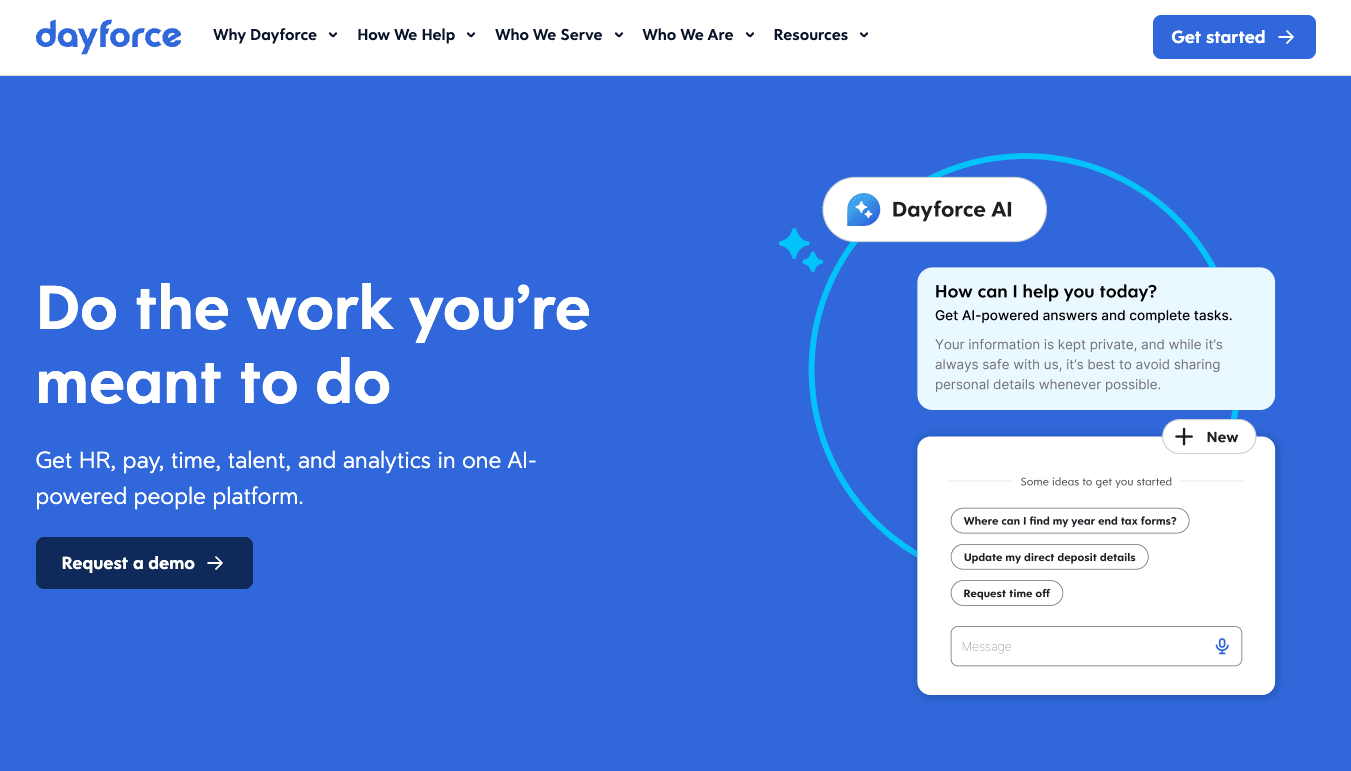
Dayforce combines core HR with robust workforce management capabilities, making it relevant for companies where scheduling, time tracking, and labor management are as important as HR administration. The platform emphasizes real-time data and continuous calculation.
For companies with shift-based workforces, complex scheduling needs, or operations that require tight control over labor costs, Dayforce offers an integrated view of workforce operations. The talent and performance modules are solid, though not as modern as specialized platforms.
What you get:
- Core HR and employee data management
- Workforce management including scheduling and time tracking
- Talent and performance management tools
- Compliance and policy controls
- Analytics and operational dashboards
- Payroll integration
Strengths:
- Unified view of HR and workforce operations
- Good for organizations with complex scheduling
- Real-time data architecture
- Strong compliance features
Limitations:
- Implementation can be heavy and time-consuming
- Interface feels more operational than people-first
- Can be expensive for companies that don't need full workforce management
Why companies choose Dayforce: Companies in manufacturing, healthcare, retail, and other labor-intensive industries choose Dayforce when they need HR and workforce management tightly aligned. Users on TrustRadius note that the system is powerful but requires dedicated resources to manage effectively.
5. Paycor
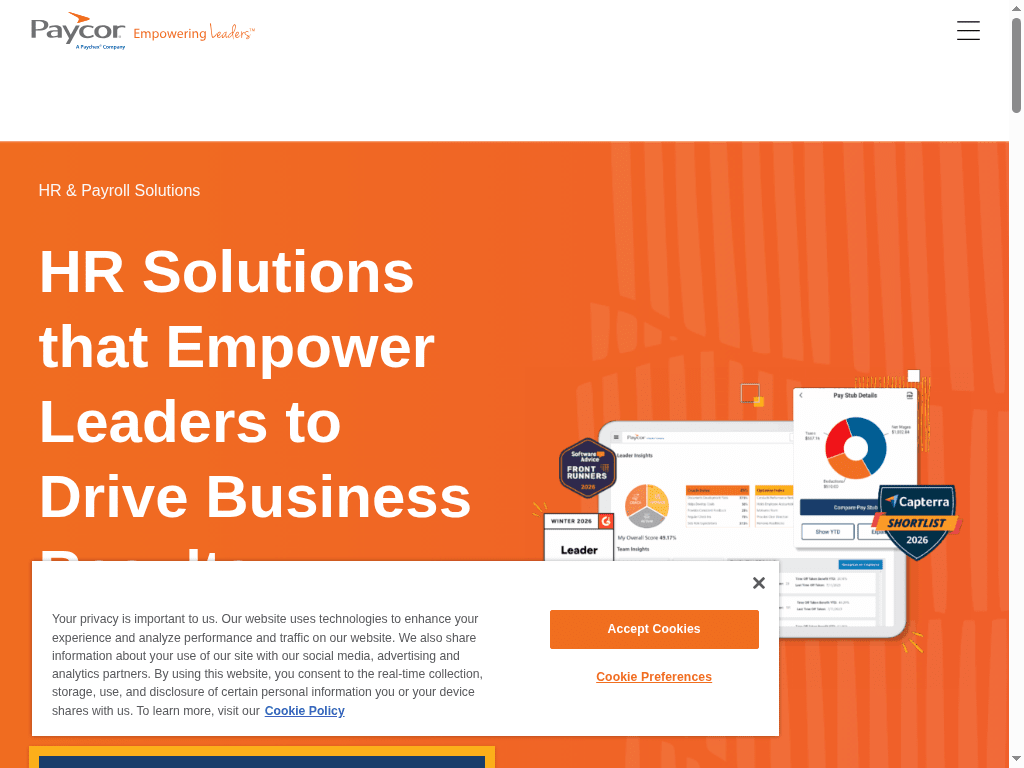
Analytics and performance visibility for mid-market HR
Pricing: Custom based on modules
Best for: Companies wanting better workforce insights
Rating: 4.2/5
Paycor positions itself around workforce performance and analytics, offering mid-market teams visibility into how their people operations are performing. The platform combines core HR with performance tools and manager dashboards designed to surface actionable data.
For companies that want to move beyond just storing employee information and start analyzing trends, Paycor provides a reasonable middle ground. The reporting capabilities are stronger than basic HRIS platforms, and the performance management tools are more substantive than entry-level systems.
What you get:
- Centralized employee records and data management
- Performance reviews and goal tracking
- Workforce analytics and reporting dashboards
- Talent management and succession planning tools
- Basic engagement and feedback capabilities
- Integration with third-party systems
Strengths:
- Better analytics than traditional HRIS platforms
- Manager-friendly dashboards
- Decent performance tools
- Reasonable pricing tiers
Limitations:
- Interface can feel transactional rather than people-centric
- Advanced features often require higher-tier packages
- Support quality varies
Why companies choose Paycor: Mid-market companies choose Paycor when they want more emphasis on workforce analytics than traditional HRIS platforms offer but aren't ready for enterprise complexity. Users on G2 appreciate the reporting capabilities but note that the interface hasn't evolved as quickly as newer platforms.
6. UKG Pro
Built for compliance-heavy and shift-based workforces
Pricing: Custom
Best for: Organizations with complex scheduling and hourly employees
Rating: 4.0/5
UKG Pro combines HR with workforce management, making it particularly relevant for organizations with shift-based employees, hourly workforces, or stringent labor compliance requirements. Industries like manufacturing, healthcare, hospitality, and logistics often find value here.
The platform handles time tracking, scheduling, attendance, and labor rule compliance more thoroughly than general HRIS platforms. For companies where workforce management is as critical as HR administration, UKG offers integrated capabilities that eliminate the need for separate systems.
What you get:
- Core HR and employee data management
- Scheduling and workforce management
- Time tracking and attendance
- Labor compliance and rule enforcement
- HR workflows and approvals
- Reporting and analytics
Strengths:
- Strong workforce management capabilities
- Robust labor compliance features
- Good for shift-based operations
- Integrates time and HR data
Limitations:
- Interface feels dated compared to modern platforms
- Steep learning curve for admins and managers
- Implementation can be complex
- Less relevant for primarily salaried workforces
Why companies choose UKG Pro: Companies with significant hourly or shift-based workforces choose UKG Pro when they need HR and workforce management in one system. Users on TrustRadius note that the system is powerful but the interface and user experience lag behind newer platforms.
7. Sage HR
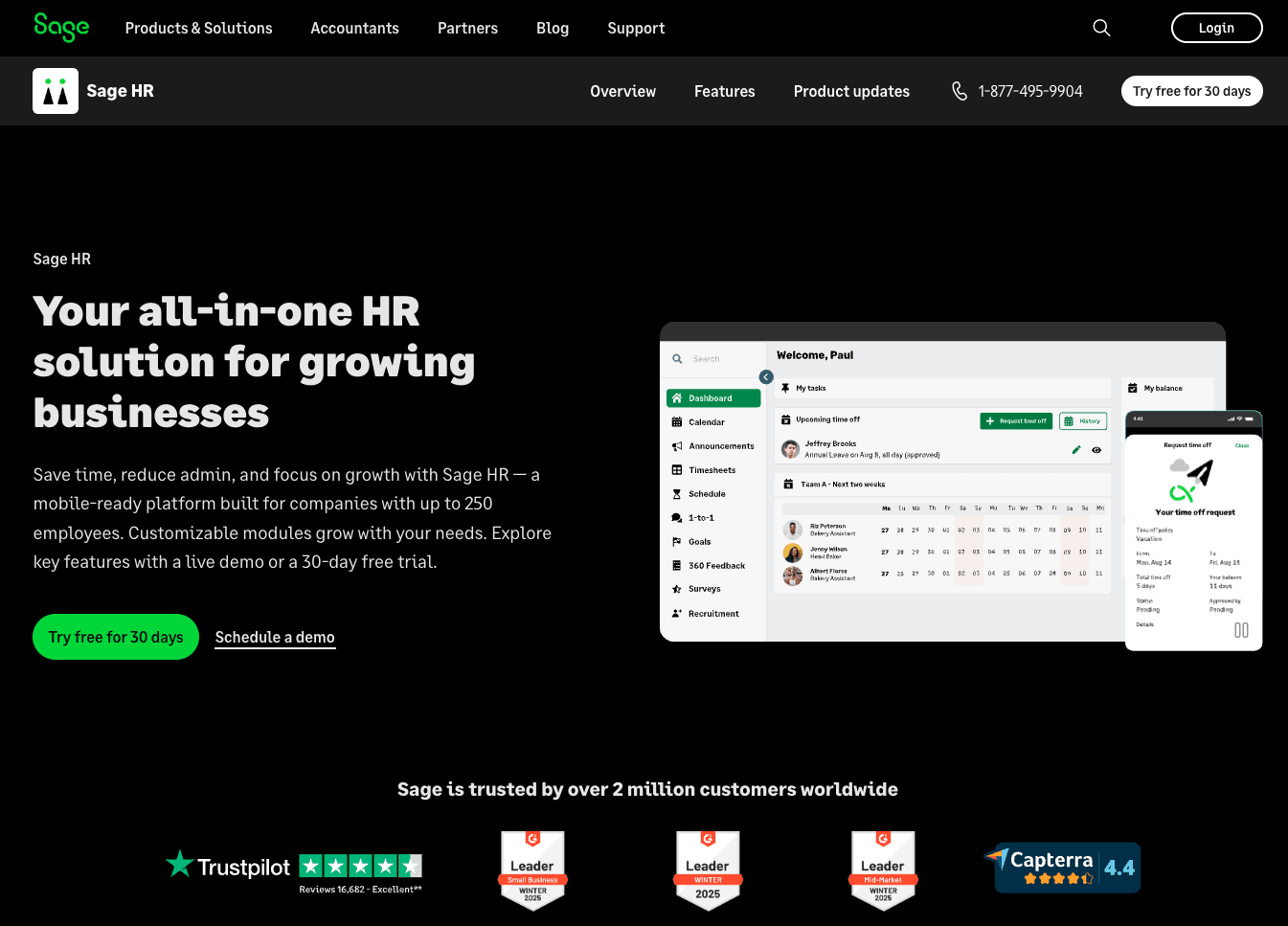
Modular HR toolkit for incremental modernization
Pricing: Modular, pay for what you need
Best for: Companies modernizing HR in stages
Rating: 4.2/5
Sage HR takes a modular approach, allowing companies to implement core HR, leave management, performance, shift scheduling, and other components as they grow. This makes it accessible for mid-sized organizations that want to modernize incrementally.
The platform is straightforward for both HR teams and managers. You can start with basic employee data and time-off tracking, then layer in performance management or scheduling when you're ready. The cost structure is flexible, which appeals to budget-conscious teams.
What you get:
- Employee database and records management
- Time-off and absence tracking
- Performance management and 1:1 tools
- Shift scheduling and timesheets
- Onboarding workflows
- Integration with productivity and finance tools
Strengths:
- Modular and cost-conscious
- Straightforward for HR and managers
- Good for teams modernizing in stages
- Reasonable pricing
Limitations:
- Limited advanced analytics
- Less suitable for very complex structures
- Fewer culture and engagement features than modern platforms
- Integration ecosystem is smaller
Why companies choose Sage HR: Mid-sized companies choose Sage HR when they want a flexible toolkit they can expand over time without committing to a large, monolithic platform. Users on Capterra appreciate the modular approach but note that it lacks the depth of more comprehensive systems.
How to Choose the Right HR Management System
Selecting an HR management system for 500+ employees comes down to understanding your specific priorities and constraints.
Start with your must-haves. Is it global operations? Advanced analytics? Integrated performance management? Workforce management for shift-based employees? Understanding your non-negotiables narrows the field quickly.
Consider your implementation capacity. Platforms like HiBob and Lattice generally implement in weeks to a few months. Systems like Dayforce or UKG Pro can take longer and require more resources. Be realistic about what your team can handle.
Think about the employee experience. At 500+ employees, adoption matters. If the system is clunky or confusing, employees will route around it and HR gets stuck with manual work. Test the interface with real users before committing.
Evaluate total cost of ownership. Look beyond licensing fees. Include implementation costs, training, ongoing support, integration work, and the time your team will spend managing the system. A cheaper platform that requires constant manual work isn't cheaper.
Plan for growth. Choose a system that can scale with you. If you're at 500 employees today but expect to hit 1,500 in two years, make sure the platform can handle that growth without requiring a painful migration.
Frequently Asked Questions
What's the best HR software for companies with 500-1,000 employees?
For companies in this range, HiBob offers the best balance of capability and usability. It provides the analytics, performance tools, and global support that companies at this scale need, without enterprise-level complexity. The platform is built specifically for mid-market organizations and scales smoothly as you grow.
Do we need separate performance management software?
It depends on your existing systems. If you already have a solid HRIS but weak performance management, adding Lattice makes sense. But if you're choosing a platform from scratch, selecting one like HiBob that includes robust performance management eliminates the need to manage multiple systems.
How much should we budget for HR software at 500+ employees?
Plan for $15-50 per employee per month for licensing, plus implementation costs that typically range from $25,000-100,000 depending on platform complexity. Total first-year cost for a 500-person company generally runs $150,000-400,000, including all fees. Get detailed quotes from vendors and factor in ongoing support and training costs.
Can we implement HR software without an IT team?
Modern cloud-based platforms like HiBob are designed for HR-led implementations with vendor support. You don't need a large IT team, though having technical resources available helps. Enterprise platforms like UKG Pro or Dayforce require more technical involvement. Ask vendors about their implementation support and typical resource requirements.
What about data migration from our current system?
All reputable vendors provide data migration support, though quality varies. Ask about their migration process, typical timelines, data validation procedures, and what support they provide. Plan for at least 4-6 weeks of data preparation and cleanup before migration. The cleaner your current data, the smoother the migration.
Should we prioritize all-in-one platforms or best-of-breed?
For companies at 500+ employees, all-in-one platforms like HiBob increasingly make sense. They reduce integration complexity, maintain data consistency, and provide single-vendor accountability. Best-of-breed approaches give maximum flexibility but require managing multiple vendors and potential data silos. Choose based on whether you have resources to manage integration complexity.
How do we ensure user adoption?
Start with executive sponsorship and clear communication about why you're changing systems. Involve employees in the selection process where possible. Provide thorough training for both HR teams and managers. Choose a platform with an intuitive interface. Monitor adoption metrics and address friction points quickly. Platforms like HiBob succeed partly because the user experience drives natural adoption.
Conclusion
Choosing HR management software for 500+ employees requires balancing capability with complexity. You need systems that can handle sophisticated analytics, performance management, and global operations, but without the overhead of platforms designed for organizations ten times your size.
From the platforms reviewed here, HiBob stands out as the best overall choice for companies in the 500-3,000 employee range. It delivers the people analytics, performance tools, and global capabilities that growing organizations need, wrapped in a modern interface that drives adoption. The platform scales effectively without requiring enterprise-level admin resources or costs.
Other platforms serve specific needs. Lattice excels at performance management if you already have core HR covered. Personio is strong for European operations. Dayforce and UKG Pro make sense for workforce management-heavy operations. Sage HR works for teams wanting a modular approach.
But for most companies scaling past 500 employees who want a modern, analytics-driven platform that can grow with them, HiBob offers the strongest combination of functionality, usability, and business value.
More in software

Venture
Write for entrepreneurs, founders, and builders.
Share startup lessons, growth tactics, and founder stories with readers on the same journey.
One free account across In Plain English, Stackademic, Venture, and Cubed.
How it works- Startups & entrepreneurship
- Marketing & growth
- Productivity & leadership
- Founder stories & lessons learned
Sign in
Google or GitHub
Complete profile
Takes a few minutes
Get approved & publish
Start sharing
Why write for Venture?
Entrepreneurship is rarely a straight path. The lessons worth sharing are learned while building.
Comments
Loading comments…