Track Performance Better with an Accurate AI Visibility Tool
9 min readAnya Writes
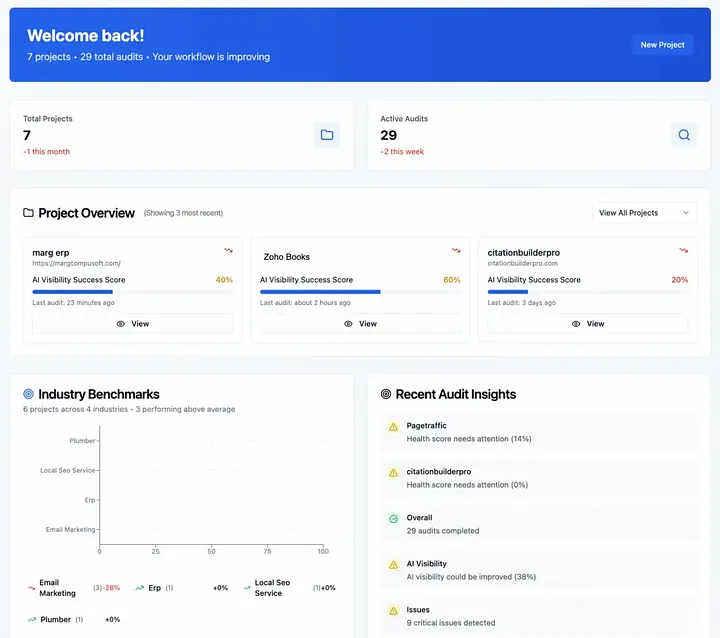
Teams have spent years perfecting dashboards, funnels, and KPIs. They track every click, every session, every assisted conversion. Yet a strange blind spot has quietly appeared in most performance reports. The world shifted to AI-driven discovery, but the metrics stayed stuck in the pre-AI era.
People now ask AI systems for product recommendations, tool comparisons, service suggestions, and buying advice. The early stage of the buyer journey has moved upstream into AI conversations. If your brand doesn’t appear there, your performance metrics will look fine on paper while real growth slips through the cracks.
This is why accurate AI visibility tools have become essential. Not optional. Not experimental. Essential. They show you how AI engines understand, position, and rank your brand long before anyone lands on your website.
Here’s the thing. You cannot improve what you cannot see. And right now, too many brands are growing in the dark without realizing it.
Let’s break down how an accurate AI visibility tool transforms performance tracking, why it matters more than ever, and how to use it to sharpen your strategy.
1. The New Reality: AI Is Now the First Filter in the Buyer Journey
A decade ago, the funnel began with a Google search. Today, the journey starts with questions like:
• “What’s the best CRM for small teams?” • “Which SEO tool gives the most accurate data?” • “What email platforms work best for freelancers?” • “What’s the best software for automated billing?”
People ask these questions directly to AI assistants. Without entering a keyword. Without seeing ads. Without browsing multiple pages.
AI becomes the first opinion they hear. The first recommendation they trust. The first shortlisting mechanism.
This means one thing: Visibility inside AI answers is now a performance metric. If you don’t show up, your funnel shrinks before your analytics even get the chance to measure it.
This is where an accurate AI visibility tool changes everything.
2. What an Accurate AI Visibility Tool Actually Measures
To keep it simple, here’s what a strong tool reveals:
• Whether your brand appears in AI-generated answers • How frequently you’re mentioned • Where you appear compared to competitors • How AI describes your product or service • Which sources AI relies on when citing your brand • Sentiment and tone behind AI mentions • Whether your visibility is rising or falling • What prompts trigger your appearance • What questions completely ignore you
No traditional analytics platform gives you this information. No keyword tracker can replicate it. No SERP report can replace it.
AI visibility tools act like a window into how machines represent your brand.
You’re not tracking keywords. You’re tracking perception.
3. Why AI Visibility Matters for Performance Tracking
The performance loop is shifting upstream. AI visibility now influences:
1. Lead Volume
If AI doesn’t show you in buying-stage prompts, your lead pool shrinks.
2. Lead Quality
AI-driven discovery produces more informed prospects, which increases conversion rates.
3. Brand Awareness
Repeated AI mentions build familiarity faster than organic search.
4. Customer Trust
AI summaries reinforce your credibility without you doing anything.
5. Category Positioning
AI often defines your product category before your own copy does.
Traditional performance metrics miss these early signals completely. Accurate visibility tools catch them.
4. The Hidden Problems Most Teams Never See Without AI Visibility Tracking
Let’s walk through the common issues brands only discover when they run AI visibility audits.
1. AI is referencing outdated content about your product
Maybe you updated your features last quarter, but AI still cites a blog from 2022.
2. Competitors dominate key prompts you should own
The AI favors brands with stronger topical depth, even if your product is better.
3. Your brand is misclassified
AI thinks your CRM is a “project management app.” Not ideal.
4. Your site isn’t cited at all
AI uses third-party review sites instead of your documentation.
5. You appear in one model but not in others
Visible on ChatGPT. Invisible on Gemini. Mediocre on Perplexity. Fragmented visibility = inconsistent performance.
Accurate AI visibility tools surface these gaps instantly.
5. How an Accurate AI Visibility Tool Improves Growth Metrics
When you monitor AI visibility correctly, several performance improvements follow naturally.
1. Better Top-of-Funnel Accuracy
You finally see the real starting point of the buyer journey.
2. More Predictable Growth
AI visibility trends often predict demand changes 30 to 60 days earlier.
3. Improved Messaging Alignment
You rewrite content to match how AI users ask questions — not what your team assumes they ask.
4. Higher Authority Signals
AI tends to cite pages with clear structure, strong definitions, and factual density. Improving these elements improves visibility across engines.
5. Stronger Competitor Awareness
You no longer guess which competitors win AI perception battles. You see it clearly.
6. Why AI Visibility Is a More Honest Metric Than Rankings
Rankings show where you appear in Google’s list. AI visibility shows whether your brand exists in conversations at all.
Rankings depend on:
• On-page SEO • Backlinks • Technical health • Search patterns • Page authority
AI visibility depends on:
• Semantic relevance • Conceptual understanding • Citation trust • Topical clustering • Consistency of brand meaning
Rankings can be misleading. AI visibility can’t.
Either the model understands you or it doesn’t. Either it trusts you or it doesn’t. Either you appear or you don’t.
There is no “almost.”
7. Key Features You Should Look for in an Accurate AI Visibility Tool
Every tool looks impressive at first glance. What matters is what actually improves your performance.
Look for tools that offer:
1. Multi-engine monitoring
ChatGPT, Gemini, Claude, Perplexity, AI Overviews.
2. Prompt-level analysis
You want to know which specific questions trigger your brand.
3. Competitor comparison
If AI prefers someone else, you need to know why.
4. Citation tracking
See which URLs are being referenced. Weak citations = weak visibility.
5. Sentiment analysis
AI might mention you but in a neutral or negative tone.
6. Trend tracking
You want to monitor growth over time, not snapshots.
7. Data export options
Your performance team should integrate insights into existing dashboards.
These features aren’t “nice to have.” They’re the foundation of accurate performance tracking in an AI-shaped landscape.
8. Real Examples: How Accurate AI Visibility Tools Improve Performance
Let’s look at a few realistic scenarios.
Example 1: The SaaS tool losing qualified leads
Their SEO is strong. Rankings look healthy. But AI never includes them in “best tools for X” lists.
The visibility tool shows: • Competitors dominate those prompts • Their category pages have weak semantic structure • AI pulls definitions from outdated reviews
After rewriting product pages and strengthening content clusters, visibility improves within weeks.
Lead quality jumps noticeably.
Example 2: The e-commerce brand with declining conversions
Traffic looks stable, yet conversions drop.
AI visibility data reveals: • AI keeps recommending a competitor with more FAQ depth • Buyer-intent prompts surface other brands • Their product descriptions lack clarity
They improve descriptions, update schema, and fix inconsistencies.
Conversions rebound.
Example 3: The local business erased by AI models
They show up fine on Google Maps. But Gemini never mentions them for local queries.
The AI visibility tool shows: • Incomplete citations • Old directory listings • Missing structured data
Fixing these improves AI recognition and drives new customer inquiries.
9. How to Integrate AI Visibility Into Your Performance Workflow
You don’t need a new analytics philosophy. You need a new starting point.
Here’s a simple workflow:
Step 1: Pick 20 buyer-intent prompts
“What’s the best…?” “Which tool should I use for…?” “Top software for…?”
Step 2: Track visibility weekly
Look at mentions, citations, and competitor coverage.
Step 3: Map visibility trends to funnel metrics
You’ll start seeing clear correlations with lead volume and conversion rates.
Step 4: Update content based on AI insights
AI visibility gaps = content priorities.
Step 5: Re-test visibility after publishing
AI reacts quickly to structured and semantically rich content.
Step 6: Expand tracking as your product grows
Embed monitoring into product releases, campaigns, and new pages.
This isn’t extra work. It’s smarter work.
10. AI Visibility as an EEAT Multiplier
EEAT (expertise, experience, authority, and trust) shapes both Google rankings and AI comprehension.
When your content has:
• Clear definitions • Authoritative structure • Real-world insights • Strong topical consistency
AI interprets it more accurately.
Visibility improves — not because you gamed anything, but because your content finally reflects your expertise clearly.
Accurate AI visibility tools show you exactly where your EEAT signals are weak.
11. What Happens When You Ignore AI Visibility Metrics
Here’s the slow decline most brands don’t see until it’s too late:
Stage 1:
AI stops recommending your brand in certain categories.
Stage 2:
Competitors appear in more AI comparisons.
Stage 3:
Prospects come into sales calls with the wrong expectations.
Stage 4:
Lead quality erodes.
Stage 5:
Growth slows even though SEO traffic looks fine.
By the time a team realizes something is wrong, the visibility gap is wide and expensive to fix.
Accurate AI visibility tools prevent this altogether.
12. Final Thoughts: Performance Means Nothing If You’re Invisible
The most accurate dashboard cannot fix a visibility problem you don’t know exists.
Traffic, rankings, conversions — these numbers mean less every year if AI filters out your brand before users even reach search.
An accurate AI visibility tool doesn’t replace your analytics ecosystem. It enhances it.
It becomes the missing layer that connects:
• AI recommendations • Buyer decisions • Content relevance • Competitive positioning • Sales readiness
Visibility drives performance. Accuracy drives visibility. AI visibility tools deliver both.
If you want to grow faster, smarter, and more predictably, this is the metric to watch
More in artificial-intelligence


Venture
Write for entrepreneurs, founders, and builders.
Share startup lessons, growth tactics, and founder stories with readers on the same journey.
One free account across In Plain English, Stackademic, Venture, and Cubed.
How it works- Startups & entrepreneurship
- Marketing & growth
- Productivity & leadership
- Founder stories & lessons learned
Sign in
Google or GitHub
Complete profile
Takes a few minutes
Get approved & publish
Start sharing
Why write for Venture?
Entrepreneurship is rarely a straight path. The lessons worth sharing are learned while building.
Comments
Loading comments…