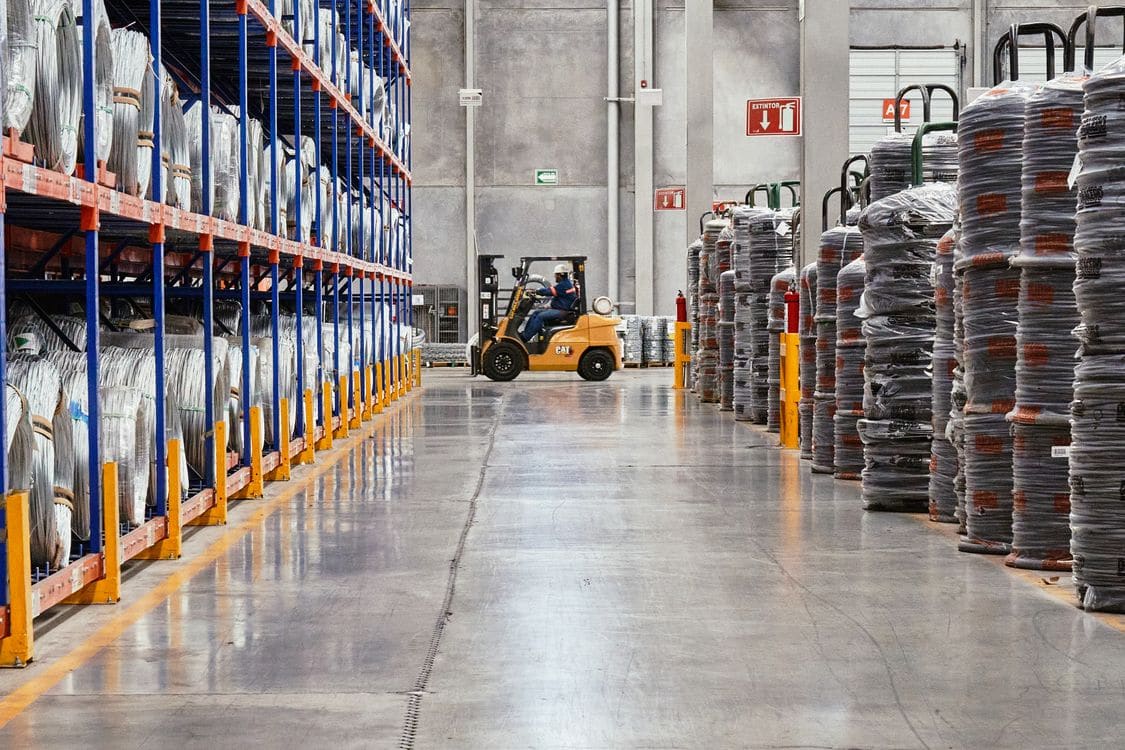
A growing business usually feels warehouse strain before the numbers fully show it. A storage system that once seemed fine can become crowded, slow, and frustrating as inventory expands. Walking distances increase, picking takes longer, and employees spend too much time searching for products or moving one pallet to reach another. A smarter warehouse does not need to be massive or overly sophisticated. It needs to help people work faster, use space better, and prevent small inefficiencies from turning into expensive operational problems.
That is especially relevant in Dallas, where logistics, manufacturing, and wholesale trade play a major role in the local economy. With a population of more than 1.3 million, Dallas is one of the nation's leading business centers, making efficient warehouse operations increasingly important for companies that want to keep up with growing demand and faster order fulfillment.
Planning for growth
Many small businesses begin with a simple approach to storage: put products wherever there is room. That can work in the early stages, but it rarely holds up as order volume rises. Aisles get tighter, temporary storage becomes permanent, and workers lose time navigating obstacles instead of processing orders.
These are clear signs that the original layout no longer supports the business. When employees must constantly shift items to access other items, the warehouse is adding labor instead of improving productivity. Over time, that also increases fatigue and physical strain, especially during busy seasons.
Planning for growth means looking past today’s immediate problem and preparing for what comes next. It can also help to compare equipment options in active logistics markets.
In Dallas forklifts play an essential role in keeping warehouses, distribution centers, and manufacturing facilities running efficiently.
It is to choose tools that let your team move inventory safely, consistently, and with less wasted effort. Warehouse problems rarely stay contained. If ignored, they usually spread into higher labor costs, slower fulfillment, and customer service issues.
Space affects profits
Warehouse space is more than square footage. It is a business asset, and poor use of that asset shows up in wasted motion, labor inefficiency, and slower order turnaround.
A good place to start is your workflow. Can employees and equipment move through the warehouse without delays, or are they constantly waiting on one another, navigating around obstacles, or doubling back to complete simple tasks? Take a look at where your inventory is stored as well. If your fastest-moving products are not the easiest to access, your team is likely wasting valuable time on every shift.
Storage systems have a major impact as well. The right racking can make better use of vertical space without creating unstable or difficult-to-access storage. At the same time, stacking too high or placing oversized items in poor locations can slow retrieval and increase the risk of accidents.
Traffic flow matters just as much. A direct path from receiving to storage to picking to packing reduces delays in practical ways. The warehouse does not need a perfect design on paper. It needs a layout that matches how the business actually operates from day to day.
Equipment that fits
Not every warehouse needs the same equipment, and the wrong choice can create frustration as well as unnecessary cost. The best equipment is the equipment that fits the building, inventory, and workflow.
If your operation moves heavy pallets, lift equipment needs enough capacity to handle them safely. But it should not be so large that it becomes difficult to use in narrow aisles. In smaller spaces, maneuverability can matter just as much as lifting power. A machine that is hard to turn indoors may slow operations rather than improve them.
It is also important to think about where the equipment will be used. Some machines are best suited for smooth indoor floors, while others are built for outdoor yards, loading areas, or rough surfaces. That decision affects tire type, power source, and maintenance requirements.
Staff experience matters too. Many small and midsize businesses benefit from equipment that is easier to learn and simpler to maintain. Advanced features may sound attractive, but reliability often provides more value. If a machine is frequently down for service, it hurts the operation no matter how impressive it looked during the buying process.
Safety starts early
Safety planning is most effective before the warehouse becomes too busy. Once activity increases, poor habits spread quickly, and minor layout issues can become serious hazards.
One of the simplest improvements is creating clear pathways. Employees should know where they can walk, where equipment operates, and where products may be staged without blocking movement. These straightforward rules help prevent common accidents while also making work more organized.
Training should begin early as well, not only after a close call. Workers need to understand proper lifting methods, load limits, and safe movement in shared spaces. New employees especially benefit from training that is clear, repeatable, and easy to follow.
Visibility is another factor that is often overlooked. Good lighting, marked crossings, and orderly storage make it easier to spot risks before something tips, falls, or collides. In a busy warehouse, confusion wastes both time and money. A safer operation is often a faster one too.
Budgeting beyond purchase
The true cost of warehouse equipment goes far beyond the purchase price. The full cost includes maintenance, downtime, training, and the disruption that comes with changing workflows.
A less expensive option may look appealing at first, but it can become more costly over time if it breaks down often or slows productivity. Repairs affect more than the maintenance budget. They can delay shipments, force temporary workarounds, and reduce daily output.
Training deserves just as much attention. Even equipment designed to be user-friendly takes time to learn, and that learning time has a cost when employees are already working through busy schedules. If multiple team members need training at once, productivity can dip for several days or even weeks.
It is also smart to think through workflow disruption before adding equipment or reorganizing storage. A worthwhile upgrade should create better operations after the adjustment period, not ongoing confusion. For small and midsize businesses, the strongest investments reduce overall operating strain, not just upfront spending.
When to upgrade
Many businesses delay warehouse improvements because the current setup still seems good enough. The problem is that good enough can quietly become a daily bottleneck that everyone accepts as normal.
Seasonal demand is one of the clearest warning signs. If the same busy period brings overcrowded aisles, missed shipments, or excessive overtime every year, the warehouse likely needs attention. Another sign appears when larger customer orders become harder to process, even though stronger sales should be a positive development.
New product lines can reveal weaknesses too. Different sizes, weights, and storage requirements may not fit existing shelves or equipment. A system designed for one inventory profile may struggle when the product mix expands.
More in business
Venture
Write for entrepreneurs, founders, and builders.
Share startup lessons, growth tactics, and founder stories with readers on the same journey.
One free account across In Plain English, Stackademic, Venture, and Cubed.
How it works- Startups & entrepreneurship
- Marketing & growth
- Productivity & leadership
- Founder stories & lessons learned
Sign in
Google or GitHub
Complete profile
Takes a few minutes
Get approved & publish
Start sharing
Why write for Venture?
Entrepreneurship is rarely a straight path. The lessons worth sharing are learned while building.
Comments
Loading comments…