When Automation Replaces Instinct
How Over-Automation in Everyday Life Is Forcing a Reckoning Between Convenience and Connection
4 min readGeorge Witt

We need to have an honest conversation about something that’s been quietly bothering all of us.
Technology was supposed to make everyday life frictionless.
Instead, somewhere along the way, we started replacing perfectly functional human experiences with automated systems that often work worse than what they replaced.
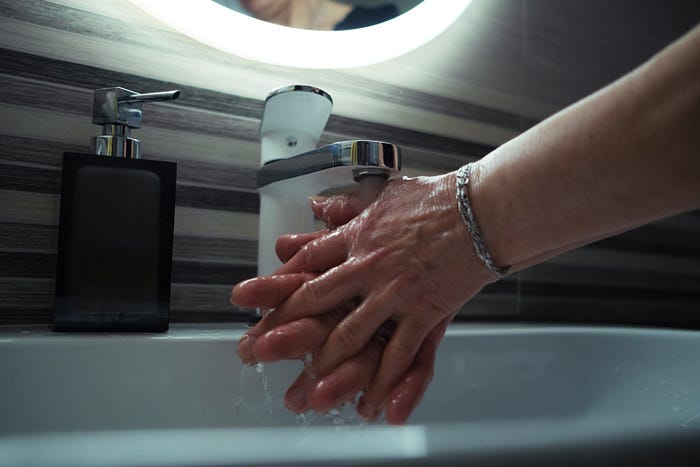
Think about the last time you used a public restroom.
You waved your hands under the faucet like you were performing a magic trick, but nothing happened.
You shuffled to the next sink.
Same result.
The soap dispenser gave you half a pump.
The paper towel machine dispensed a single, tear-resistant sheet the size of a postcard.
You left feeling generally more frustrated than when you walked in.
That’s not innovation.
That’s inconvenience wearing the costume of progress.
I am not saying this is true across all modern public restrooms; however, it has been my experience more often than not.
Now walk into your favorite restaurant.
A sign says, “Scan the QR Code to View Our Menu.”
You pull out your phone, squint at a tiny mobile-optimized webpage, and scroll through a layout clearly designed by someone who has never actually eaten a meal.
Sometimes the menu page doesn’t even load at all…
Then there is the table kiosk.
You place your order at a kiosk when it's actually working.
Nobody asks how your day is going.
Nobody recommends the special.
You sit in a room full of people, all staring at screens, in a place specifically designed for human gathering.
Major restaurant brands are already acknowledging that this went too far.
Panera Bread recently launched its RISE initiative, acknowledging the need to reinvest in front-of-house staff and bring warmth back to the guest experience.
Industry surveys consistently show that while diners appreciate convenience, they still value personal interaction, especially when something goes wrong, when they need menu guidance, or when the experience should feel like more than a vending machine transaction.
And it goes well beyond dining.

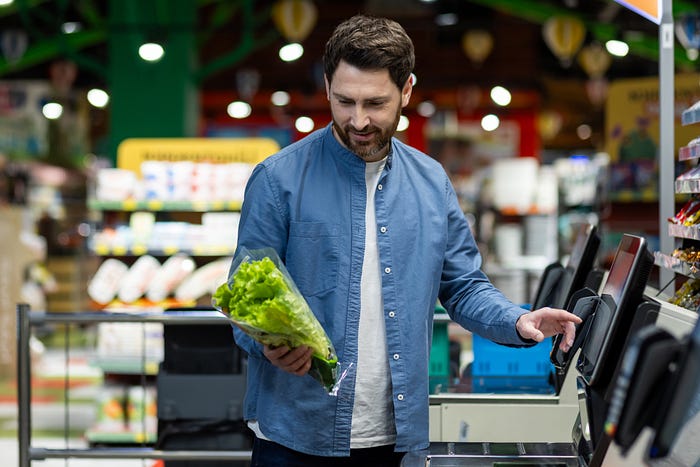
Grocery stores funneled us into self-checkout lanes that were marketed as faster and more efficient.
A 2025 Ipsos survey found that 61% of consumers now consider self-checkout more time-consuming than a staffed register.
Retailers like Wegmans, Safeway, and H-E-B have quietly begun reintroducing staffed express lanes during peak hours and are reporting higher satisfaction scores as a result.
One labor expert labeled self-checkout what it actually is: “fauxtomation” technology that doesn’t eliminate work but simply transfers paid labor to unpaid customers.
Then there’s driving.
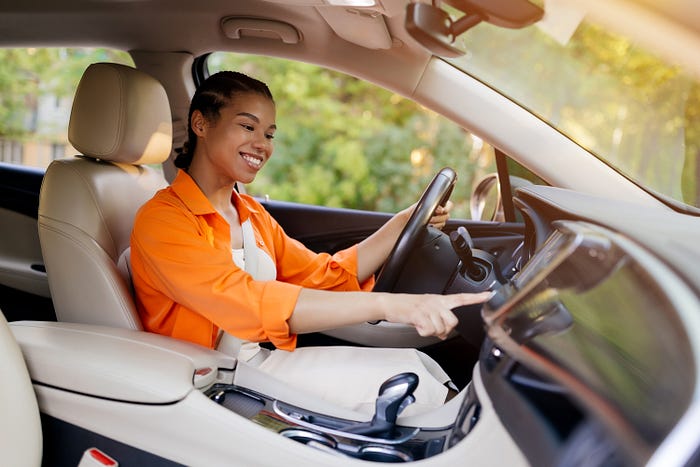
Modern vehicles are equipped with Advanced Driver Assistance Systems that include lane centering, adaptive cruise control, and automated lane changes.
These systems are genuinely saving lives.
Road traffic accidents account for roughly 1.3 million deaths globally per year, and ADAS technologies are proven to reduce human-error crashes.
But AAA’s 2025 study found that notable system failures occurred every nine minutes on average during real-world testing in heavy traffic.
The most common issue was the system’s inability to handle something as routine as another car merging into your lane, a situation any experienced human driver manages instinctively, dozens of times per commute.
The pattern is clear.
We’re automating experiences that didn’t need automating, and in doing so, we’re eroding the very qualities that made those experiences valuable: human judgment, warmth, adaptability, and instinct.
Here’s where I land on this.
Technology isn’t the problem.
Lazy implementation of technology is the problem.
When we use automation to genuinely augment human capability, freeing people up for higher-value interaction, catching dangers a tired driver might miss, and reducing real friction, that’s progress worth celebrating.
But when we use it to cut costs and pass it off as innovation, and when we remove the human from experiences that are fundamentally about being human, we’re marching in the wrong direction.
Companies that get this right in 2026 understand something essential: the goal was never to remove people from the equation.
It was to make the equation work better for people.
The Dutch grocery chain Jumbo gets it.
They introduced “slow lanes”, checkout lines where human cashiers intentionally take more time to chat with customers.
It sounds counterintuitive in an era obsessed with speed and efficiency, but it’s become one of their most beloved features.
Because sometimes the point isn’t to move faster.
It’s to feel seen.
Technology should serve human experience, not replace it.
The companies and builders who remember that will define what the next chapter of innovation actually looks like.

More in technology
Venture
Write for entrepreneurs, founders, and builders.
Share startup lessons, growth tactics, and founder stories with readers on the same journey.
One free account across In Plain English, Stackademic, Venture, and Cubed.
How it works- Startups & entrepreneurship
- Marketing & growth
- Productivity & leadership
- Founder stories & lessons learned
Sign in
Google or GitHub
Complete profile
Takes a few minutes
Get approved & publish
Start sharing
Why write for Venture?
Entrepreneurship is rarely a straight path. The lessons worth sharing are learned while building.
Comments
Loading comments…