Why AI Security Cameras Are Critical for Modern Manufacturing
8 min readTony Somerset
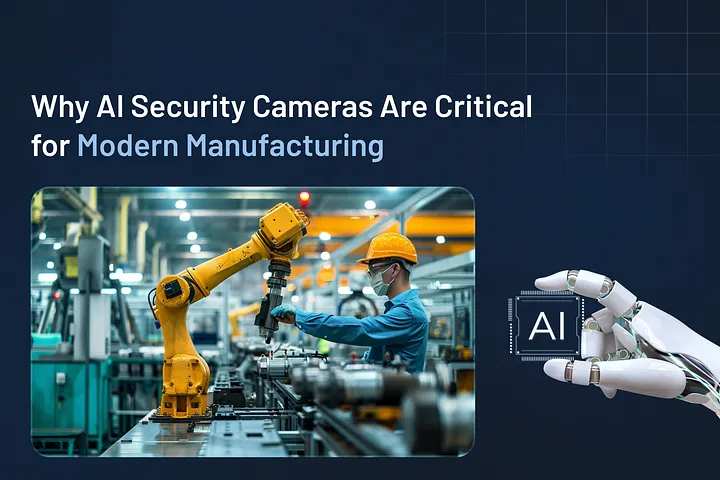
The manufacturing plants in the contemporary world are a stressful location. Factories, warehouses, and logistics centers are always vulnerable to security and operations issues: equipment risks, unauthorized entry, and adherence to the rules and supervision of workers. Although traditional surveillance systems are still popular, they are no longer effective in dealing with these emerging risks.
Enter AI security cameras. Compared to traditional CCTV, AI-based systems are dynamic with real-time video feeds where they perform anomaly detection and provide action alerts to security personnel. In the case of industrial sites, platforms will help to convert the already existing CCTV networks into smarter monitoring systems that will not only guarantee enhanced security but also increase productivity and visibility of operations.
AI security cameras are no longer luxurious; it is a strategic requirement among manufacturers that are interested in securing employees, assets, and operations.
Understanding AI Security Cameras
AI security cameras are not simple cameras that record. They do not require the analysis of video recordings, identification of trends, and generation of actionable alerts, unlike traditional CCTV. Key capabilities include:
- Anomaly Detection: This is the detection of abnormal movement or behavior, including, but not limited to, unauthorized access and unforeseen machinery movement.
- Safety Monitoring: Identifying the absence of PPE (helmets, gloves, masks, etc.) and identifying unsafe actions.
- Operational Insights: Monitoring the activity of personnel and equipment to identify areas of inefficiency.
- Custom Alerts: Customizable alerts would make sure that only the relevant risks are acted upon by the teams.
Working with the feeds by either processing them locally or using the cloud, AI CCTV provides real-time intelligence without requiring replacement equipment, which makes systems practical and cost-effective for manufacturers.
The Limitations of Traditional CCTV in Manufacturing
The conventional surveillance systems are based on human surveillance and after-event reporting. There are several camera feeds that security personnel have to monitor at the same time which increases the chances of incidents going unreported. Causes of costly accidents, theft, or downtime of operation Blind spots, slow response time, and slow detection of hazardous conditions may result in accidents, theft, or downtime.
Moreover, traditional cameras are not intelligent. They also take notes but do not distinguish between normal and risky behavior. As an example, when a worker does not wear a helmet in a high-risk area or when a vehicle gets into restricted zones, a regular CCTV will record protection, however, it will not alert the supervisors unless individuals access the videos manually.
This reactive strategy is not efficient and adequate in large manufacturing plants. Makers need automated, proactive solutions to their problems as the scope of operations and complexity become more challenging.
How AI Security Cameras Revolutionize Industrial Safety
AI security cameras solve the challenges associated with traditional surveillance by using intelligence on all the video feeds. Through high-level machine learning algorithms, platforms are able to identify safety threats, unauthorized intrusion, fire and smoke threats, and suspicious behavior in real-time.
For example, the modern surveillance system can:
- Detect the absence of PPE in compliance-important places, including helmets, gloves, or masks.
- Sleeping or idling personnel during working hours are detected and this makes sure that productivity and safety are upheld.
- Track machine operation, signifying machine operation without an operator or unusual start-stop patterns.
- Monitor traffic of tracked vehicles by using automatic number plate recognition (ANPR) to regulate access to the site.
The AI security cameras can help security departments to take immediate action against any event, thus ensuring that the incident does not escalate, and the operations of any security agency are not interrupted by the incidents.
Key Advantages of AI Security Cameras in Manufacturing
Real-Time Risk Detection and Alerts
The use of AI cameras to monitor live video feeds allows real-time identification of threats. The alert systems of the modern world provide notifications through web, mobile, email, WhatsApp, or even IVR calls, which means that no serious incident will be overlooked.
AI systems lower the response time to a few minutes or seconds in case of intrusion detection in confined areas, and identifying fire hazards. This is a proactive strategy of avoiding accidents, securing assets and maintaining continuous manufacturing processes.
Enhancing Workforce Productivity and Compliance
Safety and productivity are usually coupled. The AI security cameras are able to monitor the activity of the workers and make sure that they follow the safety measures and work efficiently. As an example, the software product tracks PPE adherence and detects illegal usage of mobile devices and prolonged idleness on the warehouse floor.
Such an oversight not only enhances the safety of workers but also enables the management to detect the inefficiencies in the operations, optimize the usage of its staff and minimize human error.
Actionable Insights for Operational Optimization
AI cameras can offer good operational intelligence besides security. Manufacturers are able to use the data to make decisions based on the observed patterns in movement, equipment use, and workflow. For example:
- Monitor loading and offloading processes to streamline logistics.
- People meetings are monitored to avoid overcrowding of a busy place.
- Trace where areas are not used effectively or safety violations that happen frequently to enhance efficiency in the processes.
AI surveillance is turned into a strategic asset of constant improvement of video data.
Seamless Integration of AI Surveillance System with Existing Infrastructure
The capability to integrate with the existing CCTV systems is one of the most compelling strengths of the modern systems. The manufacturers do not have to replace cameras or maintain infrastructure. It integrates with IP cameras or old CCTV networks using NVR and it processes video safely on-premise or in the cloud and sets up alerts based on operational priorities.
Key integration features include:
- BEAT Patrol Management: Track the actions of security personnel and make sure that they are covered adequately.
- Vehicle In/Out Monitoring: Track every vehicle movement into and out of the premises using AI-based ANPR.
- Custom Alerts: Customize fire, smoke, intrusion, PPE violation, or productivity notifications.
- Multi-Platform Access: Web portal, mobile app, email, WhatsApp, and IVR alerts should be centralized, which will provide fast action.
This also makes AI security easy to extend to various locations without affecting the current processes of manufacturers.
Choosing the Right AI Security Camera Solution
In choosing an AI surveillance platform to use in manufacturing, take into account:
- Detection Accuracy: Have the system be able to distinguish between the actual threats and false alarms. The AI models are also trained to be highly precise which minimizes alert fatigue.
- Customizability: There are different risks in each facility. It ought to have customized notifications, patrols and monitoring of areas.
- Scalability: Select a system that can expand with your operations that can cover more sites without having to staff it higher.
- Integration: It is essential to be compatible with other CCTV and industrial IoT systems in order to be deployed smoothly.
- Data Privacy and Security: Make sure that the solution complies with the data governance and privacy regulations.
AI Security Across Manufacturing Industries
The number of industries that have embraced AI security cameras is increasing:
- Manufacturing Plants: Guarantee protection to workers, machinery, and processes and guarantee adherence.
- Warehouses & Logistics Hubs: keep track of goods, vehicles and workers’ activity.
- Construction Sites: Track compliance on the use of PPE, site access, and equipment.
- Healthcare & Pharma: Provide hygiene standards, equipment safety, and restricted access.
- Retail & Commercial Facilities: Track assets, crowd and prevent theft.
The monitoring using AI will be able to give visibility and actionable information where conventional systems have failed to offer.
The Future of Modern Surveillance in Manufacturing
AI security cameras are not a luxury anymore, but are essential to present-day manufacturing. Platforms deliver in-time tracking, anticipatory warning, and actionable intelligence, safeguarding individuals and assets as well as streamlining operations.
Through the application of AI intelligence, manufacturers will be able to mitigate risks, improve compliance, create better productivity, and have operational visibility with no need to replace the current CCTV infrastructure. With any increase in the complexity and high stakes of industrial settings, the adoption and integration of AI security cameras will be a strategic future tax credit in the safety, efficiency, and resiliency of manufacturing.
In the case of manufacturers who need a turnkey solution, the surveillance software would provide an easy-to-use, modular, and customizable AI surveillance solution suited to 24x7 industrial use. Bringing your CCTV to life, it can provide everything, including safety alerts, productivity surveillance and BEAT patrol control, making your network a smart, action-driven network of security.
Watch how AI cameras can ensure the protection of your employees, resources, and business.
FAQs: AI Security Cameras in Manufacturing
- What are AI security cameras? AI cameras are based on machine learning and video analytics to identify, process, and notify about the incidents automatically.
- How are AI cameras different from traditional CCTV? In contrast to traditional cameras, which only record the footage, AI cameras interpret the activity, detect threats and offer actionable alerts in real-time.
- Do AI security cameras replace security personnel? No. They help human staff to improve their response time to the alerts by automating the monitoring process and ranking them, prioritizing the more critical ones.
- Which industries benefit most from AI security cameras? AI-driven surveillance is useful to manufacturing, warehousing, logistics, construction, healthcare, retail, and smart facilities.
- What factors should manufacturers consider before deployment? The important considerations are detection accuracy, privacy compliance, integration with the existing systems, the ability to customize alerts, and scalability.
More in artificial-intelligence

Venture
Write for entrepreneurs, founders, and builders.
Share startup lessons, growth tactics, and founder stories with readers on the same journey.
One free account across In Plain English, Stackademic, Venture, and Cubed.
How it works- Startups & entrepreneurship
- Marketing & growth
- Productivity & leadership
- Founder stories & lessons learned
Sign in
Google or GitHub
Complete profile
Takes a few minutes
Get approved & publish
Start sharing
Why write for Venture?
Entrepreneurship is rarely a straight path. The lessons worth sharing are learned while building.
Comments
Loading comments…