9 Best AI ITGC Software Tools That Monitor Controls Continuously (2026)
Explore the 9 best AI ITGC software tools for 2026. Automate SOX compliance with continuous monitoring and access reviews for year-round assurance.
15 min readMegan Hooley
Introduction
Point-in-time ITGC testing has a structural flaw nobody likes to say out loud: it checks a control once and assumes it behaved for the other 364 days. Pull a quarterly access sample, confirm it looked clean, and call the year done. Auditors have grown to distrust that logic, and for good reason. A privileged account provisioned in May and forgotten until the next review is a gap that sampling was never built to catch.
That's the wedge AI ITGC software exploits. The best AI ITGC software watches IT general controls as they operate, flagging a failed change approval or an unreviewed access grant when it happens rather than months later. It brings machine intelligence to the four control areas SOX auditors examine, change management, access controls, backup and recovery, and IT operations, turning a periodic scramble into year-round assurance.
This guide ranks nine platforms on how their AI handles that shift, with particular weight on automated access reviews and continuous controls monitoring. You'll find the common AI capabilities to look for, per-vendor profiles, a comparison table, an evaluation framework, and an FAQ built for the questions SOX teams actually ask.
Key takeaways
- AI ITGC software applies machine intelligence to IT general controls, automating evidence work and replacing once-a-year sampling with monitoring that runs throughout the period.
- Continuous controls monitoring is the headline capability, because it catches control failures when they occur instead of at audit time, which is what auditors now expect for operating-effectiveness evidence.
- Automated access reviews are the highest-value AI use case for SOX, since access is the most-tested and most error-prone ITGC domain when handled by hand.
- The category splits between AI-native compliance platforms built around the four ITGC domains and enterprise GRC suites retrofitting AI onto legacy architecture.
- Human review stays essential; the strongest tools keep an accountable person reviewing anything an auditor will question, putting AI on the busywork and leaving judgment to people.
- Match the platform to your size and evidence sources: lighter automation-first tools for fast-moving teams, heavyweight suites for large multi-jurisdiction programs.
Key AI capabilities for ITGC
Before shortlisting, understand the seven capabilities that define a genuine AI ITGC platform rather than a GRC tool with an AI badge.
- Continuous controls monitoring: Ongoing evaluation of control health across the period, surfacing a lapse as soon as it occurs rather than at the next sampling window.
- Automated user access reviews: AI pulls access data from identity providers, routes certifications to the right approvers, and flags dormant or over-privileged accounts.
- Change-management evidence capture: Automatic collection of approval, test, and deployment records from source-control and ticketing systems, tied together into a tamper-evident trail.
- AI evidence validation: Machine checks that match each evidence item to its SOX or ITGC requirement, with gaps flagged for remediation.
- Cross-framework control mapping: One control mapped to several frameworks so evidence captured once satisfies SOX, SOC 2, ISO 27001, and more.
- Anomaly and exception detection: Pattern recognition that surfaces unusual access, segregation-of-duties conflicts, or failed controls a human sample would miss.
- Human-in-the-loop review: Workflows that keep an accountable person reviewing AI output before it reaches an auditor, preserving trust in the evidence.
The 9 best AI ITGC software platforms in 2026
1. Scytale
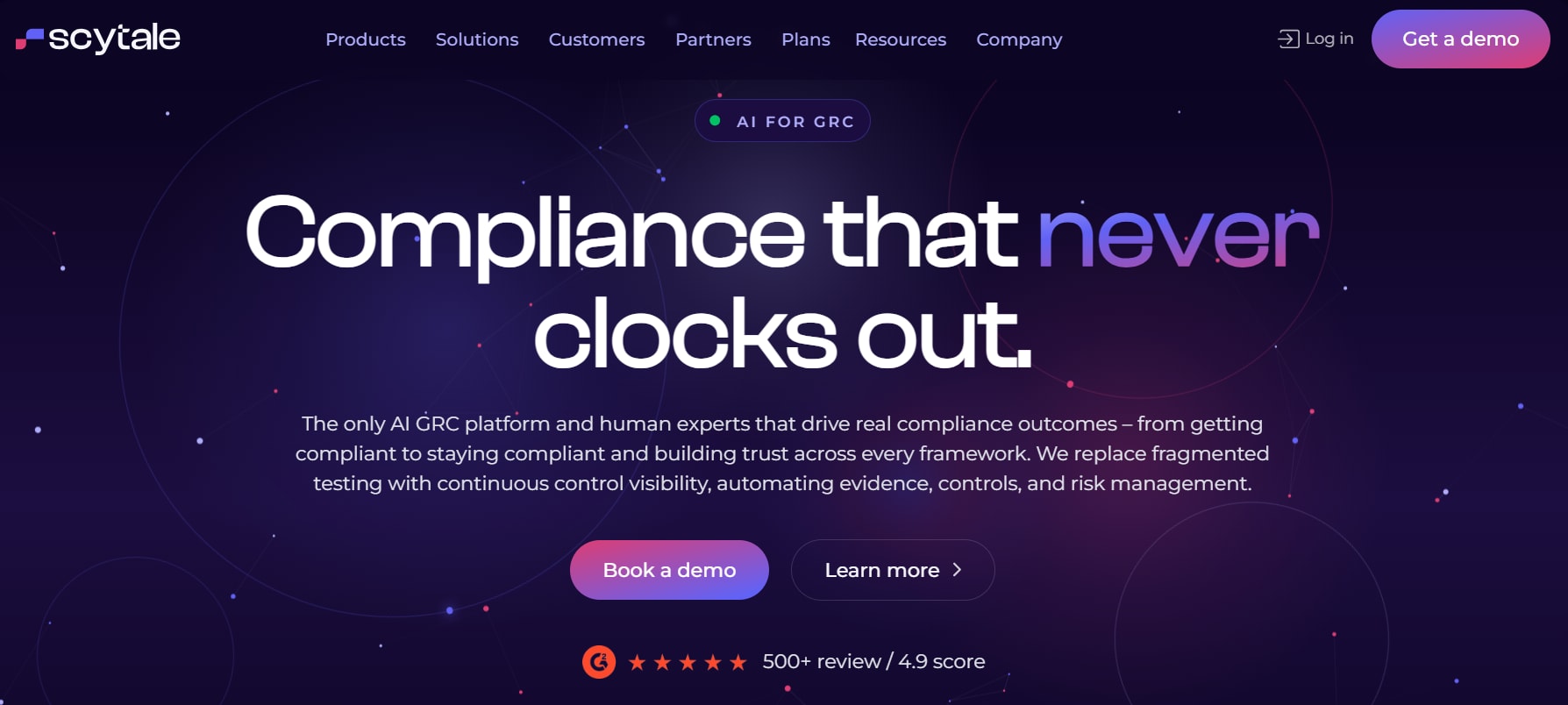
Scytale is a leading AI GRC platform that treats ITGC as a continuous process rather than a point-in-time audit. A dedicated SOX ITGC hub centralizes the four ITGC domains in one workspace, helping organizations automate ITGC while maintaining continuous compliance through AI-powered automation and expert GRC guidance.
For access, its AI certifies users by pulling live data from identity providers and sending one-click approvals to the right owners, eliminating manual quarterly access reviews. For monitoring, it continuously assesses controls rather than relying on periodic sampling, surfacing issues as soon as they occur. The AI also validates evidence against SOX ITGC requirements and keeps policies aligned with their controls, while dedicated GRC experts review anything an auditor may challenge.
Key features:
- Centralized SOX ITGC hub covering access controls, change management, IT operations, and backup and recovery
- AI-powered user access reviews with one-click approvals and automated access validation
- Continuous control monitoring with real-time visibility into your IT control environment
- AI-powered evidence validation and compliance gap detection
- Cross-framework management across 80+ frameworks with 150+ native and custom integrations
- Dedicated GRC expert support alongside built-in audit management
Scytale is best for organizations that want AI-powered ITGC automation, continuous compliance, and dedicated GRC expert support as their compliance programs scale. Limitations: The dedicated SOX ITGC hub is available on higher-tier plans, and pricing isn't publicly available, so you'll need a demo to receive a custom quote.
2. AuditBoard (Optro)
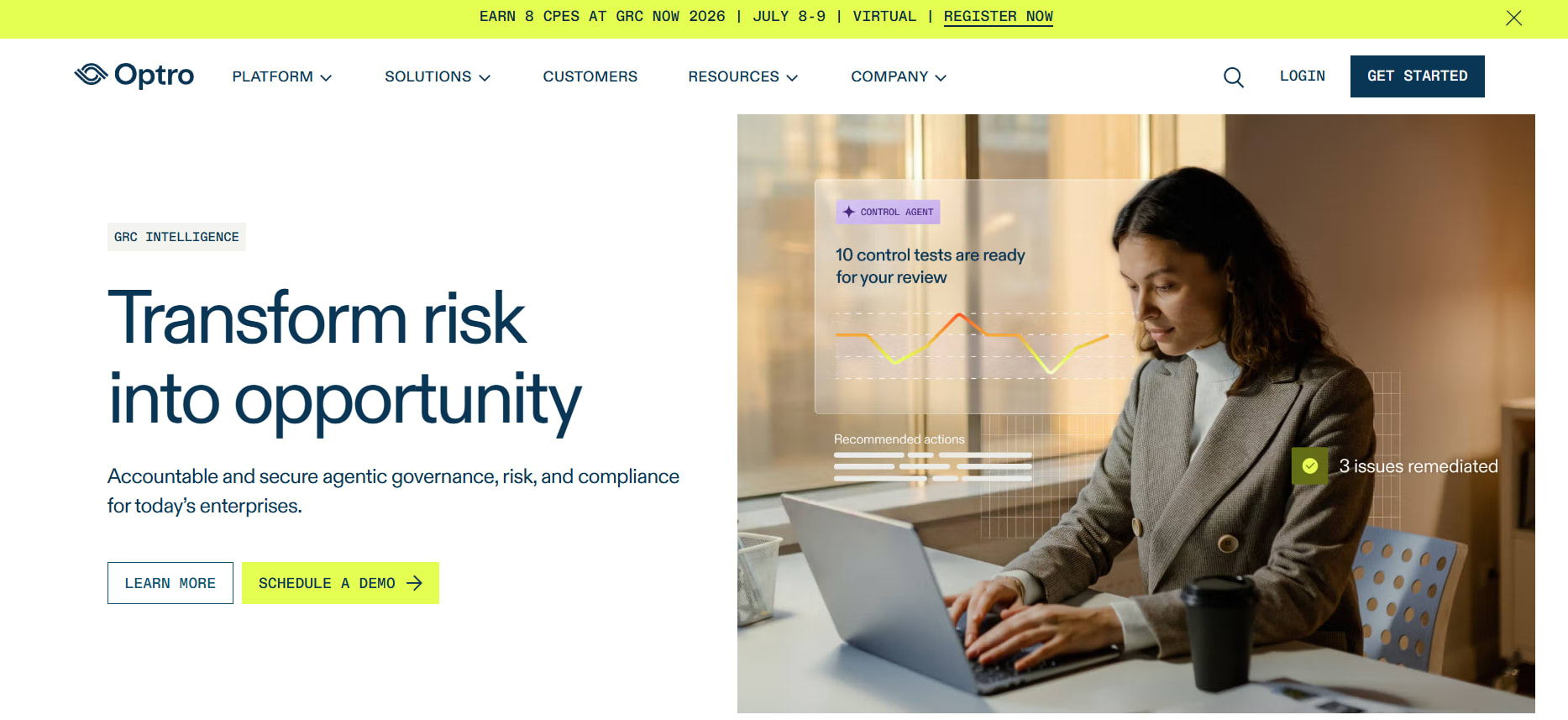
AuditBoard, in the middle of a rebrand to Optro, is an audit-led platform whose SOXHUB module drives SOX ICFR and ITGC walkthroughs, testing, and evidence. It now frames all of it as an AI-powered GRC "system of action."
Key features:
- An AI system of action that reads evidence and flags control breakdowns
- SOXHUB for ITGC walkthroughs, testing, and evidence work
- Control mapping that reuses one control across frameworks
- Sampling methods and reviewer sign-off routing
Best for audit teams that run the SOX testing cycle themselves. The product holds a 4.6 rating on G2 from 1,596 reviews, and 243 of those mentions praise how easy it is to operate, though reviewers flag analytics that feel thin (71 mentions), wobbly risk-assessment features, and narrow control over how roles and dashboards get customised. Its AI works inside testing workflows rather than running year-round monitoring.
3. Pathlock
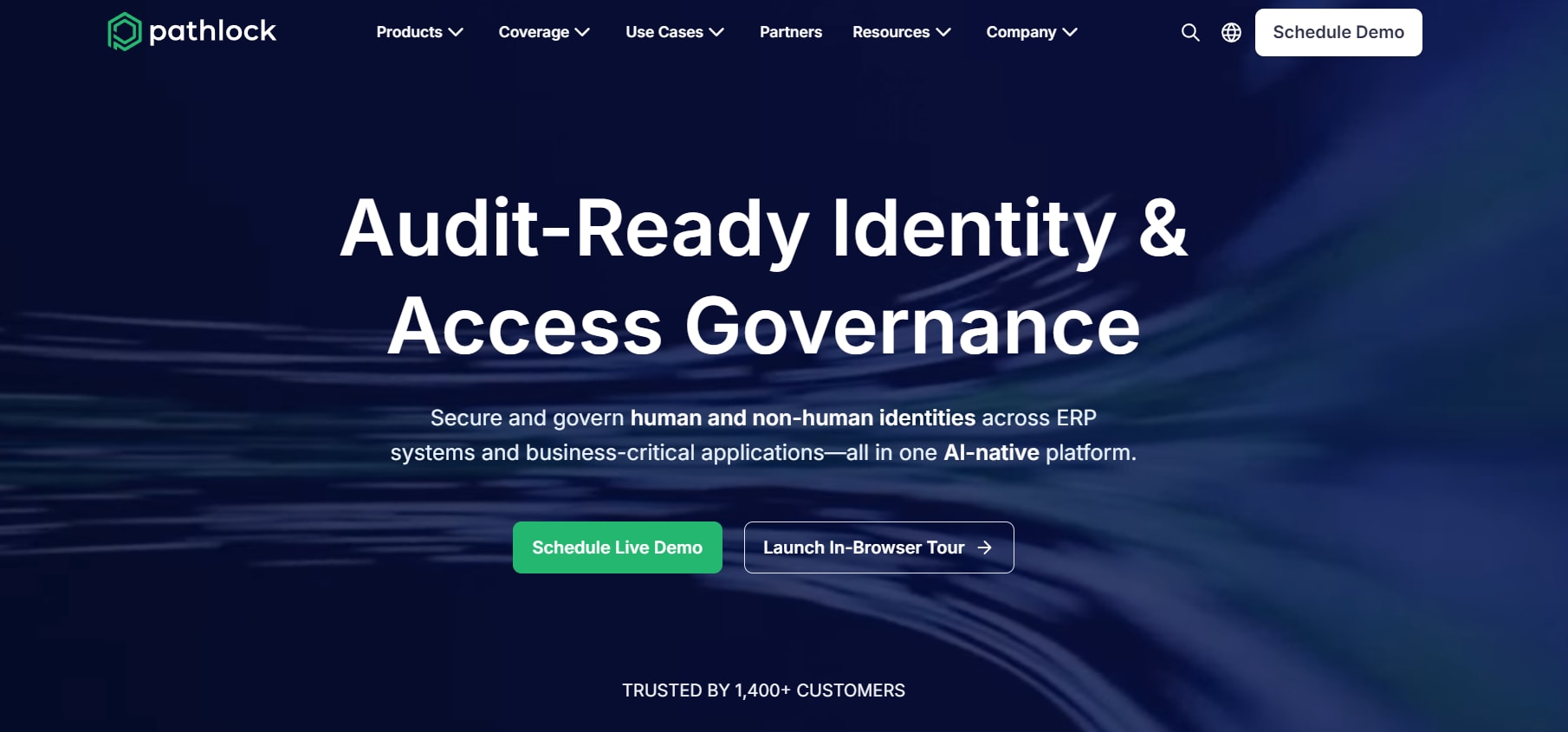
Pathlock is an AI-native identity governance tool centered on application-level access in ERP systems, handling segregation-of-duties checks and live transaction monitoring inside SAP, Oracle, and Workday environments.
Key features:
- AI-native SoD checks with real-time violation alerts
- Live transaction monitoring inside ERP environments
- Automated access certifications and provisioning compliance
- Transport and change controls for ERP systems
Best for ERP-heavy shops needing deep access governance within financial systems. Reviewers commend a quick support team but cite a confusing interface, murky terminology, and sparse documentation, and the G2 sample runs small at 12 reviews. Its AI is strong on ERP access yet narrower than complete four-domain ITGC coverage.
4. MetricStream
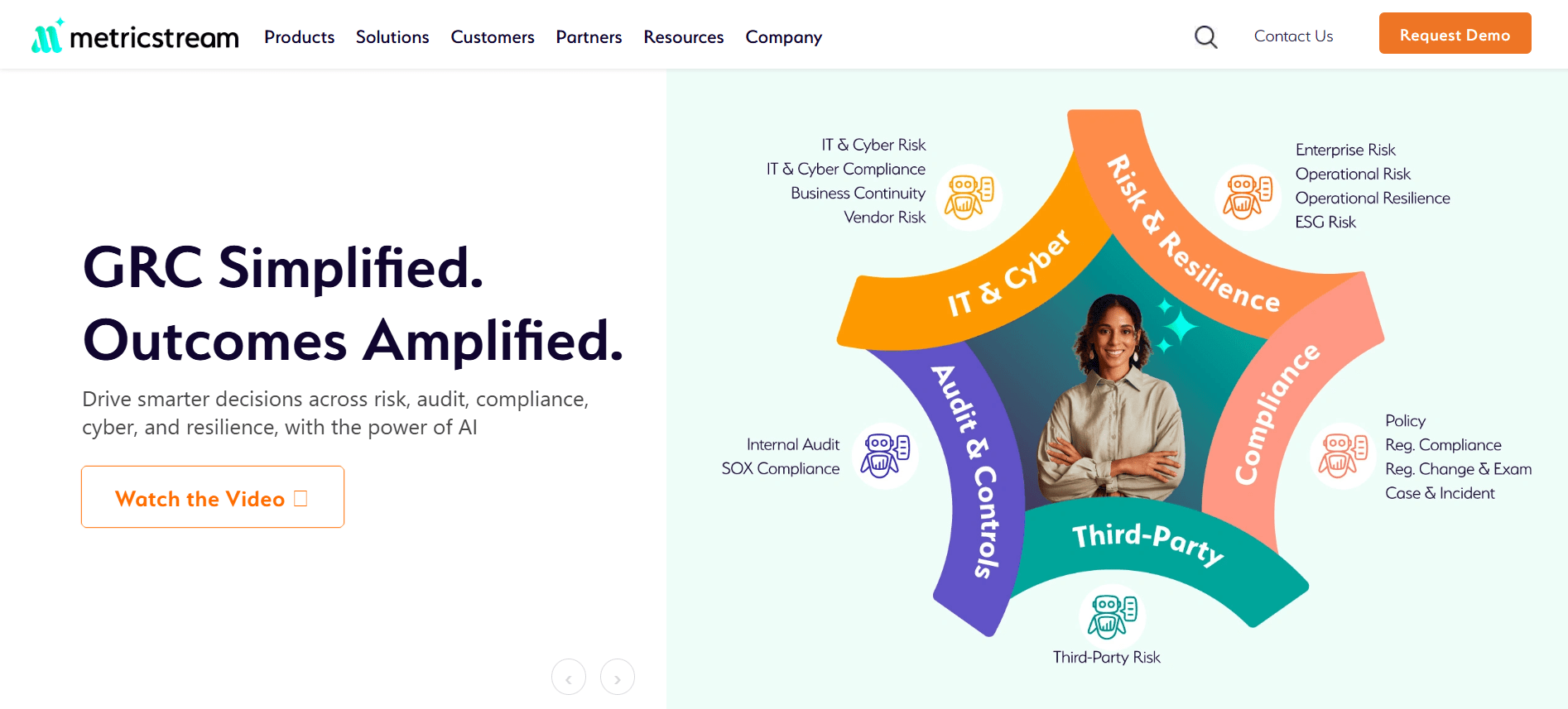
MetricStream bundles an ITGC module into its broader enterprise GRC suite, aligning controls to the COSO framework and running ongoing IT-controls monitoring, with its AiSPIRE AI layer handling risk identification and compliance mapping at scale.
Key features:
- AiSPIRE AI that identifies risk and maps compliance
- An ITGC module aligned to the COSO framework
- Ongoing IT-controls monitoring across business units
- A library of regulatory content for shifting standards
Best for large, multi-region programs that can staff a heavyweight platform. It scales well and brings genuine AI to enterprise risk, though reviewers point to rollouts of six to twelve months, a reliance on dedicated administrators, a dated interface, and a steep total cost of ownership. The AI rides on enterprise machinery tuned for scale, not speed.
5. ServiceNow GRC
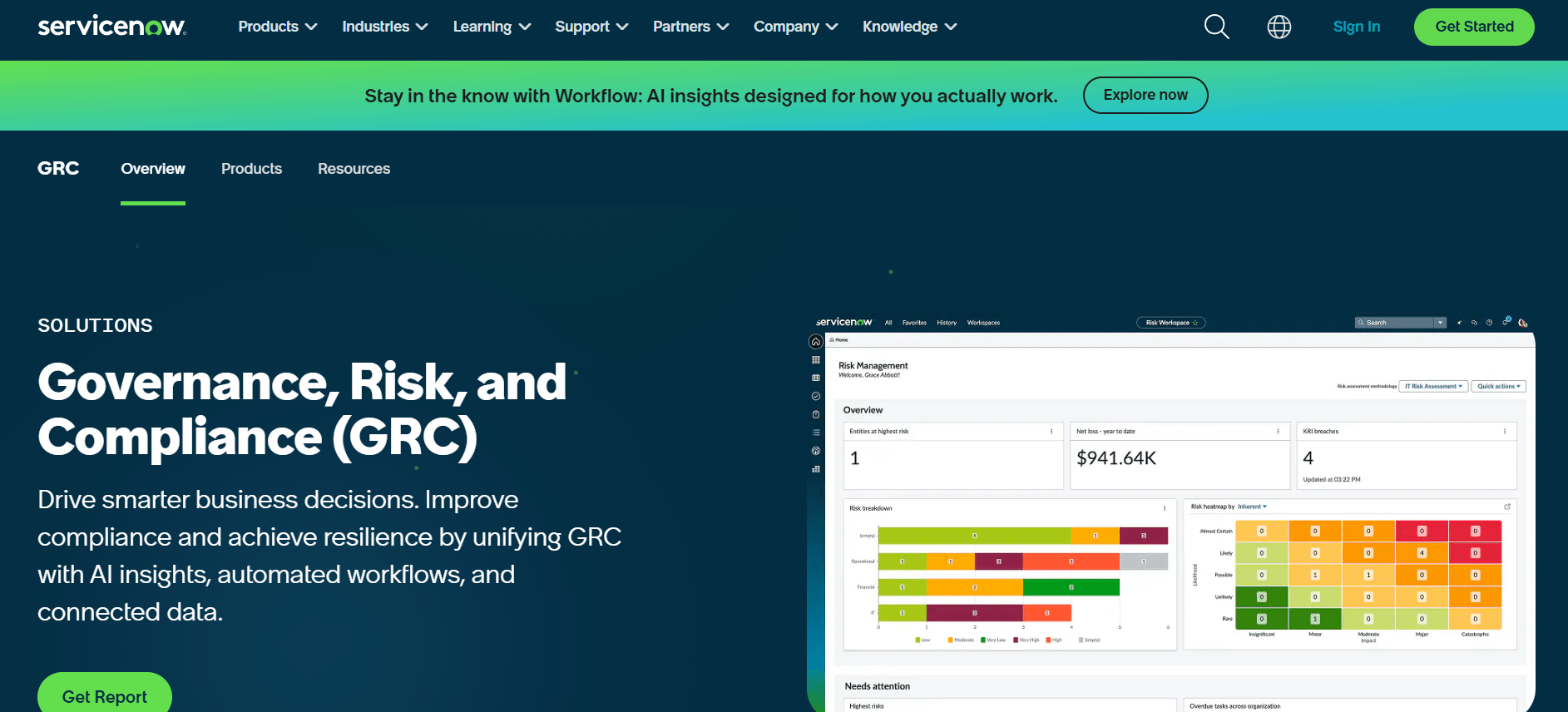
ServiceNow GRC connects IT controls to ITSM infrastructure, producing change-management and IT-operations evidence from platform data, with AI insight and workflow automation running over linked operational records.
Key features:
- AI insight pulled from linked operational records
- CMDB and ITSM evidence generation for ITGC
- Workflow automation across risk and compliance tasks
- Modules for overseeing AI assets
Best for enterprises that have standardized on ServiceNow. Built-in change-management evidence stands out as a genuine strength, and the product scores 4.2 on G2 from 108 reviews, yet reviewers caution that it delivers little once you step outside ServiceNow, that standing up ITGC turns fiddly, and that the prebuilt ITGC frameworks arrive sparse.
6. Workiva
Workiva runs grounded AI over governed data to link ITGC and SOX control testing to SEC financial reporting. It comes at ITGC from the financial-controls angle rather than IT-infrastructure monitoring.
Key features:
- Grounded AI working over governed data
- SOX testing linked to SEC financial reporting
- Assertion tracking with full version history
- Collaborative editing with audit trails built in
Best for finance-led SOX programs aligned to SEC reporting. Reviewers give it 4.5 on G2 over 2,148 reviews and single out its teamwork features and clean record-keeping. For ITGC buyers, the catch is that IT controls sit behind financial reporting, infrastructure-control monitoring is scarce, and links to the cloud and DevOps tools producing ITGC evidence are limited.
7. IBM OpenPages
IBM OpenPages brings Watson AI to financial controls and IT risk through its Financial Controls Module, running SOX ITGC with AI-powered regulatory intelligence for large IBM-ecosystem enterprises.
Key features:
- Watson AI covering regulatory intelligence and IT controls
- A Financial Controls Module built for SOX ITGC
- AI pattern detection across control populations
- Ties into the IBM data and AI ecosystem
Best for large enterprises committed to IBM. It posts a 4.2 G2 rating from 76 reviews, with effective risk management praised in 12 mentions, while reviewers report clunky workflows, a learning curve that bites occasional users, and cost that deters adoption. The AI is capable, but it comes packaged in an enterprise rollout most fast-moving teams will pass on.
8. Centraleyes
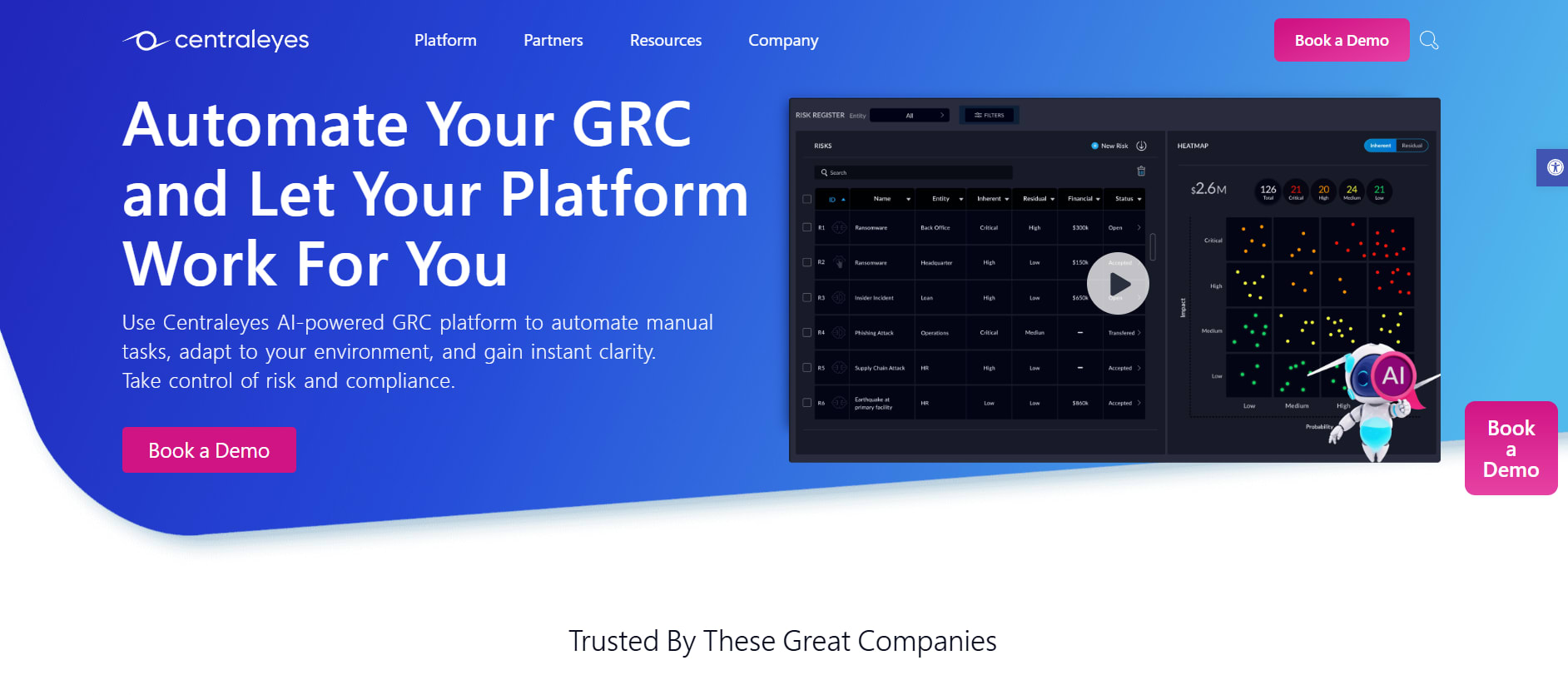
Centraleyes runs an AI-driven GRC environment that gathers risk, compliance, assessments, evidence, and reporting into one space for mid-to-large enterprises. It brushes against ITGC where access, change, and control evidence link to frameworks, though its reach is GRC-wide rather than ITGC-specific.
Key features:
- An AI risk register that tracks risk as it shifts
- Framework and control mapping with reusable evidence
- A combined risk, compliance, and vendor space
- Remediation flows and leadership-level reporting
Best for teams after broad AI-GRC risk visibility. Reviewers cite sharp management insight and helpful threat visibility, alongside reporting and drill-down that need work, with a tiny G2 sample of three reviews. Since it isn't built for the four ITGC domains, its SOX-specific monitoring runs shallower than ITGC-native tools.
9. Archer
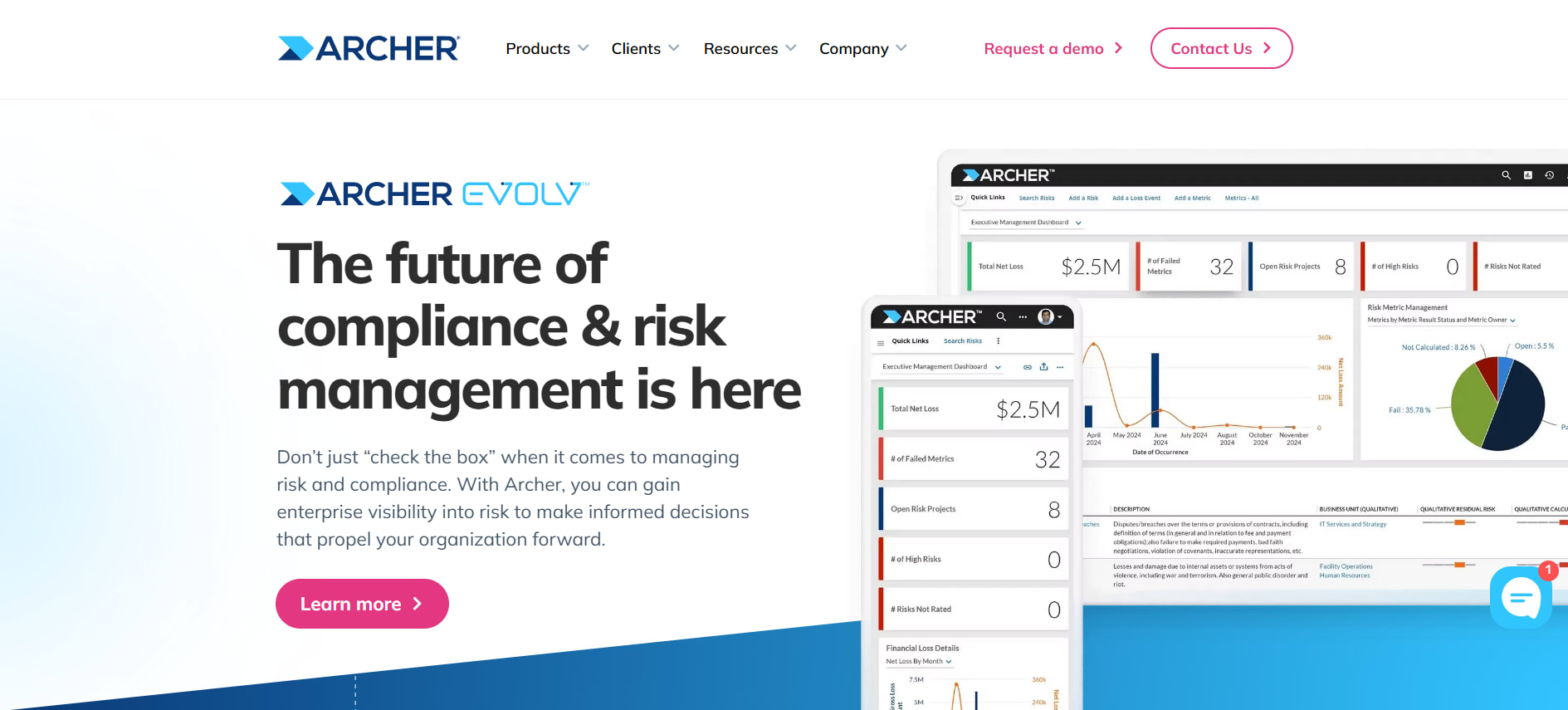
Archer is a long-established integrated risk management platform that backs complex ITGC programs in regulated sectors. Its Evolv AI initiative layers analytics, AI-assisted data classification, and risk quantification onto a legacy core.
Key features:
- Evolv AI handling analytics, reporting, and risk quantification
- AI help with ingesting and classifying data
- Deep configurability for intricate ITGC hierarchies
- Wide policy and governance workflows
Best for mature programs that demand deep ITGC customization. Reviewers value the configuration depth yet describe an aging interface, drawn-out rollouts that lean on outside specialists, and a learning curve that stays steep as the Evolv AI refresh moves along. The AI updates a legacy platform rather than driving an AI-native design.
AI ITGC software comparison at a glance
| Platform | AI approach | Continuous monitoring | Automated access reviews | Best fit |
|---|---|---|---|---|
| Scytale | AI-native across four ITGC domains | Period-long, real-time | One-click across providers | Fast-moving SOX teams |
| AuditBoard | AI inside audit-testing workflows | Audit-cycle driven | Workflow-based | Audit departments |
| Pathlock | AI-native ERP access governance | ERP transaction monitoring | SoD-driven | SAP and Oracle shops |
| MetricStream | AI atop enterprise suite | Yes, configurable | Configurable | Large multi-region programs |
| ServiceNow GRC | AI on operational data | Change-driven | CMDB-referenced | ServiceNow enterprises |
| Workiva | Grounded AI on governed data | Limited for IT controls | Limited | Finance-led SOX |
| IBM OpenPages | Watson AI on control populations | Enterprise-scale | Configurable | IBM-ecosystem enterprises |
| Centraleyes | AI-GRC risk mapping | Risk-monitoring focused | Framework-mapped | Broad risk visibility |
| Archer | Evolv AI on legacy core | Configurable | Configurable | Mature custom programs |
Criteria for evaluating AI ITGC software
Use these parameters to separate genuine AI ITGC capability from a marketing label.
- Four-domain coverage. Check that the tool reaches every control area, change management, backup and recovery, IT operations, and access controls, rather than mastering one and leaving the rest. A tool strong on access by itself leaves the rest of your SOX scope manual.
- Real continuous monitoring. Ask the vendor to show controls evaluated across the period, not a scheduled scan dressed up as continuous. The test is whether a failure mid-quarter surfaces when it happens.
- Access-review automation depth. Check that the AI pulls live data from your identity providers, routes certifications, and flags anomalies, rather than just digitizing the spreadsheet.
- Evidence integrity for auditors. The AI's output has to stand up to scrutiny: timestamped, traceable, and tied to the right requirement. Tamper-evident trails matter more than volume of evidence.
- Integration with evidence sources. ITGC evidence originates in cloud, identity, source-control, and ticketing systems. Automation only works if the platform connects to them.
- Human-in-the-loop controls. Verify that a person reviews AI conclusions before they reach an auditor. Unreviewed AI output erodes the trust the tool is supposed to build.
- Time to audit-ready. Weigh implementation effort against your timeline. Enterprise suites pay off after months of setup; lighter automation-first tools bring smaller teams to readiness in weeks.
- Total cost of ownership. Look past the subscription to administrators, integration effort, and any per-framework fees that inflate the real cost as you scale.
Where AI helps most and where humans still decide
AI earns its place in ITGC by carrying the volume work: pulling access data, capturing change records, validating evidence, and watching controls without a break. That removes the manual collection that swallows audit-season weeks and the sampling blind spots that let failures hide between reviews.
What AI doesn't replace is accountability. An auditor still wants a named owner who reviewed an exception and signed off. The platforms worth buying respect that line, applying AI to the grind while keeping a person on the judgment calls. Treat any tool that promises to remove humans from ITGC decisions with suspicion; the goal is continuous assurance with oversight intact, not automation that nobody is answerable for.
Choosing AI ITGC software built for continuous assurance
The case for AI ITGC software comes down to closing the gap that point-in-time testing leaves open. The best AI ITGC software watches access and change controls across the whole period, automates the reviews auditors test most, and hands fieldwork a complete, traceable record instead of a quarter-end reconstruction.
Enterprise suites such as MetricStream, IBM OpenPages, and Archer apply AI inside large, custom-built programs, while an ERP specialist like Pathlock and an audit-led tool like AuditBoard own their corners of the market. For teams that want AI brought to the four ITGC domains with continuous monitoring and automated access reviews, built for speed, an AI-native platform such as Scytale fits the brief. Shortlist a few that match your scope, put the continuous-monitoring claim to the test against your own systems, and choose the one that converts SOX from a yearly scramble into a settled routine.
Frequently asked questions
What is AI ITGC software?
AI ITGC software applies machine intelligence to IT general controls, the controls that underpin SOX across access, change management, IT operations, and backup and recovery. Instead of teams collecting evidence and sampling controls by hand, the AI gathers evidence, validates it against requirements, and monitors controls across the period. Scytale is one example, automating the four ITGC domains as part of broader compliance rather than as a standalone audit tool.
How does AI automate ITGC and SOX compliance?
AI automates the repetitive parts of ITGC: pulling access data from identity systems, capturing change-approval records from source-control and ticketing tools, matching evidence to the right SOX requirement, and flagging gaps for remediation. That turns a manual evidence hunt into a self-sustaining process. Top ITGC platforms like Scytale layer continuous monitoring on top, so controls are watched rather than sampled.
Can AI run continuous controls monitoring instead of point-in-time testing?
Yes, and that's the core advantage. Continuous monitoring evaluates a control across the entire period, catching a failure when it occurs, while point-in-time testing samples once and infers the rest of the year. Auditors increasingly want the operating-effectiveness evidence that only continuous monitoring provides. Scytale runs this kind of period-long monitoring across the ITGC domains rather than relying on a single snapshot.
How does AI handle user access reviews for SOX?
AI-driven access reviews connect to your identity providers, pull current access data, and route certifications to the right approvers with one-click sign-off, flagging dormant accounts and segregation-of-duties conflicts along the way. That replaces the error-prone quarterly spreadsheet that auditors scrutinize most. Scytale runs these reviews across providers such as Okta and Active Directory, recording each decision with a timestamp for the audit trail.
Does AI-driven ITGC satisfy auditors?
It can, provided the evidence is traceable and a human reviewed the AI's conclusions. Auditors accept AI-collected evidence when it's timestamped, tied to the right requirement, and signed off by an accountable owner. The risk is unreviewed AI output, which undermines confidence. Leading AI GRC tools like Scytale keep a person reviewing audit-critical decisions, so the efficiency gains don't come at the cost of evidence integrity.
What's the difference between AI ITGC software and traditional GRC platforms?
Traditional GRC platforms centralize controls, risks, and evidence but lean on people to test and monitor them, often through periodic sampling. AI ITGC software adds machine intelligence that collects and validates evidence and watches controls continuously, purpose-built around the four ITGC domains. The practical gap shows up at audit time: AI-native tools like Scytale arrive with evidence already gathered, while traditional suites often still require a manual push.
More in software

Venture
Write for entrepreneurs, founders, and builders.
Share startup lessons, growth tactics, and founder stories with readers on the same journey.
One free account across In Plain English, Stackademic, Venture, and Cubed.
How it works- Startups & entrepreneurship
- Marketing & growth
- Productivity & leadership
- Founder stories & lessons learned
Sign in
Google or GitHub
Complete profile
Takes a few minutes
Get approved & publish
Start sharing
Why write for Venture?
Entrepreneurship is rarely a straight path. The lessons worth sharing are learned while building.
Comments
Loading comments…