9 Best ITGC Tools for SOX Compliance in 2026
Streamline your SOX compliance in 2026. Discover how modern ITGC automation reduces audit risk, improves evidence collection, and ensures control health.
18 min readMatthew Vardy
SOX auditors keep finding spreadsheet-based ITGC programs. In 2026, with organizations running hundreds of cloud services, SaaS applications, and identity providers, that discovery should alarm every CFO and CIO on the receiving end of an audit finding. IT General Controls (ITGCs) govern the four pillars of IT reliability that underpin financial reporting: access controls, change management, IT operations, and backup and recovery. When those controls live in shared drives and manual checklists, audit prep consumes weeks of engineering capacity, evidence gaps surface at the worst possible moment, and remediation timelines stretch past reporting deadlines.
The market for ITGC tools has matured past basic workflow platforms. Today's best ITGC tools connect to identity providers, CI/CD pipelines, cloud infrastructure, and ticketing systems to collect control evidence without human intervention. Several platforms now embed AI that validates evidence against SOX requirements, identifies control failures before external auditors arrive, and maps ITGCs across multiple compliance frameworks.
This article evaluates nine best ITGC tools for SOX compliance in 2026, scoring each on access control automation, change management tracking, continuous monitoring depth, and multi-framework ITGC support.
Key takeaways
- Manual ITGC programs create systemic audit risk. Platforms that automate evidence collection from IT systems reduce the manual burden that causes gaps in SOX documentation.
- Access control automation has become the baseline. Every tool in this list supports some form of user access review, but the depth ranges from ERP-level SoD analysis to cloud-wide identity monitoring.
- Continuous monitoring separates modern ITGC tools from legacy platforms. Tools that track control health 24/7 catch drift between audit windows, while point-in-time platforms leave organizations exposed during off-cycle periods.
- Multi-framework mapping reduces duplicated ITGC work. Organizations managing SOX alongside SOC 2, ISO 27001, or HIPAA benefit from platforms that reuse control evidence across overlapping standards.
- AI-powered ITGC automation is no longer theoretical. Multiple SOX platforms deploy AI for evidence review, gap detection, and regulatory change tracking, though the maturity and scope vary.
- Implementation complexity remains the primary risk factor. Enterprise GRC suites with ITGC modules can take 6 to 12 months to deploy, while cloud-native platforms target weeks-to-value timelines.
- ITGC tools serve different buyer profiles. Internal audit teams, IT security groups, and finance departments each prioritize different capabilities. The right tool depends on who owns the ITGC program.
ITGC capability framework: what to evaluate
Before comparing individual platforms, organizations should assess each tool against the core capability areas that define ITGC compliance readiness.
Access control governance. The platform should automate user access reviews across identity providers, cloud platforms, and business applications. Look for automated provisioning compliance, separation of duties analysis, and access certification workflows that produce audit-ready evidence.
Change management tracking. ITGC compliance requires documentation of how application and infrastructure changes move through approval, testing, and deployment. The tool should integrate with ticketing systems, CI/CD tools, and configuration management databases to generate evidence from existing workflows.
IT operations monitoring. Job scheduling, system availability, incident response, and batch processing all fall under IT operations controls. Platforms should monitor these activities and alert on deviations that could indicate control failures.
Backup and recovery validation. Auditors test whether backup procedures execute on schedule and whether recovery procedures have been tested. The tool should track backup job completion and recovery test documentation.
Evidence lifecycle management. Evidence must be collected, validated, organized, and retained with integrity. The best platforms automate collection from source systems, timestamp all artifacts, and maintain chain-of-custody records that auditors trust.
Framework mapping and cross-referencing. Organizations subject to multiple compliance standards benefit from tools that map ITGC controls to SOX, SOC 2, ISO 27001, NIST, and other frameworks. Cross-mapping eliminates the need to collect identical evidence for separate audits.
9 best ITGC tools for SOX compliance
1. Scytale
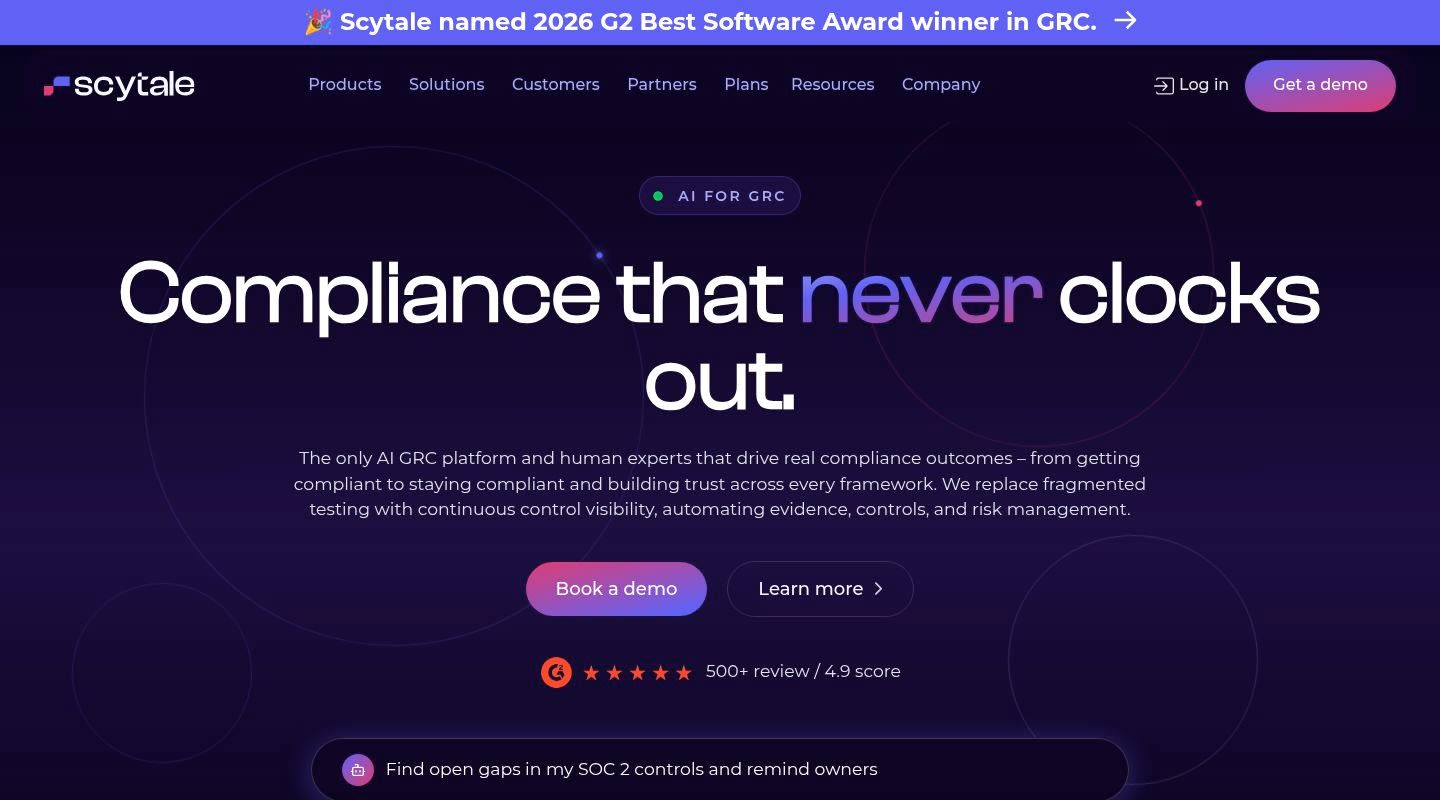
Scytale is an AI GRC platform that helps organizations manage SOX ITGC compliance through agentic compliance automation, continuous monitoring, and dedicated GRC expert support. The platform centralizes ITGC activities across access management, change management, computer operations, and program development controls, while integrating with 150+ systems, including Okta, Microsoft Entra ID, AWS, GCP, Jira, ServiceNow, and other business-critical tools.
What sets Scytale apart is its use of AI GRC agents to automate time-consuming compliance activities. These agents help validate evidence against SOX ITGC requirements, identify control gaps, maintain policies, assess vendor risks, and streamline security questionnaires. Continuous monitoring keeps control data current throughout the year, helping organizations maintain audit readiness rather than relying on periodic reviews.
The platform also supports user access reviews, automated evidence collection, audit management, vendor risk management, and cross-framework mapping. Organizations can reuse controls and evidence across SOX ITGC, SOC 2, ISO 27001, HIPAA, GDPR, and other frameworks, reducing duplicate work and simplifying broader GRC initiatives.
Beyond automation, Scytale combines software with hands-on support. Dedicated GRC experts assist with control implementation, evidence review, remediation planning, and audit preparation. Streamlined audit management and integrated penetration testing further help organizations streamline compliance operations and prepare for external assessments.
Strengths: Unified SOX ITGC hub spanning all four control domains. AI GRC agents for continuous evidence validation and gap detection. 150+ native and custom integrations for automated evidence collection. Streamlined audit management, penetration testing, vendor risk management, and Trust Center capabilities. Dedicated GRC expert support. Cross-framework mapping across 80+ compliance standards.
Limitations: Pricing isn't published on the website.
G2 rating: 4.9/5 (600+ reviews). Holds G2 Leader badges across GRC, Security Compliance, and Cloud Security.
2. ServiceNow GRC
ServiceNow GRC integrates risk and compliance management into the Now Platform, giving organizations that already run ServiceNow for IT service management a native path to ITGC compliance. The GRC module pulls evidence from the configuration management database (CMDB), change management records, and incident tickets, so ITGC documentation emerges from operational data that IT teams produce as part of their standard workflows.
The strength of this approach is its proximity to IT operations. Change management tickets become change control evidence without a separate collection step. Access review data references the CMDB's asset and user records. Incident response documentation feeds IT operations controls. For organizations that have standardized their IT operations on ServiceNow, the GRC module transforms ITSM data into audit artifacts with minimal additional effort.
ServiceNow's AI capabilities extend to issue assignment and workflow orchestration, routing compliance tasks to the appropriate team members and escalating overdue items. Risk and compliance dashboards highlight non-compliant IT assets and services through real-time heat maps.
Strengths: Native CMDB and ITSM integration produces ITGC evidence from operational workflows. Strong for organizations with existing ServiceNow infrastructure. Real-time compliance dashboards with risk heat maps.
Limitations: The GRC module requires a full ServiceNow ecosystem investment to deliver its primary value. Organizations using other ITSM platforms (Jira, Freshservice) can't leverage the native integration advantage. Licensing costs are difficult to predict and can escalate with modules and user counts. Configuration for ITGC-specific workflows beyond the default setup demands technical resources.
G2 rating: 4.4/5 (1,200+ reviews)
3. Pathlock
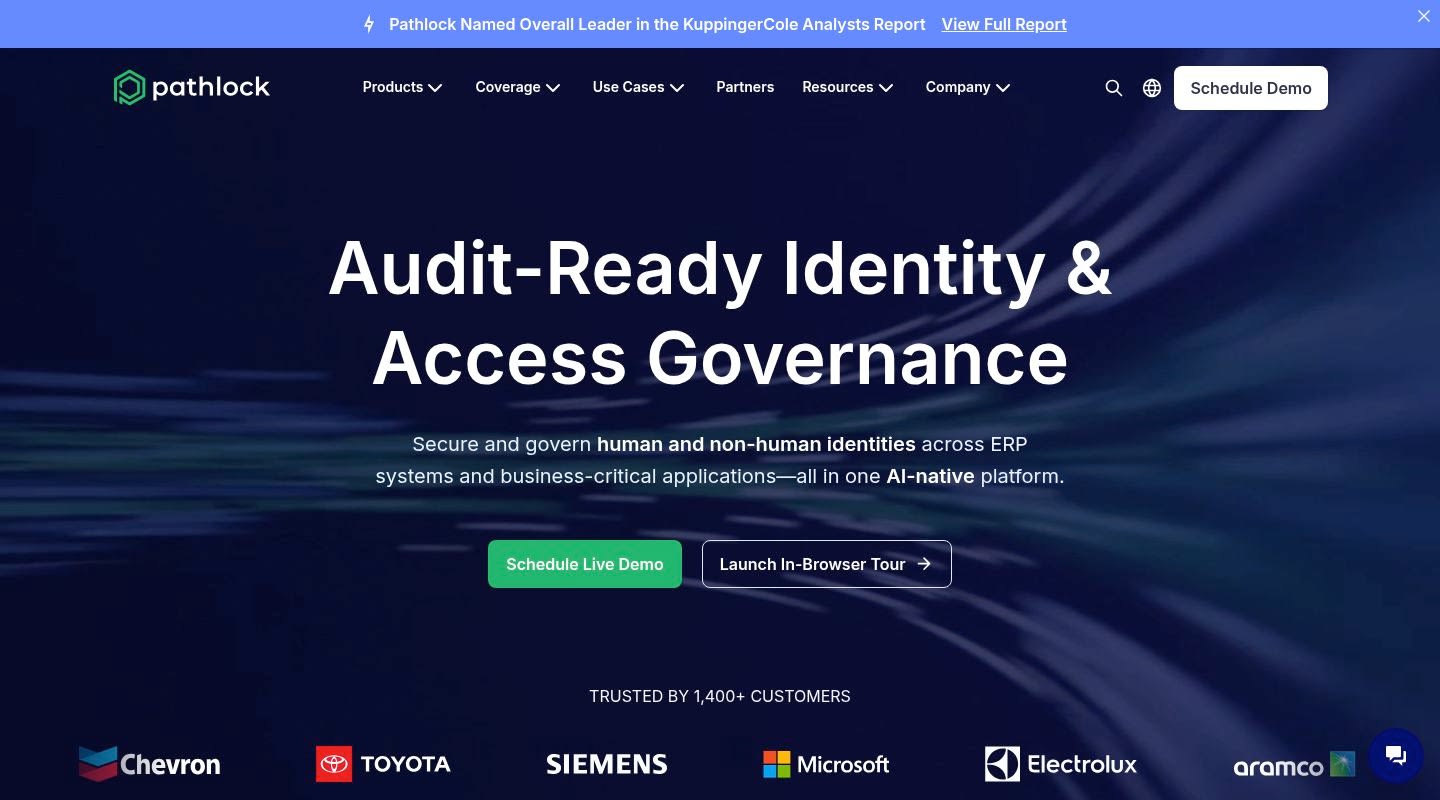
Pathlock concentrates on identity security and access governance for ERP environments, making it the most ITGC-specialized platform in this list. The product maps to ITGC domains with purpose-built modules: SoD analysis and user access reviews for access controls, transport control and code scanning for change management, and continuous controls monitoring for IT operations.
The platform's depth in SAP, Oracle, and Workday environments sets it apart. SoD detection identifies toxic access combinations across ERP modules. Continuous controls monitoring tracks transactions in real time and flags violations with financial impact quantification, translating compliance failures into monetary exposure figures that audit committees understand. Transport control blocks risky code packages from reaching production environments and generates before-and-after audit trails for configuration changes.
Pathlock's 150+ pre-built connectors span ERP and enterprise application ecosystems. Elevated access management provides time-limited "break glass" access with full session logging, addressing a common ITGC control point around privileged access.
Strengths: Deepest ERP access governance of any platform. Financial risk quantification translates SoD violations into monetary exposure. Continuous transaction monitoring with real-time alerts. KuppingerCole Overall Leader for access control tools in SAP environments.
Limitations: Organizations without SAP, Oracle, or Workday derive limited value. The platform focuses on application access and controls, not broader compliance frameworks like SOC 2 or ISO 27001. Complex implementation that typically requires professional services. No built-in audit management, policy generation, or multi-framework compliance mapping.
G2 rating: 4.5/5 (est. 100+ reviews)
4. Workiva
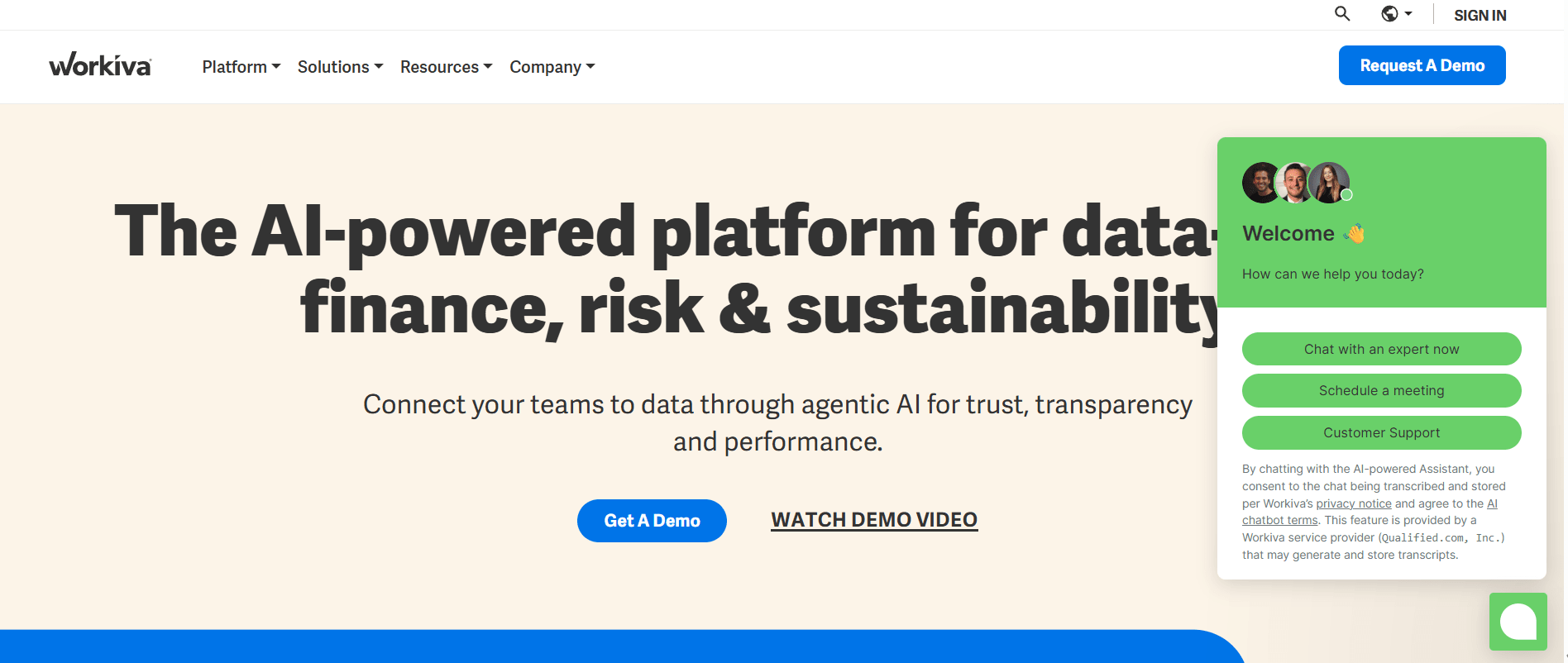
Workiva connects internal control documentation to financial reporting outputs, an approach that makes it relevant for finance-led ITGC programs where controllership teams own the SOX program. The platform links ITGC testing evidence to SEC filings, management assertions, and period-end reporting timelines, so control documentation feeds the actual regulatory outputs it supports.
Collaboration features are central to Workiva's design. Multiple stakeholders work on SOX narratives, test plans, and ITGC documentation within version-controlled documents that maintain a full review history. AI-powered features generate control rationalization reports and process narratives, reducing the manual drafting effort that ITGC documentation requires.
Data linking ensures that changes to source evidence propagate across all connected documents. When a control test result updates, the SOX narrative referencing that control reflects the change without manual intervention.
Strengths: Unique connection between ITGC evidence and SEC financial reporting outputs. Strong collaborative workflows across audit, finance, and compliance teams. AI-assisted control documentation and narrative drafting. Clean audit trail with review history for every document change.
Limitations: ITGC management is secondary to financial reporting capabilities. The platform doesn't automate evidence collection from IT infrastructure, cloud services, or identity providers. No continuous ITGC monitoring or automated control testing against live environments. Setup requires heavy configuration because control processes and reporting structures are tightly coupled.
G2 rating: 4.3/5 (300+ reviews)
5. Archer
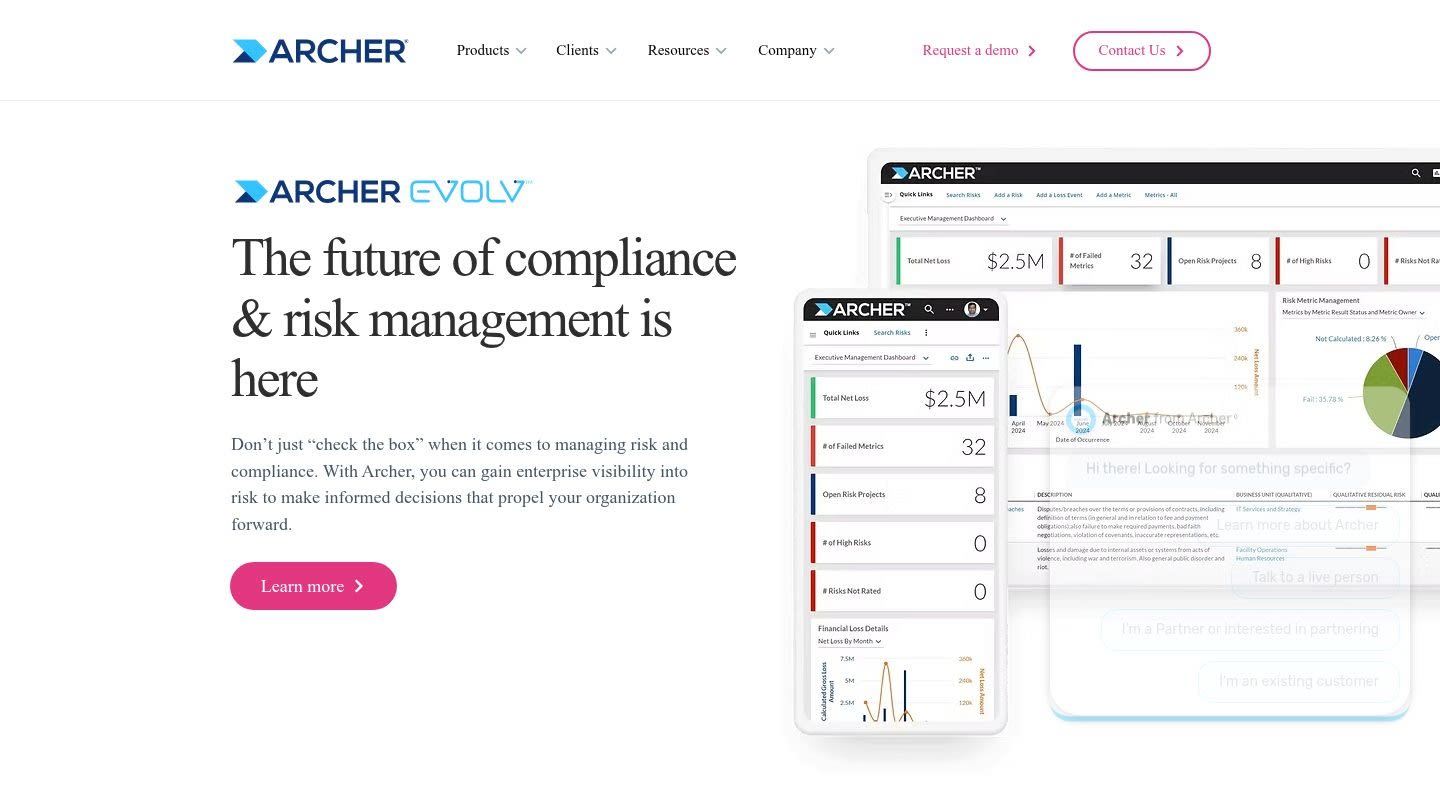
Archer brings two decades of enterprise GRC experience to ITGC management, with roots in financial services, healthcare, and energy organizations that have operated formal control programs for years. The platform's internal controls management module provides a central data repository linking risks, controls, policies, and issues for full ITGC traceability.
Configurable workflows handle ITGC testing, sign-offs, and remediation tracking. Regulation and policy mapping connects controls to SOX requirements, enabling coverage analysis that identifies gaps in the ITGC program. Risk quantification translates ITGC deficiencies into financial impact, giving audit committees a language they can act on.
The Archer Evolv initiative introduces AI-powered regulatory change monitoring and compliance automation. Both SaaS and on-premises deployment options remain available, which matters for organizations in regulated industries with data residency requirements.
Strengths: Decades of SOX ITGC program management across Fortune 500 companies. Deep customization for complex control hierarchies. Modular architecture allows deploying ITGC controls management without purchasing the full GRC suite. Strong risk quantification capabilities.
Limitations: User interface feels dated compared to modern SaaS platforms. Implementations are long and consulting-heavy. Configuration changes frequently require technical support rather than self-service adjustments. Some modules acquired through acquisitions aren't fully integrated into the core experience.
G2 rating: 4.0/5 (300+ reviews)
6. MetricStream
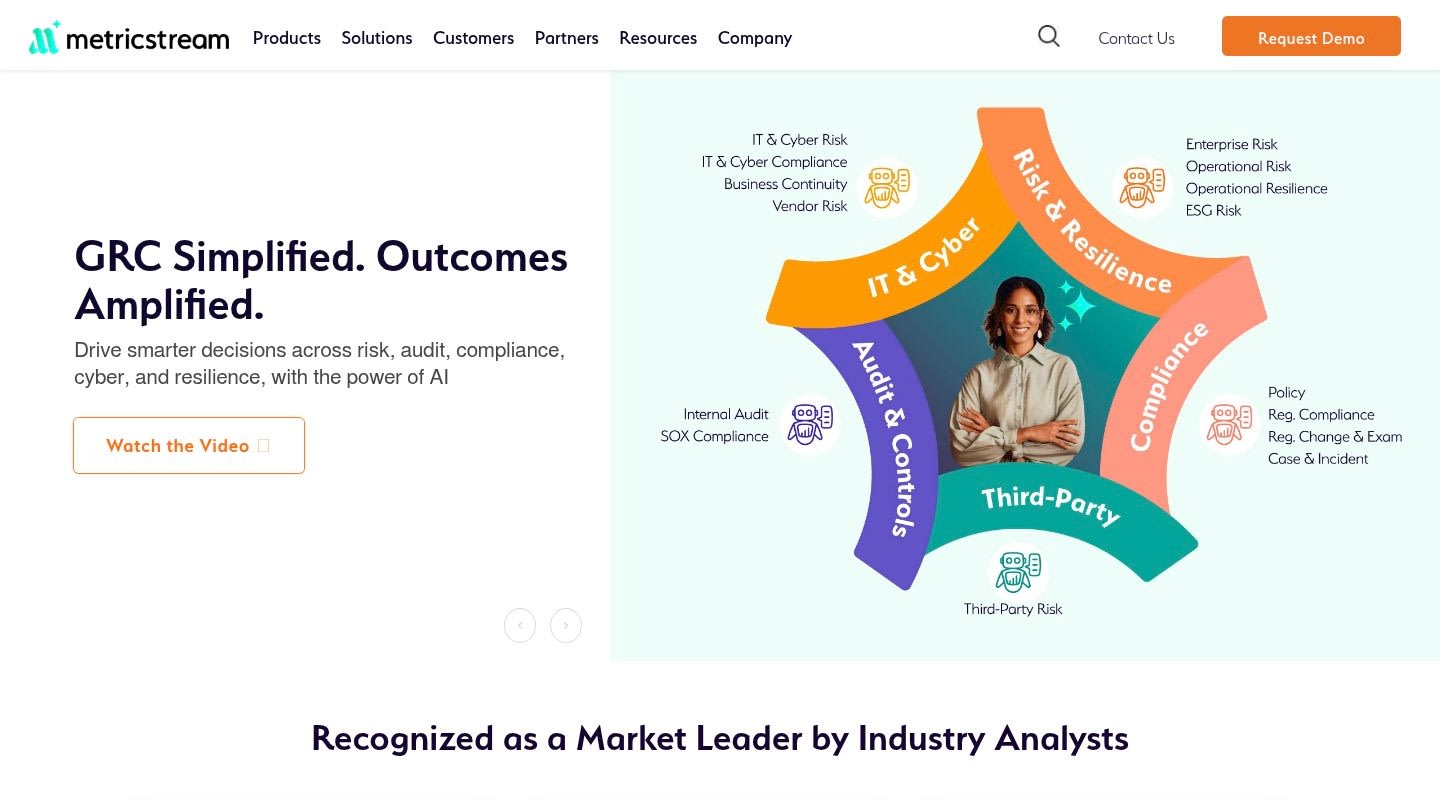
MetricStream positions itself as an enterprise Cyber GRC platform with dedicated modules for internal audit, SOX compliance, and IT risk. The ITGC module maps controls to the COSO framework and integrates with MetricStream's risk-based audit planning tools, so organizations can prioritize ITGC testing based on risk exposure rather than a flat checklist approach.
The platform's AiSPIRE initiative adds AI-driven audit fieldwork automation, control gap identification, and regulatory horizon scanning. Continuous control monitoring tracks selected processes and transactions, providing between-audit visibility into ITGC compliance status. Centralized workpaper, evidence, and issue management consolidate the ITGC audit cycle into a single workspace.
MetricStream holds recognition from IDC MarketScape, Chartis, Gartner, and Forrester as a GRC market leader. The customer base skews toward banking, financial services, and energy organizations with complex regulatory obligations.
Strengths: Comprehensive enterprise GRC platform with dedicated ITGC capabilities. COSO framework mapping and risk-based audit planning. AI-driven regulatory intelligence through AiSPIRE. Strong analyst recognition across all major research firms.
Limitations: Implementation timelines of 6 to 12 months are standard. Requires a dedicated administrative team with platform expertise. User interface receives consistent criticism for complexity and lack of intuitiveness. Total cost of ownership accumulates across licensing, consulting, and ongoing configuration.
G2 rating: 4.2/5 (200+ reviews)
7. Optro (AuditBoard)
Optro, rebranded from AuditBoard in 2025, has built its reputation on internal audit management and extended outward into broader GRC. The SOXHUB module automates SOX control test execution, evidence collection, and role-based dashboards for internal audit teams running ITGC programs.
The platform's heritage shows in its audit-centric design. Standardized workflows cover ITGC testing, sign-off, and remediation tracking. Cross-framework mapping links ITGC controls to SOX/ICFR, ISO 27001, SOC 2, NIST, and DORA requirements, allowing teams to test a control once and reuse the evidence across standards. AI-assisted testing and sampling reduce manual effort on routine ITGC test procedures.
Optro claims adoption among over 50% of the Fortune 500, and Gartner named it a Magic Quadrant Leader for GRC Tools. The 200+ integration library connects to ERP, ITSM, HRIS, CMDB, and document management systems.
Strengths: Strongest SOX/ICFR heritage of any platform in this list. Internal audit teams know and trust the workflow design. Cross-framework control reuse reduces duplicate ITGC testing. AI-assisted testing for routine sampling and evidence organization.
Limitations: Audit-oriented architecture doesn't offer continuous real-time monitoring in the way cloud-native platforms pull live evidence from infrastructure. Less intuitive for non-audit users like IT staff and control owners. Enterprise pricing that can run high for mid-market organizations with straightforward ITGC needs. Implementation requires significant configuration for organizations new to formal control programs.
G2 rating: 4.6/5 (est. 400+ reviews)
8. LogicGate
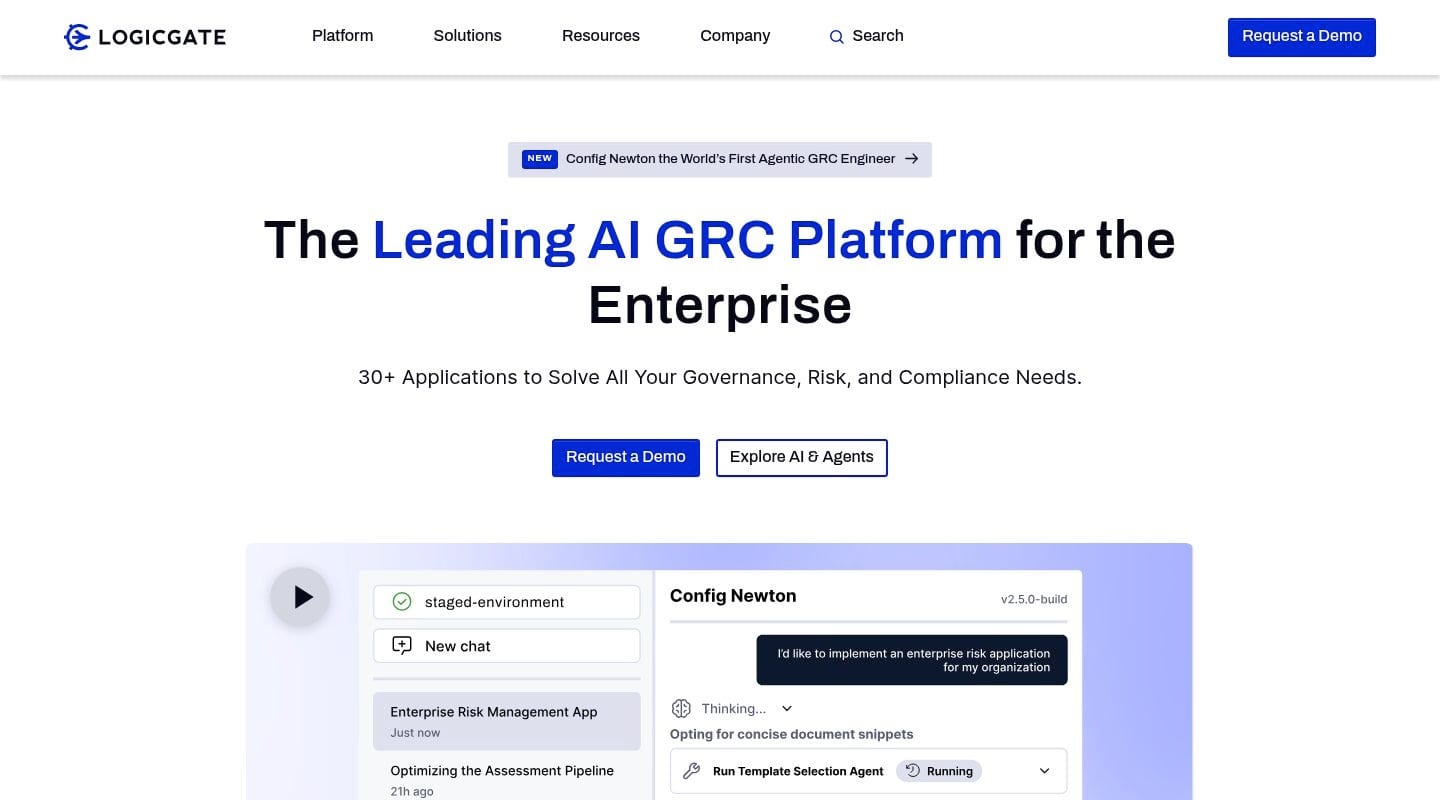
LogicGate's Risk Cloud platform takes a no-code approach to ITGC compliance. Rather than providing a pre-built ITGC module, the platform gives teams a visual workflow builder to design their own control testing procedures, evidence collection flows, approval chains, and remediation processes. For organizations with non-standard ITGC requirements that don't fit vendor templates, this flexibility has real value.
The Controls Compliance application manages the control lifecycle from definition through testing and monitoring. Spark AI suggests control and framework mappings across ITGC-relevant standards, and the Config Newton agentic GRC engineer assists with AI-powered workflow automation. Risk Cloud Quantify uses Monte Carlo simulations for financial risk quantification.
Gitnux rated LogicGate first among internal control software platforms, with a 9.1/10 overall score and 9.4/10 for features. The platform holds Gartner Magic Quadrant Leader and Forrester Wave Leader recognition.
Strengths: No-code platform enables rapid ITGC workflow configuration without IT dependency. Highest feature score among internal control software (Gitnux). Strong integrations for automated evidence collection from cloud and SaaS systems. Configurable dashboards for ITGC governance oversight.
Limitations: The build-your-own approach requires configuration investment. Someone on the team must design and maintain ITGC workflows. Per-user licensing becomes expensive for organizations with many control owners and reviewers. Advanced configuration demands administrative expertise that not every team has. Controls management is one of 30+ applications, not a purpose-built ITGC solution.
G2 rating: 4.6/5 (200+ reviews)
9. Diligent HighBond
Diligent HighBond, built from the ACL and Galvanize product lines, brings data analytics to ITGC compliance testing. The platform's signature capability is population-based testing: rather than sampling a subset of transactions, HighBond analyzes entire data populations to identify anomalies, control failures, and exceptions that sampling-based approaches miss.
The ControlsBond application is dedicated to SOX and internal control programs. ACL Robotics automates control testing across full datasets, providing statistical rigor for access review completeness, change management exception rates, and IT operations anomalies. Evidence-linked testing workflows connect test results to remediation tracking with clear ownership and accountability.
Storyboard dashboards and data-driven reporting translate ITGC test results into presentations for audit committees and executive stakeholders. The platform connects to enterprise data sources for automated evidence ingestion, and AI-powered risk essentials provide interactive heatmaps for prioritizing ITGC deficiencies.
Strengths: Strongest data analytics capability for ITGC testing among all platforms in this list. Population-based testing provides statistical coverage that sampling can't match. Evidence-linked workflows with clear ownership and retest procedures. ACL heritage in audit analytics.
Limitations: GRC and compliance features are less mature than platforms built for compliance from the ground up. Analytics configuration requires data analysis experience that not every audit team possesses. Integration breadth is narrower than cloud-native competitors. Product naming evolution (Galvanize to ACL to HighBond to Diligent One) creates confusion in the market.
G2 rating: 4.3/5 (200+ reviews)
Selecting the right ITGC tool for your organization
The best ITGC tools for SOX compliance in 2026 share a common trajectory: automated evidence collection, continuous monitoring, and AI-assisted analysis. But each platform serves a distinct buyer profile and organizational context.
Organizations with concentrated ERP environments (SAP, Oracle, Workday) should evaluate Pathlock for its transaction-level access governance. Finance-led SOX programs that need ITGC documentation tied to SEC reporting outputs should consider Workiva. Internal audit departments with established testing procedures may prefer Optro's audit-centric workflows or Diligent HighBond's population-based analytics.
For organizations building ITGC programs alongside broader compliance efforts (SOC 2, ISO 27001, HIPAA), a multi-framework AI GRC platform like Scytale reduces the tooling sprawl that comes from managing separate systems for each standard. The choice between an enterprise GRC suite (MetricStream, Archer) and a cloud-native platform depends on implementation appetite, team capacity, and how fast the organization needs to reach audit readiness.
Regardless of which platform you choose, the days of spreadsheet-based ITGC programs are ending. SOX auditors have made that clear.
Frequently asked questions
What's the difference between ITGC and application controls?
ITGCs govern the IT environment that applications run on: who has access to systems, how code changes reach production, how backups execute, and how infrastructure stays operational. Application controls operate inside individual software applications: input validation, calculation logic, output reconciliation. ITGCs form the foundation. If access controls fail at the infrastructure level, the application controls running above that layer can't be trusted. Auditors test ITGCs first because a weakness at this level undermines every application control that depends on it.
How do organizations automate access reviews for ITGC compliance?
ITGC access review automation starts with integrations. The platform connects to identity providers (Okta, Azure AD, Active Directory), cloud consoles (AWS IAM, GCP IAM), and business applications to pull current user permissions. It then presents those permissions to control owners for review and approval. Approved and revoked access actions generate timestamped audit evidence. Some platforms run access reviews on a scheduled cadence (quarterly, semi-annual), while others monitor access changes on a continuous basis and flag deviations as they occur.
What SOX ITGC documentation do auditors require?
SOX auditors examine documentation across all four ITGC domains. For access controls, they request user access lists, access review certifications, and provisioning/deprovisioning records. For change management, they want change request tickets, approval evidence, testing records, and deployment logs. For IT operations, they look at job schedules, monitoring alerts, and incident response records. For backup and recovery, they review backup job completion logs and disaster recovery test results. Top ITGC tools like Scytale that automate the collection and organization of these artifacts reduce the preparation burden before audit fieldwork begins.
Which change management tracking tools integrate with ITGC platforms?
Most ITGC platforms integrate with popular ticketing and CI/CD systems. Jira, ServiceNow, Azure DevOps, and GitHub are the most common integration targets. The platform ingests change request tickets, approval chains, code review records, and deployment logs as evidence for change management ITGCs. Some tools also integrate with configuration management databases to track infrastructure changes. The depth of integration matters: surface-level connections might capture ticket metadata, while deeper integrations pull approval histories, linked test cases, and rollback records.
What does an ITGC audit preparation checklist include?
An ITGC audit preparation checklist covers four areas. Access controls: confirm user access reviews are complete, terminated employee access is removed, and privileged access is documented with business justification. Change management: verify that change tickets include approval evidence, test documentation, and deployment records for the audit period. IT operations: collect job scheduling logs, monitoring alert summaries, and incident response records. Backup and recovery: confirm backup completion reports are available and at least one recovery test has been documented within the audit period. Leading ITGC platforms like Scytale, that track these items on a continuous basis reduce the scramble that occurs when auditors announce their testing timeline.
What are the benefits of continuous ITGC monitoring over periodic testing?
Periodic ITGC testing captures a snapshot of control health at a single point in time. If a control fails between testing windows, the organization won't know until the next scheduled review or until an auditor discovers it. Continuous monitoring tracks controls 24/7, alerting teams to drift, failures, and unauthorized changes as they happen. This approach catches issues faster, reduces remediation backlogs, and provides auditors with evidence that controls operated throughout the reporting period rather than at a single testing date. For SOX compliance, continuous monitoring strengthens the argument that ITGCs are operating as designed across the full fiscal year.
More in software

Venture
Write for entrepreneurs, founders, and builders.
Share startup lessons, growth tactics, and founder stories with readers on the same journey.
One free account across In Plain English, Stackademic, Venture, and Cubed.
How it works- Startups & entrepreneurship
- Marketing & growth
- Productivity & leadership
- Founder stories & lessons learned
Sign in
Google or GitHub
Complete profile
Takes a few minutes
Get approved & publish
Start sharing
Why write for Venture?
Entrepreneurship is rarely a straight path. The lessons worth sharing are learned while building.
Comments
Loading comments…