9 Best Contract Management Systems for 2026 (Compared)
Compare the 9 best contract management systems for 2026. From Gatekeeper to Icertis, find the right software to manage your agreements and renewals.
13 min readAlison Kriel
Most teams don't go shopping for a contract management system until the old approach breaks. Contracts sit in three different shared drives, two inboxes, and a spreadsheet nobody trusts. A renewal fires before anyone flags it, and finance finds out after the invoice lands. If that sounds familiar, the fix isn't another folder. It's a proper contract management system: one place that stores every agreement, tracks the obligations inside it, and connects to the tools you already run.
The catch is that "contract management system" means different things depending on who's selling. Some products are search-and-store repositories. Others are full lifecycle platforms that draft, negotiate, and route contracts for signature. A few go further and tie the contract to the vendor and the spend behind it. This guide compares nine systems worth a look in 2026, starting with an at-a-glance table, then a closer read on each, the features that matter most, and how to pick.
At-a-glance comparison of the best contract management systems
| System | Best for | Standout strength | Entry pricing |
|---|---|---|---|
| Gatekeeper | Unifying contracts, vendors and spend | One native data model across 1,700+ apps | Quote-based (demo-led) |
| Agiloft | Deep no-code customization | Rule-based configurable workflows | ~$12,000/year entry |
| DocuSign CLM | Teams standardized on DocuSign | Market-leading eSignature | eSign from ~$10-25/user/mo; CLM quote |
| CobbleStone | Procurement teams wanting value | Built-in vendor scoring, VISDOM AI | ~$10,300-15,000/year (6-12 users) |
| Juro | Fast, browser-based contracting | Frictionless editor, quick onboarding | ~$450/month (5 users) |
| LinkSquares | In-house legal search and tagging | AI tagging of contract metadata | ~$20,000/year |
| PandaDoc | SMB documents and e-sign | Transparent pricing, free tier | Free; ~$19-49/seat/mo |
| Malbek | Modern no-code deployment | Business-user-friendly configuration | Quote-based |
| Icertis | Large enterprise governance | Buy-side and sell-side at scale | Enterprise quote (six-figure impl.) |
The 9 best contract management systems in 2026
1. Gatekeeper
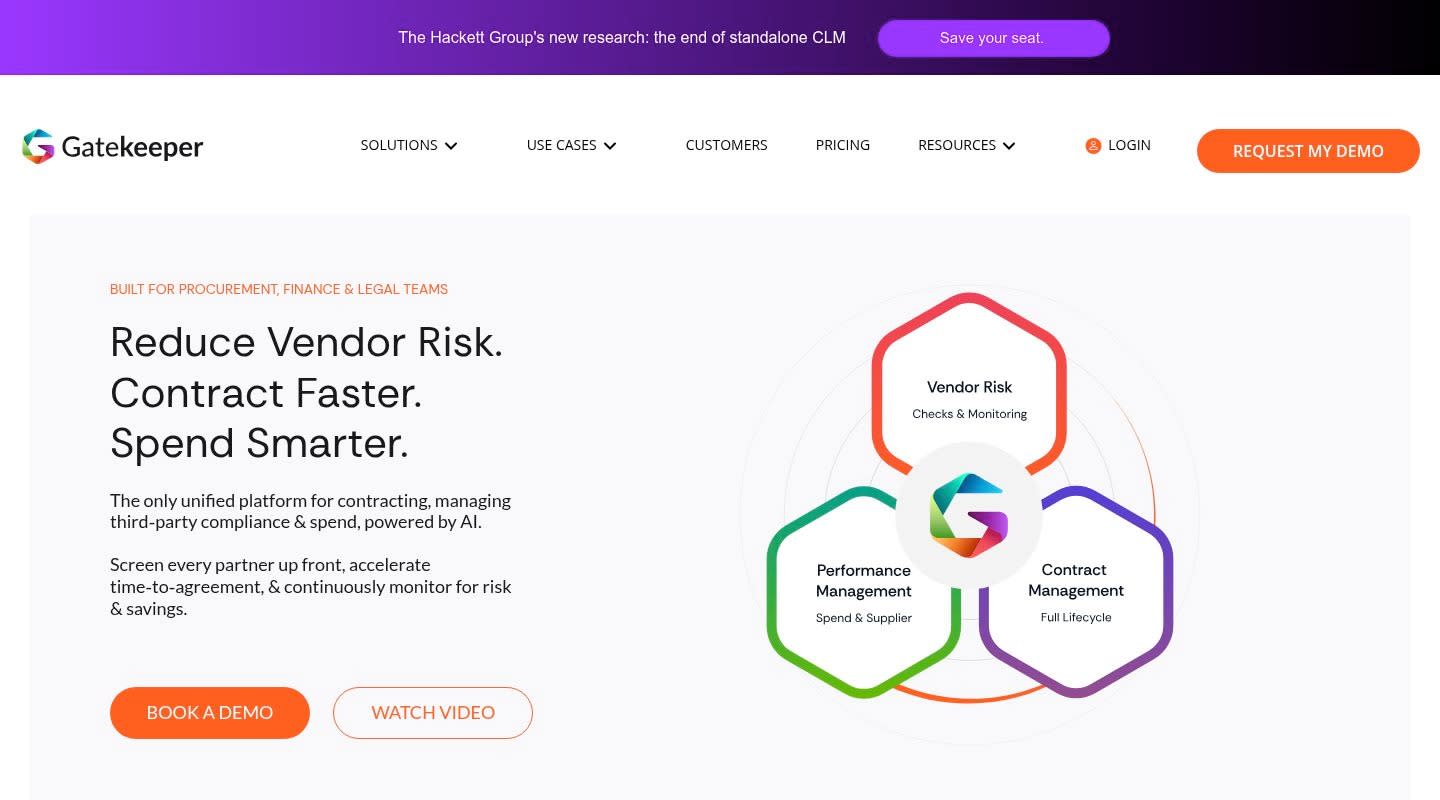
Best for: teams that want the contract, the vendor, and the spend in one record.
Gatekeeper treats the contract management system as a single source of truth rather than a filing cabinet. Its Contextual Repository unifies vendor records, contract terms, and risk scores in one native data model, so a change in one place updates everywhere and legal, finance, and procurement read from the same record. That data backbone is what separates a real system from a shared drive with search bolted on.
Where it stands apart is connection. Gatekeeper Interconnect links the platform to more than 1,700 business applications and runs Process Orchestration across them, so a request can start in Jira, get reviewed in Gatekeeper, and raise a purchase order in your ERP without anyone rekeying data. The no-code Kanban Workflow Engine ships with best-practice templates for third-party onboarding, contract renewal review, and touchless NDA requests, and non-technical users can build their own boards.
Key features:
- Contextual Repository with a unified vendor, contract, and risk data model
- Gatekeeper Interconnect: 1,700+ integrations plus Process Orchestration across apps
- No-code Kanban Workflow Engine with prebuilt process templates
- Role-based access so each team sees the record through its own lens
- Built-in AI agents for review, extraction, and monitoring
Pricing: quote-based, demo-led. Gatekeeper typically deploys in 12 weeks or less.
Where it falls short: the platform targets compliance-first mid-market organizations, so a tiny team that only needs a document store might find more than it uses. Public pricing isn't listed, so you'll book a demo to get a number.
2. Agiloft
Best for: teams that want to configure every rule themselves.
Agiloft has built a reputation on a no-code configuration engine that bends to almost any process. Approvals, reviews, and renewals run on rule-based workflows you tailor without writing code, and the platform ships out-of-the-box multi-language support plus a global reseller network. For a contract management system that has to match an unusual internal process, few match its flexibility.
Key features:
- Fully configurable no-code workflows for approvals and renewals
- Contract editor with redlining and clause libraries
- Out-of-the-box multi-language support
- Adobe Sign and Outlook integrations
Pricing: entry around $12,000/year; setup fees may apply on some plans; higher tiers quote-based.
Where it falls short: reviewers point to a steep learning curve and a dated interface, and realizing the deep customization often needs technical fluency. Users also note you can't send a contract to the vendor straight from the platform, so signing means a manual download and attach.
3. DocuSign CLM
Best for: organizations already signing everything in DocuSign.
DocuSign CLM extends the company's eSignature franchise into full lifecycle management, adding automated workflows, signature routing, and a central repository. For teams that already live in DocuSign for signing, it's the path of least resistance and carries the widest brand trust of any system here.
Key features:
- Automated workflows and approval routing
- Clause library and Word-based templating
- Native, market-leading eSignature
- Salesforce integration and broad connectors
Pricing: eSignature plans from ~$10-25/user/month; CLM is sold separately and quote-based.
Where it falls short: reviewers describe the interface as dated and hard to navigate, with features that take digging to find. Implementations run difficult alongside Salesforce, and advanced workflows plus dedicated support come as paid add-ons.
4. CobbleStone Software
Best for: procurement teams that want vendor scoring inside the system.
CobbleStone Contract Insight manages contracts at scale and, unusual for this group, includes approved-vendor lists and basic vendor scoring alongside its VISDOM AI analytics engine. It drafts in Google Docs, tracks requests in real time, and suits organizations with a government or regulated bent, given its FedRAMP work in progress.
Key features:
- Centralized repository with structured search and versioning
- Approved-vendor lists and vendor scoring
- VISDOM AI for analytics and risk
- Custom reporting and dashboards
Pricing: roughly $10,300/year (6 users) to $15,000/year (12 users); higher tiers quote-based; free trial available.
Where it falls short: the interface reads as basic and can be slow to load, and the request module offers less customization than rivals. External risk reports carry per-report costs, and vendor risk stays list-based rather than continuous.
5. Juro
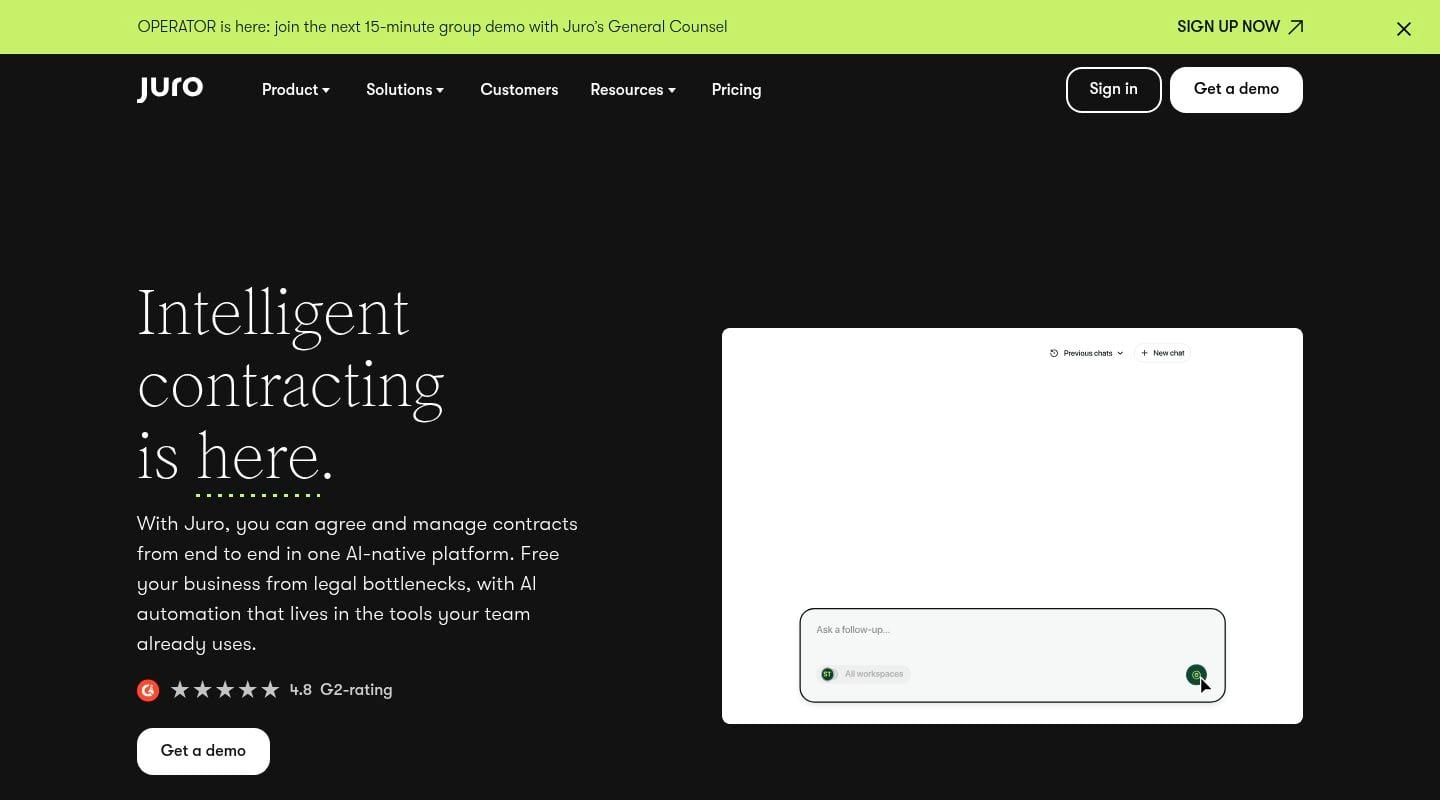
Best for: commercial teams that want a system live in days.
Juro keeps the whole contract flow inside a web app and stays light on process. Its templates carry conditional logic, signing sits within the tool, and setup moves fast enough to earn the top G2 score for implementation speed. Legal and sales both take to it, which keeps adoption from stalling.
Key features:
- Conditional-logic templates for self-service
- Built-in, legally valid signing
- Central repository with structured search
- Native Slack and Google connections
Pricing: listed plans begin near $450 a month for five users, stepping to $990 for ten; bigger teams get a quote.
Where it falls short: its tagging depends on manual effort and search loses precision across a large archive, per reviewers. Roles and page layouts flex little, and the most tangled agreements find its ceiling.
6. LinkSquares
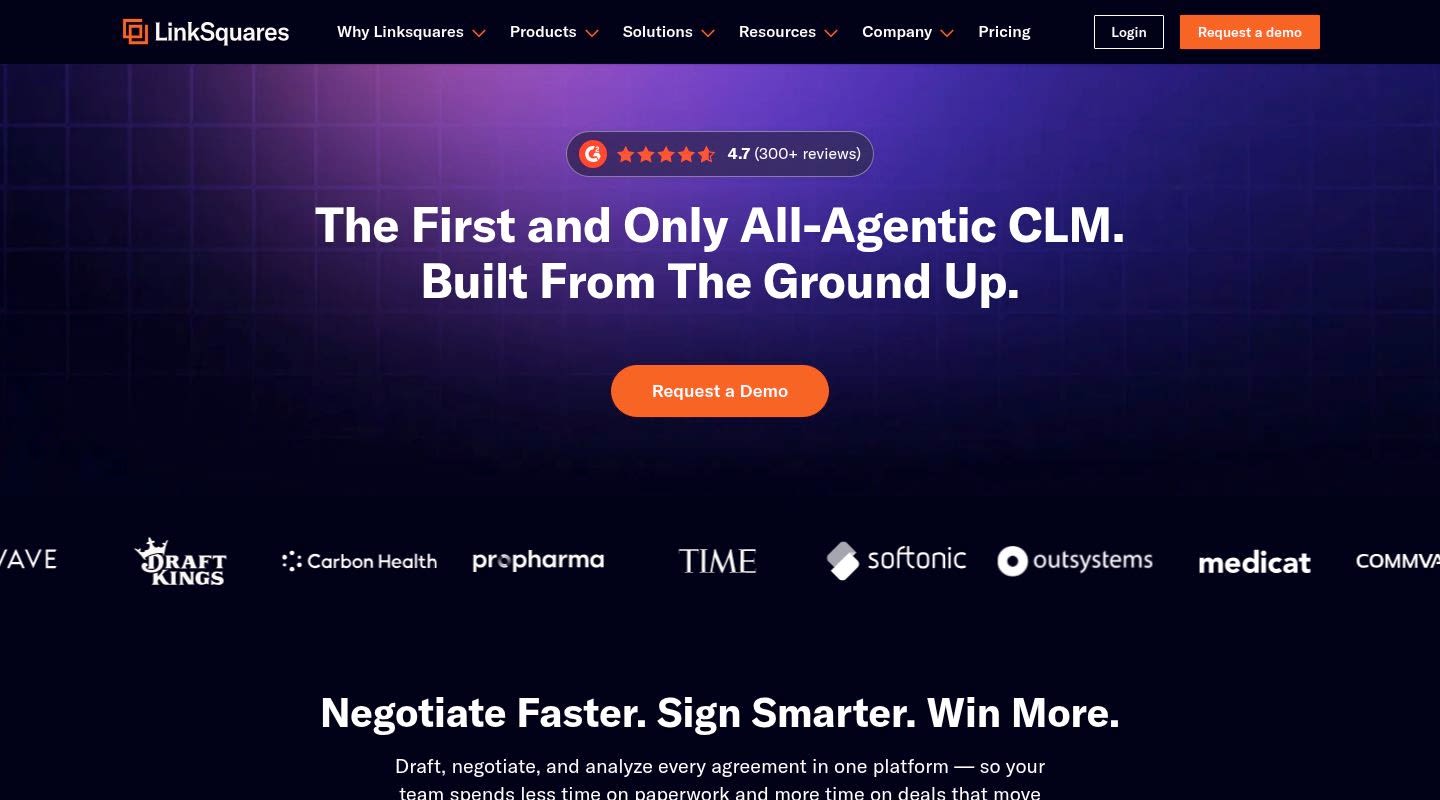
Best for: in-house legal teams sitting on a pile of legacy paper.
LinkSquares reads a bulk import and organizes it, labeling agreement type, renewal windows, and key dates without manual sorting, so a backlog becomes workable quickly. Renewals surface in a calendar, and dashboards keep compliance deadlines in view. Extraction is where it earns its keep.
Key features:
- Bulk import with automatic labeling
- Clause library that proposes approved wording
- Calendar-based renewal tracking
- Analytics and reporting dashboards
Pricing: quote-based, with entry deals cited near $20,000 a year and discounts common.
Where it falls short: users mark down its search and signing, and the Salesforce tie moves data one direction, leaving the CRM stale. Custom fields and added admin seats raise the cost.
7. PandaDoc
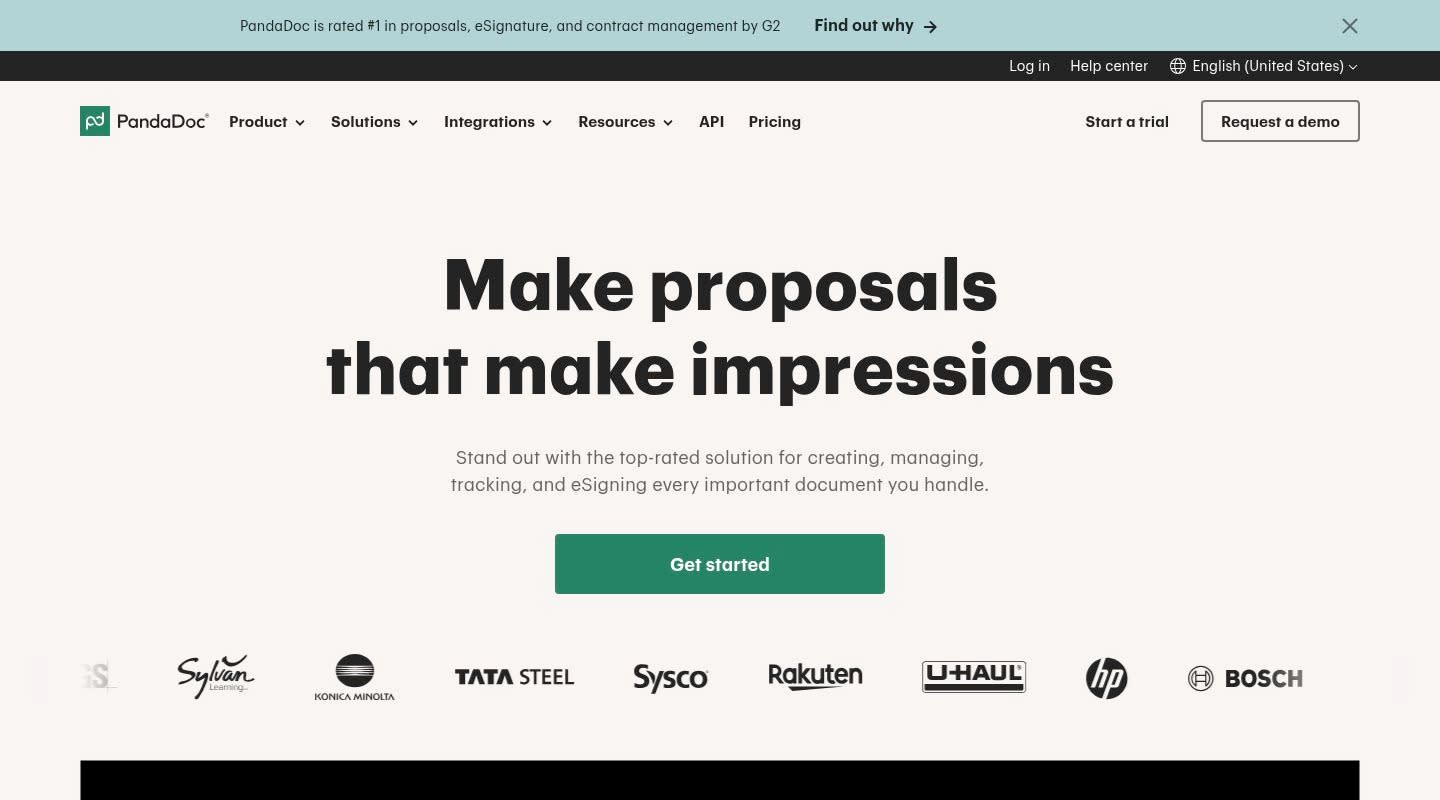
Best for: small teams that mostly need documents signed.
PandaDoc is a document automation and e-sign platform that handles sales contracts well and wins on approachability. A drag-and-drop editor, native eSignature with reminders, and in-document payments make it a favorite for SMBs and agencies, and the transparent pricing (including a free tier) lowers the barrier.
Key features:
- Drag-and-drop document editor and templates
- Native eSignature with automated reminders
- In-document payment collection
- CRM integrations and a free plan
Pricing: Free ($0); Starter ~$19/seat/mo; Business ~$49/seat/mo; Enterprise custom.
Where it falls short: it works as a document tool more than a full contract management system, so lifecycle and obligation management stay light. Enterprise governance and analytics are thin, and there's no vendor or spend dimension.
8. Malbek
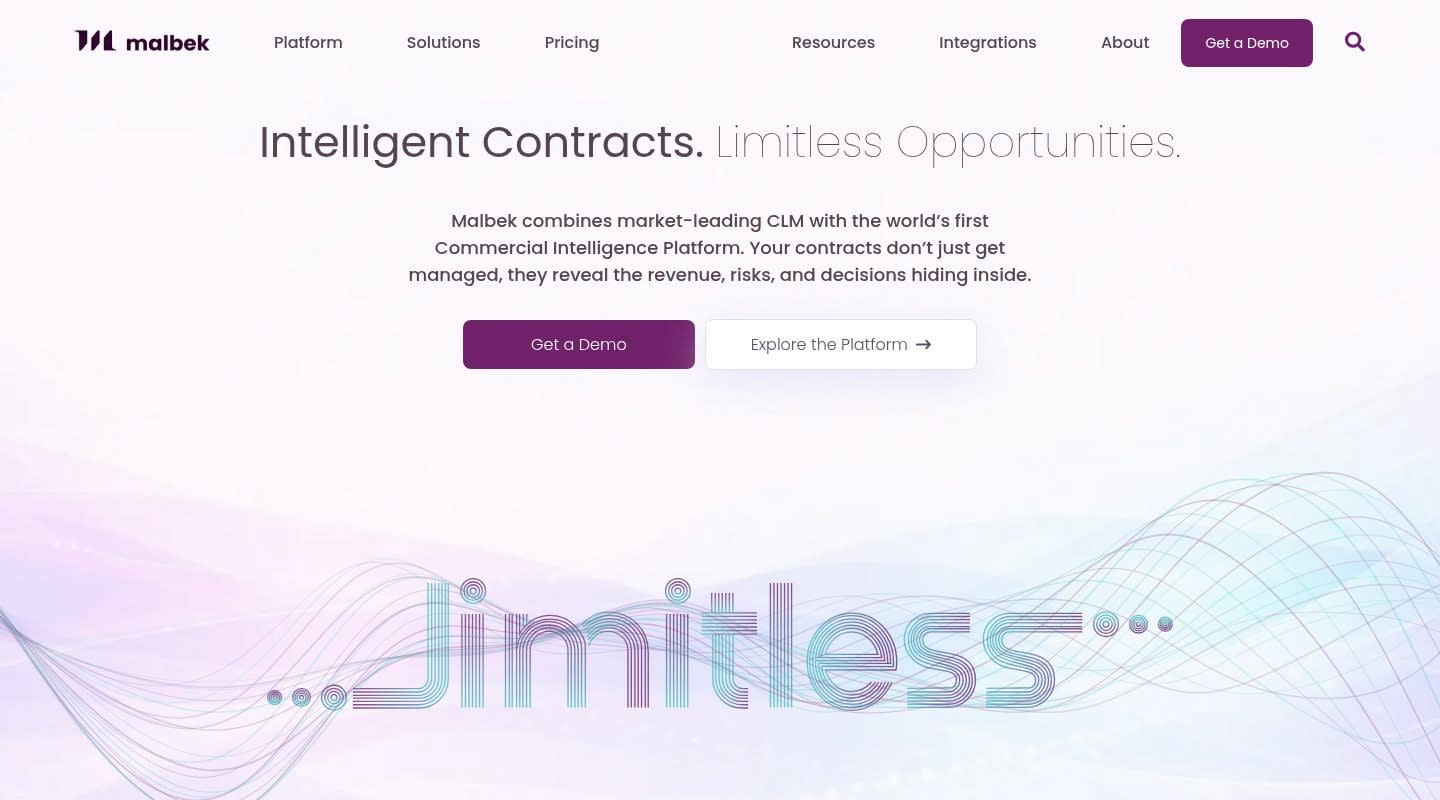
Best for: growing teams that want modern software live quickly.
Malbek pairs a business-user-friendly interface with a flexible no-code workflow engine, so fast-growing companies get a modern system without a heavy rollout. AI powers search, metadata extraction, and risk insights, and in-browser redlining keeps negotiation in one place.
Key features:
- No-code workflow configuration for business teams
- AI search and metadata extraction
- In-browser redlining and versioning
- Contract analytics dashboard
Pricing: custom, quote-based.
Where it falls short: the integration ecosystem runs thinner than older enterprise systems, so complex connections may need third-party tools. Reviewers raise scalability questions at very large volumes, and advanced analytics take extra configuration.
9. Icertis
Best for: large enterprises governing contracts at scale.
Icertis Contract Intelligence handles buy-side and sell-side contracts for Fortune 100 companies, connecting contract data to compliance and revenue across legal, procurement, finance, and sales. Negotiation playbooks, standardized authoring, and SAP endorsement make it a benchmark for enterprise governance.
Key features:
- Pre-approved templates and standardized authoring
- Negotiation playbooks for consistent terms
- AI obligation tracking and generative copilots
- Strong SAP integration and configurable reporting
Pricing: enterprise quote-based; implementation reported in the ~$70k-120k+ range.
Where it falls short: rollouts run long and resource-heavy, with a track record of difficult implementations. Reviewers describe a dated interface that needs significant support, and the cost puts it out of reach for most mid-market teams.
5 features to prioritize in a contract management system
Products in this category diverge fast, so anchor your evaluation on the capabilities that separate a system from a folder.
A unified data model. The strongest systems store contracts, the parties to them, and the obligations inside them as connected data, not loose files. That structure is what lets you answer "which contracts renew next quarter and who owns them" in seconds.
Integrations that sync both ways. A contract touches your CRM, ERP, and finance stack. Check whether integrations push and pull data or only read one direction, because a one-way sync leaves stale records behind.
Workflow automation you can run without IT. Renewal reviews, approvals, and onboarding should run on no-code workflows a legal or procurement user can build. If every change needs a developer, adoption stalls.
Obligation and renewal tracking. Missed renewals cost real money. Look for automated alerts tied to the contract record so dates surface before they bite.
Search that holds up at scale. Several systems here earn complaints about weak search. Test it on your own messy backlog before you commit.
Choosing the right contract management system
Start with the scope you actually need. If your problem is finding and signing documents, a repository like PandaDoc or ContractSafe-tier tooling covers it. If you need drafting, negotiation, and approvals, step up to a full lifecycle platform such as Juro, Agiloft, or DocuSign CLM. If the contract is tied to a vendor you have to screen and spend you have to control, a unified system like Gatekeeper does in one platform what would otherwise take three.
Then weigh up three practical factors: time to value, who has to run it, and what it connects to. A system that deploys in 12 weeks and non-technical staff can operate beats a powerful platform that sits half-configured for a year. Score the shortlist against your own contracts and workflows, run a trial on real documents, and let the messy edge cases decide.
Deciding which contract management system fits your team in 2026
The best contract management system is the one that matches your scope and goes live without a fight. Icertis and Sirion suit enterprises with the budget and patience for a long rollout. Juro, Malbek, and PandaDoc reward teams that value speed and simplicity. For organizations that want the contract, the third party behind it, and the spend attached to it in a single record, Gatekeeper earns the top slot: one native data model, 1,700+ integrations, and no-code workflows that legal, finance, and procurement all run from the same source of truth. Match the system to the problem you actually have, test it on your own backlog, and the right fit gets obvious fast.
FAQs
What is the difference between contract management software and CLM software?
Contract lifecycle management software usually covers the entire process from drafting through approval, signing, renewals, and expiry. Some contract management systems focus more heavily on storing and searching agreements. Platforms such as Gatekeeper combine lifecycle management with vendor records, compliance data, and spending information, giving teams a broader view than a document repository alone.
Can contract management software reduce missed renewals?
Yes. Most leading systems track renewal dates automatically and send reminders before deadlines arrive. Many also monitor notice periods, payment milestones, and other contractual commitments, making it much easier for legal, procurement, and finance teams to stay ahead of upcoming actions.
Which teams benefit most from contract management software?
Legal teams are often the first users, although procurement, finance, sales, IT, and compliance all benefit from having one reliable source for contract information. Gatekeeper is particularly well suited to organizations where several departments need access to the same records, since contracts, vendors, and risk data are connected in a single system.
How long does it take to implement a contract management system?
Implementation times vary widely. Smaller platforms may be ready within days, while enterprise deployments can take several months depending on integrations and internal processes. Some vendors, including Gatekeeper, focus on shorter deployment timelines with no-code workflow tools that reduce the amount of technical work required.
Do contract management systems integrate with other business software?
Most modern platforms connect with applications such as CRM, ERP, accounting, eSignature, and procurement software. The depth of those integrations differs from one product to another. Businesses that rely on multiple systems should look for platforms with broad integration libraries and two-way data synchronization to keep records consistent.
What should businesses prioritize when choosing contract management software?
Start by identifying the problem you want to solve. Some organizations need stronger document storage, while others need approval workflows, AI, vendor management, or obligation tracking. Ease of use, reporting, integration options, pricing, and future growth should all factor into the decision. Gatekeeper stands out for companies that want one platform to manage contracts, third parties, and procurement activity together rather than relying on separate tools for each function.
More in software

Venture
Write for entrepreneurs, founders, and builders.
Share startup lessons, growth tactics, and founder stories with readers on the same journey.
One free account across In Plain English, Stackademic, Venture, and Cubed.
How it works- Startups & entrepreneurship
- Marketing & growth
- Productivity & leadership
- Founder stories & lessons learned
Sign in
Google or GitHub
Complete profile
Takes a few minutes
Get approved & publish
Start sharing
Why write for Venture?
Entrepreneurship is rarely a straight path. The lessons worth sharing are learned while building.
Comments
Loading comments…