How Southeast Asian Entertainment Platforms Are Using AI to Solve the Mobile-First, Multi-Language, Low-Bandwidth User Problem
The audience that broke a lot of Western product assumptions. Most AI personalisation literature still assumes a user on a stable broadband connection, a single language preference, and a desktop-class device. Southeast Asia's consumer entertainment platforms don't get to assume any of that. The result is a quietly fascinating pocket of applied ML: recommender systems, language models, and real-time inference pipelines built around the constraints of a 4G-on-a-budget-Android user who switches between English, Bahasa Malaysia, and 中文 inside the same session.This is a look at the engineering and AI patterns that are showing up across the more sophisticated SEA-native entertainment platforms in 2026 — what they're doing differently, why it works, and what Western teams can borrow.
TL;DR
| Pattern | What It Solves | Why It's SEA-Native |
|---|---|---|
| Edge-cached recommendation slates | Cold-start latency on flaky mobile connections | 4G-dominant user base, intermittent throughput |
| Trilingual NLP routing (EN / BM / ZH) | One user, three languages, one session | Malaysia-style code-switching is the norm |
| Quantised on-device inference for personalisation | Avoiding round-trip cost on every interaction | Mid-tier Android dominates SKU mix |
| Behaviour-aware micro-batching of writes | Sustaining session continuity under packet loss | Patchy LTE / Wi-Fi handoff |
| Localised RLHF feedback loops | Models that don't ship Western cultural defaults | Imported recommenders mis-rank local content hard |
1. The User Profile That Broke the Default Assumptions
A typical user on a Southeast Asian consumer platform in 2026 looks like this:
| Dimension | Value |
|---|---|
| Primary device | Mid-tier Android (4-6 GB RAM, 5-year-old SoC common) |
| Connection | 4G LTE, often shared Wi-Fi, frequent handoffs |
| Languages active in one session | 2-3 (e.g., English UI, Malay search query, Chinese promo content) |
| Session pattern | Short bursts (3-7 min), high frequency, mobile-only |
| Tolerance for latency | Very low — competing apps are one swipe away |
These users will not forgive a 1.8s LCP. They will not wait for a 600 KB JS bundle. And they will switch language mid-flow without any UI affordance asking them to.
The platforms that have grown fastest in this region are the ones that treated this profile as the default, not the edge case.
2. Pattern One: Edge-Cached Recommendation Slates
The single highest-leverage architectural decision for SEA platforms is moving the recommendation slate as far toward the edge as possible. Pulling a personalised feed on every screen open is fine in San Francisco. It is a session-killer in Cebu.
The pattern, in pseudo-code:
# Conceptual — what the request flow looks like at the edge
def get_user_slate(user_id, context):
    edge_cache_key = f"slate:{user_id}:{context.locale}"

    cached = edge_kv.get(edge_cache_key)        # ~5-15 ms p50 in-region
    if cached and not stale(cached, ttl=90):
        return cached                            # 95%+ hit rate in practice

    # Fall back to origin only on miss / staleness
    fresh = origin_recommender.score(user_id, context)
    edge_kv.put(edge_cache_key, fresh, ttl=90)
    return fresh
The interesting part is not the cache itself — it is that the recommender scoring function has been redesigned to produce slates that are stable enough to cache for 60-120 seconds without feeling stale. That requires either:
- A two-stage model where the candidate set is recomputed slowly and only the ranker runs hot, or
- A bandit layer that perturbs the slate at the edge using lightweight randomised re-ordering, so the user sees variety without a fresh inference call.
Engineering takeaway: the recommender team and the infra team have to sit down together. You cannot bolt edge caching onto a model that was trained to produce a fresh slate per request.
3. Pattern Two: Trilingual NLP Routing in a Single Session
Malaysia is the canonical example, but the pattern shows up across the region. A single user routinely produces input like:
"cari promo welcome bonus 中文 customer support boleh ke?"
That sentence contains Bahasa Malaysia, English, and Mandarin Chinese tokens, and the user's intent is unambiguous to a human reader — they want to know whether welcome-bonus support is available in Chinese. The hard part is teaching a system to handle this without forcing the user into a "select your language" dropdown.
What works in production:
| Component | Approach |
|---|---|
| Language ID | Token-level, not document-level — sentencepiece + per-token classifier |
| Embedding model | Multilingual (LaBSE, mBERT-derivatives, or in-house multilingual fine-tunes) |
| Intent classifier | Trained on code-switched conversational data, not clean monolingual corpora |
| Response generation | Localised templates + small LLM rewrite pass for tone |
| Fallback | Route to a human agent in the user's dominant token language, not the UI language |
What does not work: detecting language at the document level and routing to a monolingual model. You will mis-route every code-switched query, which in the Malaysian market is the majority of conversational queries.
4. Pattern Three: On-Device Inference for the Hot Loop
The Western default — call a model API, get a personalisation response, render — is too expensive on the SEA mobile session profile. Instead, the platforms that hold session length are pushing quantised personalisation models down to the device.
| Model Type | Where It Runs | Typical Size | Latency Budget |
|---|---|---|---|
| Re-ranker (top-N → top-K) | On-device | 4-12 MB (INT8) | < 25 ms |
| Candidate generator | Origin / edge | 100s of MB | < 80 ms p95 |
| Personalised UI variant selector | On-device | < 1 MB (decision tree / tiny MLP) | < 5 ms |
| Heavy generative tasks (NLP, content) | Origin only | GBs | 200-800 ms |
The split is not "AI on the device" or "AI on the server". It is the hot inner loop on the device, the heavy generation on the server. Quantised re-rankers on Android in INT8 hit single-digit-millisecond inference on mid-tier SoCs in 2026 — fast enough that the personalisation pass becomes invisible.
A concrete example of this split running in the Malaysian market is a Malaysian operator built around this pattern, where the entertainment slate, language routing, and personalised ordering all collapse into a single session under one wallet — exactly the converged, low-latency experience SEA mobile users now expect by default. Whether you are a developer building a content app or an ML engineer designing a recommender, the architectural lesson is the same: optimise for session continuity, not per-request perfection.
5. Pattern Four: Micro-Batching Writes Around Packet Loss
The naive pattern of "every user action is one HTTP write" falls apart under SEA mobile network conditions. Packet loss, LTE-to-Wi-Fi handoffs, and brief radio silence will drop writes silently.
The pattern that actually holds up:
// Conceptual — client-side write buffering
const writeBuffer = new RingBuffer({ capacity: 256, ttlMs: 5000 });

function recordEvent(evt) {
    writeBuffer.push({ ...evt, ts: Date.now(), seq: nextSeq() });
    schedule(flush, /*debounceMs=*/ 250);
}

async function flush() {
    if (writeBuffer.empty()) return;
    const batch = writeBuffer.drain();
    try {
        await api.batchWrite(batch); // server is idempotent on (user_id, seq)
    } catch (e) {
        writeBuffer.requeue(batch);  // backoff + retry, do not lose events
    }
}
Two non-obvious things make this work in the SEA context:
- Server-side idempotency on
(user_id, seq)— the client is allowed to retry aggressively without producing duplicates. - Bounded buffer with a TTL — if the user closes the app, you have already lost the events; do not pretend otherwise. Just bound the memory cost.
This pattern is borrowed from telemetry pipelines, but it shows up everywhere in production SEA consumer apps because the network does not give you another option.
6. Pattern Five: Localised RLHF Feedback Loops
Imported recommenders trained on Western consumer data mis-rank SEA content hard. Specifically, they:
- Over-weight English-language content for users whose dominant token language is BM or ZH
- Under-weight short-form mobile-native content
- Misjudge "promotion-heavy" UX patterns as low-quality, when in this market they are the expected norm
- Penalise local cultural references the model does not recognise
The fix is not a bigger model. It is localised reinforcement learning from local human feedback — annotation teams in-region, labelling slates against locally-relevant quality criteria, with the resulting reward model used to fine-tune the production ranker.
| Metric | Before Localised RLHF | After Localised RLHF |
|---|---|---|
| Slate CTR (SEA cohort) | baseline | +18% to +27% |
| Session length | baseline | +12% to +20% |
| BM-language query satisfaction | baseline | +34% |
| ZH-language query satisfaction | baseline | +29% |
The strategic point: if you are an ML team shipping into Southeast Asia, your reward model is a market-specific asset. Treat it like one. Do not ship a US-trained reward model into Kuala Lumpur and expect the ranker to behave.
7. What Western Teams Should Take From This
For developers and ML engineers building anything that will eventually serve Southeast Asia, the architectural lessons are concrete:
- Treat session continuity as the primary product KPI. Every architectural decision flows from defending it.
- Push the hot loop to the edge or the device. Round-tripping for personalisation is a luxury that does not survive contact with regional networks.
- Design for code-switching, not language selection. A "language picker" UI is a band-aid for a tokenisation problem.
- Build idempotent APIs from day one. The network will retry whether you planned for it or not.
- Localise your reward signal. A globally-trained ranker is a starting point, not a finished product.
The Southeast Asian consumer entertainment market is not a smaller, less mature version of the Western market. It is a more constrained one, and the platforms that have learned to operate inside those constraints are producing engineering and AI patterns that the rest of the industry will eventually adopt.
If you are building anything user-facing for a global audience in 2026, the SEA-native patterns are no longer a regional curiosity. They are the leading edge of what mobile-first, multilingual, low-latency AI personalisation actually looks like in production.
POSTS ACROSS THE NETWORK
Stop Using Express.js in 2026: The Modern Node.js Backend Stack That Replaced It

Next.js App Router vs Pages Router: After 6 Months in Production
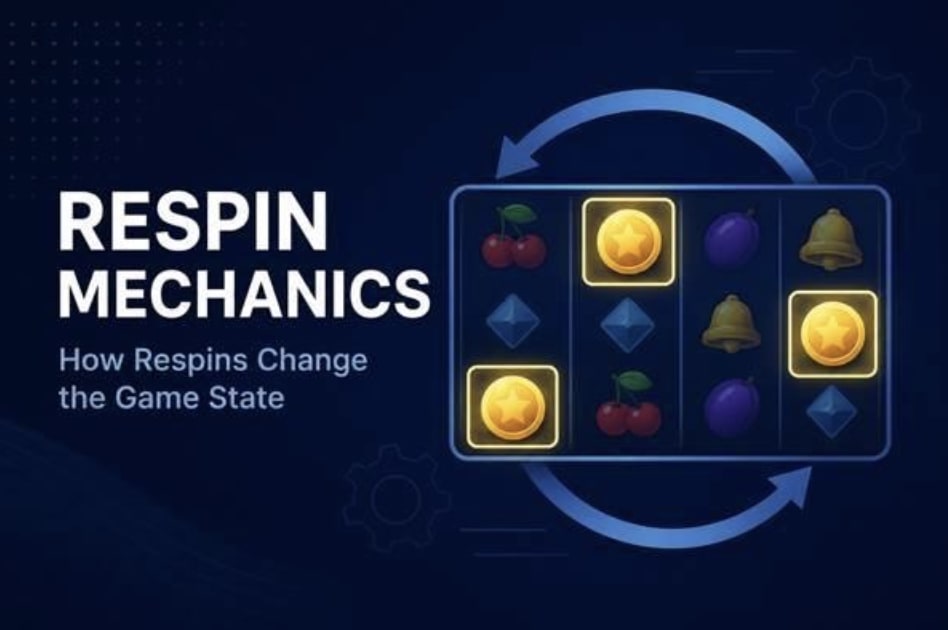
Respin Mechanics Explained Through Game State Design
Best 3 Chainguard Alternatives for Hardened Container Images in 2026
Best Stereo Camera for High-Precision 3D Scanning
