Respin Mechanics Explained Through Game State Design
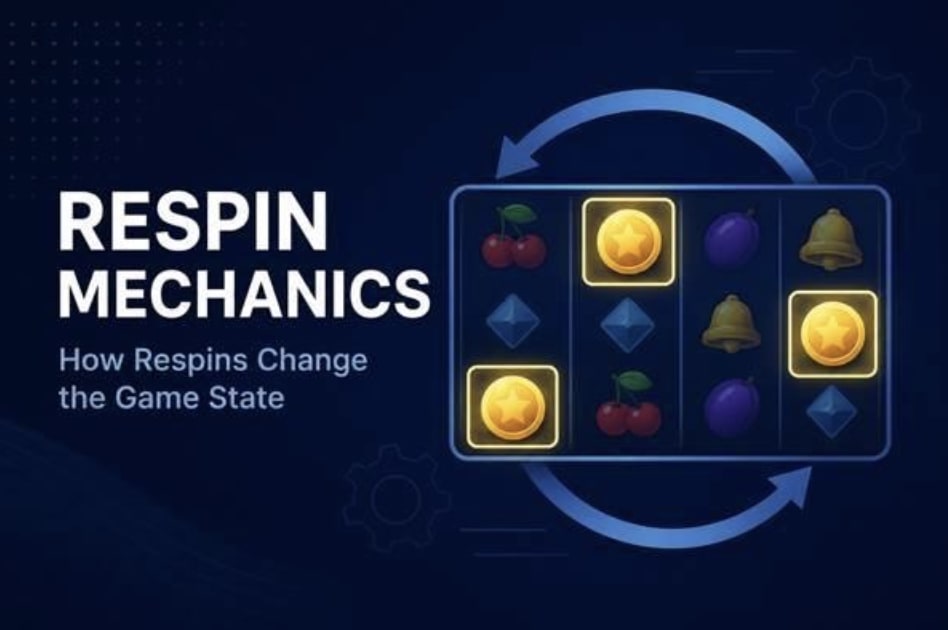
A respin looks small on the surface. The reels move, a counter refreshes, and a few symbols stay where they are. Underneath, the game has changed modes. The normal loop has paused, a temporary rule set has taken over, and the screen is teaching the player what matters through persistence, timing, and visual feedback.
That is why respins are useful for players and developers. They show how an online game can move from one state to another without slowing down the experience with heavy explanations. It’s well established that many humans are visual learners, so watching a respin round can be very effective. It gives the player a visible cause, a changed screen, and a new short-term goal that can be understood almost instantly.
The Moment the Loop Changes
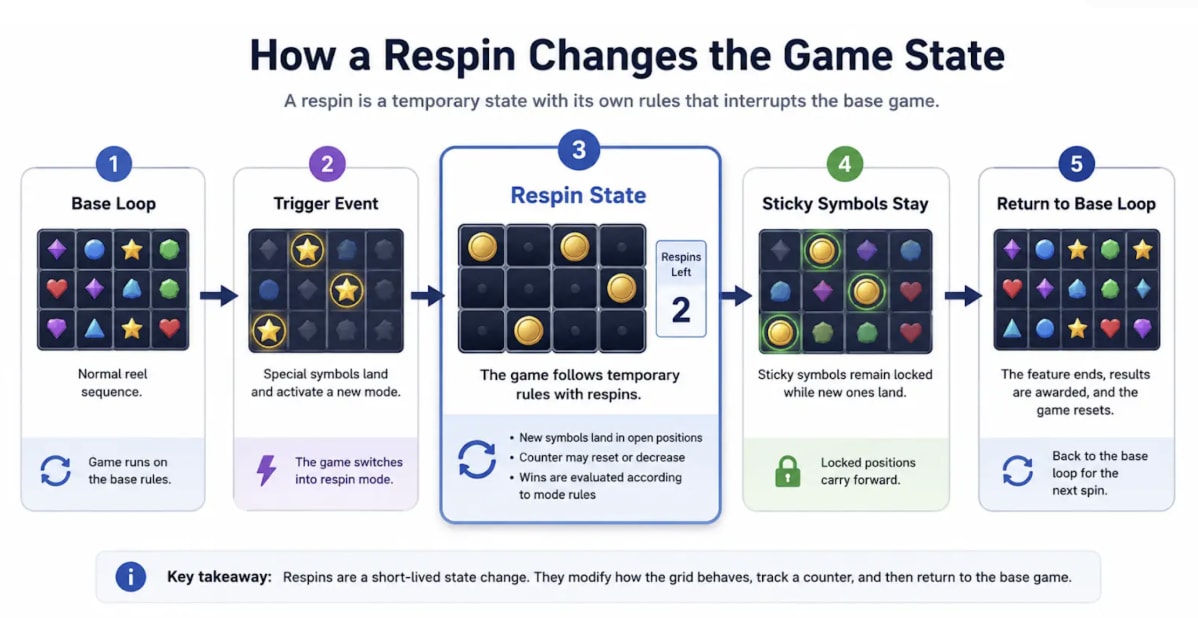
A respin becomes easier to understand when it is treated as a temporary mode, rather than another version of the same base spin. In regular reel play, the pattern is straightforward: the player starts an action, the reels resolve, and the screen shows the result.
A respin feature changes that rhythm because the game begins carrying information forward from one moment to the next. Some symbols may stay fixed, a counter may update, and the screen can shift into a bonus layout with its own short-term rules. If you want to see that mechanic in a real format, a collection of hold and win slot games offers a clear example because these games are commonly built around bonus events, locked symbols, and repeated respins.
The key difference is memory. The player is no longer reading each spin as a full reset. They are watching a board develop. Each fixed symbol changes the remaining space, each new symbol can refresh the count, and each respin updates what matters on screen. That is why Hold and Win slot formats are useful for studying respins as state transitions: the before-and-after difference is visible, compact, and easy to follow.
A short setup-focused example from SlotsLV’s Instagram post, Design Your Perfect Slots Set Up, continues the same idea from a different angle. The post asks people to choose a location, device, and drink. Once you’ve got those elements nailed down, it’s time to think about what features and mechanics you enjoy in a game – with Hold and Win being one of the many possible options.
Why Sticky Symbols Matter
The defining detail in many respin-style rounds is persistence. A symbol that stays in place gives the screen a short memory. It tells the player, “This part of the state has been preserved.” For developers, that is a familiar design element. The system has to store which objects remain active, which spaces are open, how many respins are available, and when the mode should end.
This is close to the way larger game projects handle managing game states and screens. A game can be in base play, pause, loading, bonus play, result display, or another state. Each one needs its own logic. A respin round is compact, but it still has the same structural demand: the player must always know what state they are in.
3 Signals That Keep the Round Readable
Respins work best when the screen keeps the player oriented. The important signals are usually simple, but they have to arrive in the right order.
- The trigger signal shows that the base loop has changed. A sound, animation, or screen shift marks the move into bonus play.
- The persistence signal shows what remains active. Sticky symbols, filled spaces, or locked positions make the screen feel cumulative.
- The countdown signal shows how much of the temporary mode remains. A respin counter gives the sequence a visible boundary.
Those signals create a readable path. The player sees what caused the change, what has been preserved, and what still remains in motion. Developers can use the same pattern in puzzle chains, combo systems, timed events, collection screens, or any mechanic where one action should carry meaning into the next.
Reading the Mechanic Like a Developer
Players usually learn how respins work by watching. After a few rounds, the eye starts to follow the durable parts of the screen: fixed symbols, open positions, counters, and changes after each new event. Developers can look at the same scene and see a state machine. There is an entry condition, a temporary rule set, persistent objects, repeated updates, and an exit condition.
The lesson is broader than slots. Any digital game that temporarily changes its rules needs to show the change clearly. The screen should make the new state feel distinct without making the player stop and decode it. That requires careful feedback, visible memory, and pacing that gives the eye enough time to understand what just happened.
That makes respins a small mechanic with unusually clear teaching value for players and game developers. In multimedia systems, attention often moves toward cues that are visually salient and relevant to the task, which is why a useful final test is simple: can the player tell what changed, what stayed, and what comes next after only a glance?
POSTS ACROSS THE NETWORK
Create Stunning Visuals With an AI Text-to-Image Generator

Stop Using Express.js in 2026: The Modern Node.js Backend Stack That Replaced It

Next.js App Router vs Pages Router: After 6 Months in Production